Aspen bark extract can activate reparative and metabolic processes, improve the trophism of periodontal tissues, and normalize the platelet aggregation and disaggregation systems that influence hemorrhagic syndrome in periodontal diseases. Studies have shown increased resistance of oral tissues under the influence of the extract's components, along with a significant change in the activity of markers of hydrolytic and energy processes in the cell's endoplasmic reticulum and an effect on metabolic and redox reactions in the tissues.
In an experiment, the PMA index and the Schiller–Pisarev test decreased from 32.1–36.0% to 8.1–9.4% and from 86.7–90.5% to 7.4–10.9%, respectively, while gum capillary resistance increased significantly, by an average of 30–32%, compared with the control group1.
Morphological and histochemical studies confirmed the extract's ability to slow the intensity of alveolar ridge resorption in periodontal disease. Morphological studies revealed changes in the submucosal layer of the gum — an increase in the number of thin-walled vessels — indicating improved microcirculation and periodontal trophism1.
So thanks to the combination of anti-inflammatory properties in aspen bark extract, a pronounced effect on oral hygiene can be achieved. Importantly, aspen extracts have no known contraindications and no known side effects, despite the plant's long medical history2.
The variety of biological effects comes from the enormous number of complex chemical substances found in its tissues and cell sap. In pharmacognosy, substances are conventionally divided into active and accompanying ones. Biologically active substances are usually present in plants in minimal amounts. Depending on the accompanying substances present, the overall pharmacodynamic properties of the main (active) substances can change in one way or another, and, as a result, so can the therapeutic effect of the herbal preparation. Accompanying substances can enhance the absorption of the active substance, lower or raise its activity, or give the plant some toxic property. Many researchers note that active components isolated and purified of impurities are less effective than they are as part of an extract.
Like other members of the poplar genus, aspen is rich in tannins, the highest content of which is found in the bark. Members of this family contain glycosides — salicin, populin, and others — which release salicylic acid and its derivatives. Flavonoids, in particular quercetin, have been found in aspen leaves and bark. The wood contains the pigment chrysin and others. Alkaloids have been detected in leaves and flower clusters in trace amounts3. Flavonoids are present in buds and leaves. The leaves contain kaempferol 4-methyl ether; the leaves also contain kaempferol, quercetin, isorhamnetin, luteolin, and phenolcarboxylic acids — coumaric, caffeic, and ferulic. The leaves contain phenol glycosides — salicin, tremuloidin, salicortin, tremulacin — and tannins (2.4–6.7%). The trunk bark contains phenyl glycosides — populin, salicin, and others — as well as tannins (10%). The bark contains pectins and fatty acids; the leaves contain organic and aromatic acids, carotenes, and vitamin C. Aspen bark and buds contain tannins, benzoic acid, bitter glycosides — populin and salicin — and the enzyme salicase. All parts of the plant contain lipids, resinous substances, and corticin. Under the action of the enzyme salicase, the glycoside salicin breaks down to release saligenin, which has an antipyretic effect. The bark also contains flavonoids and coumarins. The content of coumarin derivatives in the bark is 0.16%; the amount of tannins is 4.9%; the amount of ascorbic acid is 80 mg%4.
Aspen extracts include compounds of different classes: hydrophilic phenol glycosides, phenolic acids, flavonoids, and tannins; and hydrophobic saturated and unsaturated fatty acids and waxes. Double extraction allows the maximum amount of beneficial substances to be obtained from the plant — both water- and fat-soluble.
The predominance of C18 unsaturated fatty acids in aspen bark lipids, including linolenic acid, along with chlorophyll, carotene, α-tocopherol (vitamin E), phosphatides, and unsaturated sterols (β-sitosterol), and phenols (salicylic acid), allows them to be considered a bioactive preparation.
Phenolic glycosides (phenol glycosides) are a form of phenolic compound in which the hydroxyl group is bound to sugar molecules. The first phenol glycoside obtained from plants, salicin, is a β-glycoside of salicylic alcohol (Fig. 1). It was isolated by the French scientist Leroux (1828) from willow bark. Like other phenols, phenol glycosides have antiseptic and disinfectant effects. Willow bark extract containing salicin was long used as an analgesic and anti-inflammatory agent5.

Fig. 1. Salicin
Plants are known to concentrate individual elements or groups of elements. Aspen bark has been shown to have a high content of macroelements (calcium, magnesium, potassium), with calcium predominating, as well as microelements involved in redox reactions — namely iron, manganese, zinc, and copper. The concentration of macroelements exceeds 50 µmol/g, and of microelements, 1–5 µmol/g. The concentration of the remaining microelements — boron, copper, cobalt, molybdenum, chromium — is less than 1 µmol/g6.
The mineral complex of herbal preparations passes through a kind of biological filter and therefore has a ratio of main components that is favorable for the body. The latter is difficult to achieve when creating artificial mixtures, due to insufficient knowledge of the diversity of synergistic and antagonistic relationships among the numerous elements that form the basis of living things. The therapeutic effect of the complex of microelements present in medicinal plants can also enhance the activity of the main active principle7.
Biologically active substances (in particular phenolic compounds) of dry aspen leaf extract can suppress free-radical oxidation processes in vitro.8
Table 1. Bioactive substances in aspen
α- (and β-) amyrins (terpenoids)
Bactericidal, fungicidal, expectorant
Benzoic acid (organic acids)
Antitumor, lipid-lowering
Valeric acid (organic acids)
Spasmolytic, tranquilizing
Isorhamnetin (flavonoid group)
Cardiostimulatory
Quercetin (flavonoid/flavonol group)
Spasmolytic, anti-inflammatory, antioxidant, diuretic, antitumor. Used for hemorrhagic diathesis, retinal hemorrhages, capillary toxicosis, septic endocarditis, rheumatism, hypertension, allergic diseases, measles, scarlet fever, typhus, and more…
Cinnamic acid (aromatic organic acids)
Spasmolytic and bacteriostatic
p-Coumaric acid (aromatic organic acids)
Antihepatotoxic
Lignin 18.74% (phenolic compounds)
Antitumor
Gamma-linolenic acid
Anti-inflammatory
Luteolin (flavonoids)
Anti-inflammatory, spasmolytic, expectorant, diuretic
Pectin (polysaccharides)
Expectorant, cholesterol-lowering, hemostatic, binding (for diarrhea), adsorbs toxins
Salicin (phenol glycosides)
Antipyretic, tonic, analgesic, prevents disease recurrence, used for neuralgia, rheumatism, and respiratory conditions (rhinitis)
β-sitosterol (phytosterols)
Estrogenic, antiatherosclerotic, antitumor, fungicidal, bacteriostatic; used for metabolic disorders and endocrine system diseases
Triandrin (phenol glycosides)
Stimulating
Ferulic acid (aromatic organic acids)
Antihepatotoxic
Cycloartenol (terpenoids)
Anti-inflammatory
Description
Active ingredients
Properties
RIA
Clinical trials
Ingredients
Application
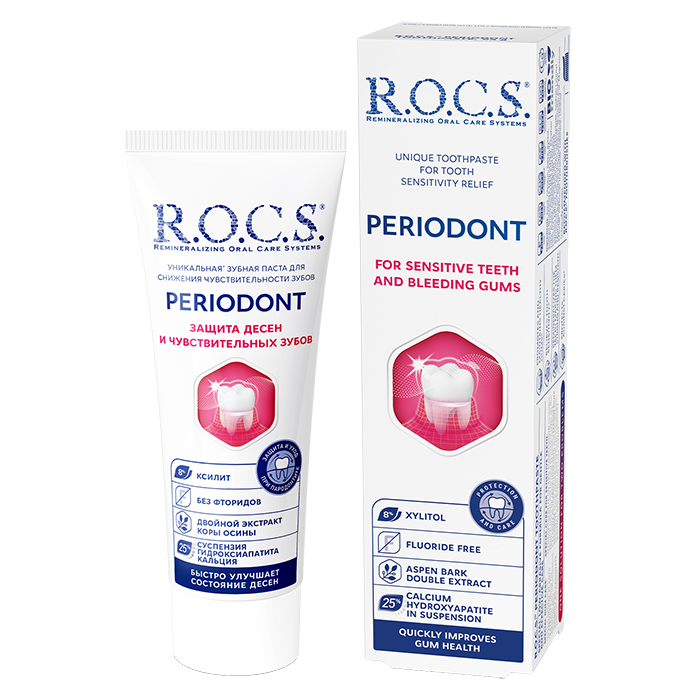
R.O.C.S. PERIODONT toothpaste is a comprehensive solution for managing the symptoms of inflammatory periodontal diseases, as well as tooth hypersensitivity associated with these conditions.
The plant extracts have a pronounced anti-inflammatory effect on periodontal tissues, reduce gum bleeding and possess a broad spectrum of antimicrobial action. Sodium bicarbonate provides a decongestant effect.
Hydroxyapatite and active minerals help protect hard dental tissues and alleviate tooth sensitivity when the tooth neck is exposed.
Comprehensive care for teeth and gums in cases of inflammatory periodontal diseases.
A white toothpaste with a mild mint flavor that does not cause a burning sensation.
* Russian Abrasivity Index reflects the cleaning capacity level of oral care products and polishing pastes. Products with a higher RIA value have enhanced cleaning properties, but are also a risk factor for the development of non-carious dental lesions, therefore the choice of toothpaste should be guided by the condition of the hard dental tissues.
The DRC group of companies, in collaboration with the Institute of Digital Dentistry of the RUDN Medical Institute, has developed and is implementing a new toothpaste abrasivity measurement standard in Russia that meets the highest requirements: safety, accuracy, reproducibility. Принято. This methodology is an alternative to the RDA measurement method and offers a number of advantages. Its effectiveness has been confirmed by a large-scale experimental and clinical study involving 534 patients.
The methodology is based on a rotary machine and digital technologies developed by a research group of dentists, physicists, and digital modeling specialists. QLF diagnostics, intraoral scanning, and digital analysis were used in the work, which made it possible to obtain objective data on tooth wear and the influence of abrasivity over time.
More detailed information on the Russian Abrasivity Index (RIA)Study of the properties of R.O.C.S. Periodont toothpaste:
This study investigated the efficacy and safety of R.O.C.S. Periodont toothpaste for the oral care of patients with chronic periodontitis and dental hard tissue hypersensitivity.
The study involved 32 people (mean age: 31.8 years) aged between 20 and 45 years with chronic periodontitis of mild to moderate severity combined with catarrhal gingivitis and hypersensitivity of dental hard tissues.
All patients were instructed in proper brushing techniques and underwent professional oral hygiene treatment. All patients used R.O.C.S. Periodont toothpaste for two months.
The oral hygiene index of patients in the study group improved significantly after two weeks of use and remained at this level throughout the observation period (Fig. 1).
The decrease in the inflammatory process of the gums (Fig. 2) could be partly due to professional oral hygiene, but using the toothpaste allowed the periodontal index to remain stable for 2 months.
Using Periodont toothpaste levelled the increase in sensitivity of the hard tissues of the teeth, which often occurs after professional oral hygiene. After two months, it reduced the intensity of sensitivity (Fig. 3).
Fig. 1. O'Leary hygiene index, %
Fig. 2. PMA index, %
Fig. 3. Air-cold test, points
In all cases of gingival inflammation (PMA index > 25%), fluorescence diagnostics using the Proof attachment on the VistaCam (405 nm) revealed the presence of plaque in the vestibular region and in areas of inflamed periodontium (Fig. 4,6).
Fig. 4. Patient M., aged 34. Plaque accumulation in the vestibular region of the teeth with transition to the inflamed gingiva. Complaints of bleeding gums and tooth sensitivity.
Fig. 5. Patient M., aged 34. Status two months after the start of the study: no plaque present. The periodontium shows no signs of inflammation.
Fig. 6. Patient N., aged 35. Plaque is present on the inflamed gums around all teeth. The patient complains of bleeding gums and tooth sensitivity. Hard tissue sensitivity: 3 points.
Fig. 7. Patient N., 35 years old. Condition 2 months after beginning to use the toothpaste. No plaque was detected and the periodontium showed no signs of inflammation. Sensitivity of hard tissues: 1 point.
During the safety study of the toothpaste, it was found that the activation coefficient of peripheral blood basophils in patients in the study group was within the normal range (1.05 ± 0.02).
Using R.O.C.S. Periodont toothpaste in patients with chronic periodontitis:
R.O.C.S. toothpaste with active minerals (calcium glycerophosphate + magnesium chloride) and xylitol saturates enamel with minerals, increases caries resistance and the rate of tooth remineralization:
The study found that R.O.C.S. toothpaste containing sources of calcium, phosphate, and magnesium, without fluoride, enhances caries resistance of teeth no less effectively than a toothpaste containing sodium fluoride at maximum concentrations (1500 ppm F–).
R.O.C.S. toothpaste significantly increases the rate of remineralization of teeth exposed to acid, and, due to its ability to limit plaque growth, allows achieving a good level of oral hygiene within one week of use.
Enamel tunnels are microstructures that curve in an S-shape along the bundles of enamel prisms and extend to the dentin, penetrating it in the form of enamel bridges, where metabolic exchange between the enamel and dentin takes place. On the enamel surface, these tunnels open as enamel pores. X-ray spectral microanalysis and planar spectrograms show that the walls of enamel tunnels and the areas near them contain mainly mineral components (Ca, Ba, Cd, Sr, P, Si, As, C, K, Br, I, Cl), while the lumen contains organic components. It has been established that the mineral component of R.O.C.S. toothpastes actively penetrates through the enamel tunnels into the area of the enamel-dentin junction and the superficial layers of the dentin, exerting a positive effect on the structural and functional caries resistance of teeth.
Confirmation of the prebiotic and anti-adhesive properties of xylitol (normalization of microflora, protection against cariogenic bacteria and Candida fungi):
The high prevalence of caries in young children necessitates the use of therapeutic and preventive products that target the primary etiopathogenetic factor of this disease — pathogenic microflora. This study presents comparative data on the antimicrobial effectiveness of products containing xylitol and chlorhexidine, as well as their effect on the microbiocenosis composition of the dental biofilm.
A total of 30 patients aged 12 to 36 months with early childhood caries (18 boys and 12 girls) were followed for one month. The patients were divided into two equal groups using a blinded method:
It was recommended that the remineralizing gels be applied 4–5 times a day after toothbrushing. All procedures were performed by the patients' parents at home after receiving prior instruction.
At baseline and at the end of the prescribed treatment course, all patients underwent molecular biology testing using multiplex PCR at the NIMSI laboratory.
In group 1, a significant reduction in colonization by cariogenic species was detected, along with a positive effect of the R.O.C.S. Medical Minerals remineralizing gel components on the ratio of cariogenic to resident species, as well as a decrease in the quantity and frequency of detection of certain periodontopathogenic anaerobic bacteria (Table 1). An important positive feature of the change in the dental biofilm microbiocenosis composition in the first group was also the disappearance of Candida fungi.
Examination of the microbial flora of dental plaque in group 2 patients one month after treatment showed only some positive shifts in the ratio of cariogenic to normal flora, and a decrease in the frequency of detection of certain virulent strains. At the same time, the quantity and frequency of detection of representatives of the resident bacterial group — enterococci — decreased. In addition, the detection rate of the yeast-like fungus Candida albicans increased, with a statistically significant rise in the fungal colonization of dental plaque. These data indicate the development of dysbiosis with the use of chlorhexidine.
Table 1. Comparative assessment of changes in the frequency of detection of microbial flora in dental plaque between the two groups after a course of therapy
| Genus, species of bacteria | 0.1% chlorhexidine | R.O.C.S. Medical Minerals with xylitol |
|---|---|---|
| Streptococcus mutans (cariogenic strain) | no change | 45.4% reduction |
| Actinomyces spp. (cariogenic strain) | 33.3% reduction | 44.5% reduction |
| Veillonella parvula (resident) | 24.7% increase | 40.2% increase |
| Porphyromonas gingivalis (periodontopathogen) | 66.5% reduction | no change |
| Prevotella melaninogenica (virulent strain) | 20% increase | 44.5% reduction |
| Fusobacterium nucleatum (periodontopathogen) | 4.8-fold increase | 33.5% reduction |
| Candida albicans (fungus, pathogen) | 49.8% increase | complete disappearance |
A clinical examination after one month showed no new carious cavities or demineralization foci in group 1 patients; existing chalky spots regained their luster; the progression of carious defects was halted; and signs of catarrhal gingivitis disappeared.
During the clinical examination of group 2 patients, no new carious cavities were recorded either; the disappearance of catarrhal gingivitis signs was observed in 80% of patients (of those who had it at baseline).
The inclusion of both xylitol and chlorhexidine as antimicrobial therapy in the comprehensive treatment plan for early childhood caries leads to a reduction in the detection frequency and colonization level of cariogenic and periodontopathogenic flora in dental plaque.
The data presented indicate a more physiological action of xylitol; it has a positive effect on the microbiocenosis composition of the dental biofilm, normalizing the qualitative (species) composition and the quantitative bacterial load of both cariogenic and stabilizing resident species.
Very few substances are known today that can significantly affect the caries-causing environment in the mouth and reduce the risk of tooth decay. One of the most widely studied substances with an anti-caries effect is xylitol. However, the antibacterial mechanism of xylitol is not fully understood. This study provides data confirming xylitol's ability to significantly inhibit the adhesion of oral streptococci, the primary formers of dental plaque. These bacteria delay the development of caries- and periodontal disease-causing bacteria on tooth surfaces through a mechanism called co-adhesion. We also revealed the ability of xylitol to inhibit the adhesion of Streptococcus sobrinus, a microorganism associated with caries, and Staphylococcus aureus, which increases the virulence level of dental plaque. This mechanism of action is realised in toothpaste within the time period traditionally recommended for brushing teeth.
Aqua, Glycerin, Silica, Xylitol, Sodium Bicarbonate, Hydroxyapatite, Populus Tremuloides Bark Extract, Xanthan Gum, Aroma, Cocamidopropyl Betaine, Lonicera Caprifolium Extract, Lonicera Japonica Extract, Calcium Glycerophosphate, Sodium Lauroyl Sarcosinate, Sodium saccharin, Sodium Benzoate, Sodium Methylparaben, Sodium Propylparaben, O-cymen-5-ol, Magnesium Chloride, Potassium Hydroxide, Limonene, Linalool.
Use twice a day (morning and evening) with a soft or medium-bristled toothbrush. Brushing time is 2-3 minutes.
Suitable for all ages, with no time restrictions on use.
After toothbrushing, as well as after each meal, we recommend using R.O.C.S. mouthwash with plant extracts or the R.O.C.S. Whitening Black Edition peroxide-containing mouthwash.
Description
Active ingredients
Properties
RIA
Clinical trials
Ingredients
Application

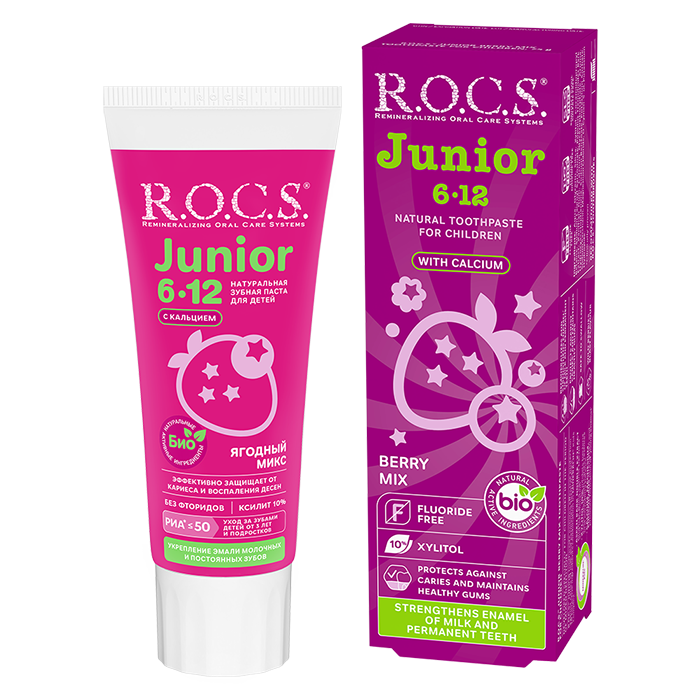
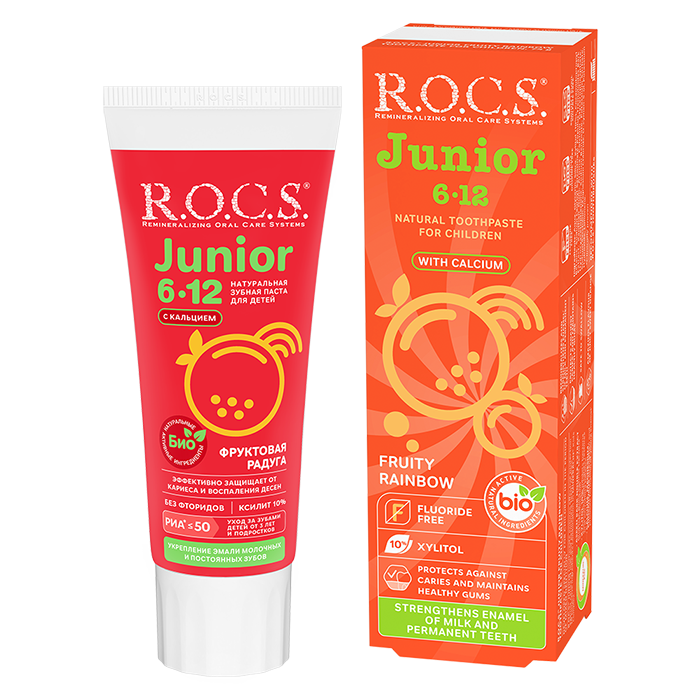
Fluoride-free toothpastes in the R.O.C.S. Junior line are designed for oral care in children ages 6–12 during the mixed dentition period. The toothpaste's gentle base provides thorough cleaning.
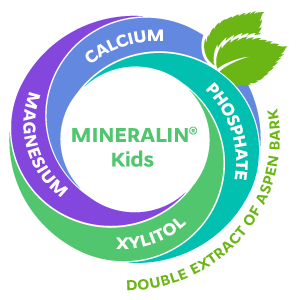
The ingredients are chosen to address the main drivers of inflammation during the tooth transition period: aspen bark double extract contains salicylates with a direct anti-inflammatory effect, while xylitol normalizes the oral microflora.
Active minerals strengthen primary teeth and speed up remineralization of newly erupted permanent teeth.
Available in two flavors: berry and citrus.
* Russian Abrasivity Index reflects the cleaning capacity level of oral care products and polishing pastes. Products with a higher RIA value have enhanced cleaning properties, but are also a risk factor for the development of non-carious dental lesions, therefore the choice of toothpaste should be guided by the condition of the hard dental tissues.
The DRC group of companies, in collaboration with the Institute of Digital Dentistry of the RUDN Medical Institute, has developed and is implementing a new toothpaste abrasivity measurement standard in Russia that meets the highest requirements: safety, accuracy, reproducibility. Принято. This methodology is an alternative to the RDA measurement method and offers a number of advantages. Its effectiveness has been confirmed by a large-scale experimental and clinical study involving 534 patients.
The methodology is based on a rotary machine and digital technologies developed by a research group of dentists, physicists, and digital modeling specialists. QLF diagnostics, intraoral scanning, and digital analysis were used in the work, which made it possible to obtain objective data on tooth wear and the influence of abrasivity over time.
More detailed information on the Russian Abrasivity Index (RIA)
A study of R.O.C.S. Junior toothpaste confirming its hygiene effectiveness and protection against gum inflammation, including in children undergoing orthodontic treatment with removable myofunctional appliances:
A 3-month study involved 42 children undergoing orthodontic treatment with standard myofunctional appliances. In the three experimental groups, children independently selected one of three R.O.C.S. Junior toothpaste varieties ("Berry Mix," "Fruit Rainbow," or "Chocolate and Caramel") and used it for 3 months. The control group received only standard hygiene recommendations without being given toothpaste. The assessment was carried out using the Fedorov–Volodkina hygiene index and the PMA index at baseline, after 1 month, and after 3 months.
Children in all three groups using R.O.C.S. Junior showed statistically significant improvement in hygiene and gum condition parameters (p ≤ 0.05) compared to the control group as early as 1 month, and the positive trend was maintained at 3 months. No statistically significant differences between the three toothpaste flavor varieties were found (p > 0.005), which confirms the equal effectiveness of all varieties. Children's independent choice of toothpaste was associated with higher adherence to regular oral hygiene.
Thus, the use of R.O.C.S. Junior toothpastes in children aged 6–12 years undergoing orthodontic treatment is an effective measure for improving the hygienic state of the oral cavity, regardless of the flavor chosen. Taking the child's taste and visual preferences into account when selecting a hygiene product increases motivation, which contributes to the success of caries and inflammatory gum disease prevention.
A long-term study confirming the anti-caries effect of R.O.C.S. toothpaste with xylitol and active minerals (calcium glycerophosphate + magnesium chloride):
A two-year program of supervised toothbrushing carried out in schools on children aged 6-7 using R.O.C.S. (Re-mineralizing Oral Care System) toothpastes has shown very effective results in reducing the OHI-S index scores by 53-57%, the GI index scores by 57-73% and the 2-year DMFT scores by 29-32%. Remineralizing toothpastes with-out fluorine, containing 500 ppm AmF or 1000 ppm NaF, were as effective in terms of improving the oral health of the schoolchildren.
R.O.C.S. toothpaste with active minerals (calcium glycerophosphate + magnesium chloride) and xylitol saturates enamel with minerals and increases caries resistance and the rate of tooth remineralization:
The study found that R.O.C.S. toothpaste containing sources of calcium, phosphate, and magnesium, without fluoride, enhances caries resistance of teeth no less effectively than a toothpaste containing sodium fluoride at maximum concentrations (1500 ppm F–).
R.O.C.S. toothpaste significantly increases the rate of remineralization of teeth exposed to acid, and, due to its ability to limit plaque growth, allows achieving a good level of oral hygiene within one week of use.
Enamel tunnels are microstructures that curve in an S-shape along the bundles of enamel prisms and extend to the dentin, penetrating it in the form of enamel bridges, where metabolic exchange between the enamel and dentin takes place. On the enamel surface, these tunnels open as enamel pores. X-ray spectral microanalysis and planar spectrograms show that the walls of enamel tunnels and the areas near them contain mainly mineral components (Ca, Ba, Cd, Sr, P, Si, As, C, K, Br, I, Cl), while the lumen contains organic components. It has been established that the mineral component of R.O.C.S. toothpastes actively penetrates through the enamel tunnels into the area of the enamel-dentin junction and the superficial layers of the dentin, exerting a positive effect on the structural and functional caries resistance of teeth.
Evidence of the prebiotic and anti-adhesive properties of xylitol (normalization of microflora, protection against cariogenic bacteria and Candida fungi):
The high prevalence of caries in young children necessitates the use of therapeutic and preventive products that target the primary etiopathogenetic factor of this disease — pathogenic microflora. This study presents comparative data on the antimicrobial effectiveness of products containing xylitol and chlorhexidine, as well as their effect on the microbiocenosis composition of the dental biofilm.
A total of 30 patients aged 12 to 36 months with early childhood caries (18 boys and 12 girls) were followed for one month. The patients were divided into two equal groups using a blinded method:
It was recommended that the remineralizing gels be applied 4–5 times a day after toothbrushing. All procedures were performed by the patients' parents at home after receiving prior instruction.
At baseline and at the end of the prescribed treatment course, all patients underwent molecular biology testing using multiplex PCR at the NIMSI laboratory.
In group 1, a significant reduction in colonization by cariogenic species was detected, along with a positive effect of the R.O.C.S. Medical Minerals remineralizing gel components on the ratio of cariogenic to resident species, as well as a decrease in the quantity and frequency of detection of certain periodontopathogenic anaerobic bacteria (Table 1). An important positive feature of the change in the dental biofilm microbiocenosis composition in the first group was also the disappearance of Candida fungi.
Examination of the microbial flora of dental plaque in group 2 patients one month after treatment showed only some positive shifts in the ratio of cariogenic to normal flora, and a decrease in the frequency of detection of certain virulent strains. At the same time, the quantity and frequency of detection of representatives of the resident bacterial group — enterococci — decreased. In addition, the detection rate of the yeast-like fungus Candida albicans increased, with a statistically significant rise in the fungal colonization of dental plaque. These data indicate the development of dysbiosis with the use of chlorhexidine.
Table 1. Comparative assessment of changes in the frequency of detection of microbial flora in dental plaque between the two groups after a course of therapy
| Genus, species of bacteria | 0.1% chlorhexidine | R.O.C.S. Medical Minerals with xylitol |
|---|---|---|
| Streptococcus mutans (cariogenic strain) | no change | 45.4% reduction |
| Actinomyces spp. (cariogenic strain) | 33.3% reduction | 44.5% reduction |
| Veillonella parvula (resident) | 24.7% increase | 40.2% increase |
| Porphyromonas gingivalis (periodontopathogen) | 66.5% reduction | no change |
| Prevotella melaninogenica (virulent strain) | 20% increase | 44.5% reduction |
| Fusobacterium nucleatum (periodontopathogen) | 4.8-fold increase | 33.5% reduction |
| Candida albicans (fungus, pathogen) | 49.8% increase | complete disappearance |
A clinical examination after one month showed no new carious cavities or demineralization foci in group 1 patients; existing chalky spots regained their luster; the progression of carious defects was halted; and signs of catarrhal gingivitis disappeared.
During the clinical examination of group 2 patients, no new carious cavities were recorded either; the disappearance of catarrhal gingivitis signs was observed in 80% of patients (of those who had it at baseline).
The inclusion of both xylitol and chlorhexidine as antimicrobial therapy in the comprehensive treatment plan for early childhood caries leads to a reduction in the detection frequency and colonization level of cariogenic and periodontopathogenic flora in dental plaque.
The data presented indicate a more physiological action of xylitol; it has a positive effect on the microbiocenosis composition of the dental biofilm, normalizing the qualitative (species) composition and the quantitative bacterial load of both cariogenic and stabilizing resident species.
Very few substances are known today that can significantly affect the caries-causing environment in the mouth and reduce the risk of tooth decay. One of the most widely studied substances with an anti-caries effect is xylitol. However, the antibacterial mechanism of xylitol is not fully understood. This study provides data confirming xylitol's ability to significantly inhibit the adhesion of oral streptococci, the primary formers of dental plaque. These bacteria delay the development of caries- and periodontal disease-causing bacteria on tooth surfaces through a mechanism called co-adhesion. We also revealed the ability of xylitol to inhibit the adhesion of Streptococcus sobrinus, a microorganism associated with caries, and Staphylococcus aureus, which increases the virulence level of dental plaque. This mechanism of action is realised in toothpaste within the time period traditionally recommended for brushing teeth.
Aqua, Glycerin, Silica, Xylitol, Cocamidopropyl Betaine, Sodium Lauroyl Sarcosinate, Populus Tremuloides Bark Extract, Xanthan Gum, Calcium Glycerophosphate, Aroma, Hydroxyacetophenone, Sodium Benzoate, Potassium Sorbate, Sodium Saccharin, Magnesium Chloride, O-cymen-5-ol, Potassium Hydroxide.
Brush with R.O.C.S. toothpaste twice a day (morning and evening) using a children's toothbrush. Recommended toothbrushing time is 2-3 minutes.
Preschool children should brush their teeth under adult supervision.
R.O.C.S. PERIODONT toothpaste is a comprehensive solution for managing the symptoms of inflammatory periodontal diseases, as well as tooth hypersensitivity associated with these conditions.
The plant extracts have a pronounced anti-inflammatory effect on periodontal tissues, reduce gum bleeding and possess a broad spectrum of antimicrobial action. Sodium bicarbonate provides a decongestant effect.
Hydroxyapatite and active minerals help protect hard dental tissues and alleviate tooth sensitivity when the tooth neck is exposed.
Comprehensive care for teeth and gums in cases of inflammatory periodontal diseases.
A white toothpaste with a mild mint flavor that does not cause a burning sensation.
* Russian Abrasivity Index reflects the cleaning capacity level of oral care products and polishing pastes. Products with a higher RIA value have enhanced cleaning properties, but are also a risk factor for the development of non-carious dental lesions, therefore the choice of toothpaste should be guided by the condition of the hard dental tissues.
The DRC group of companies, in collaboration with the Institute of Digital Dentistry of the RUDN Medical Institute, has developed and is implementing a new toothpaste abrasivity measurement standard in Russia that meets the highest requirements: safety, accuracy, reproducibility. Принято. This methodology is an alternative to the RDA measurement method and offers a number of advantages. Its effectiveness has been confirmed by a large-scale experimental and clinical study involving 534 patients.
The methodology is based on a rotary machine and digital technologies developed by a research group of dentists, physicists, and digital modeling specialists. QLF diagnostics, intraoral scanning, and digital analysis were used in the work, which made it possible to obtain objective data on tooth wear and the influence of abrasivity over time.
More detailed information on the Russian Abrasivity Index (RIA)Study of the properties of R.O.C.S. Periodont toothpaste:
This study investigated the efficacy and safety of R.O.C.S. Periodont toothpaste for the oral care of patients with chronic periodontitis and dental hard tissue hypersensitivity.
The study involved 32 people (mean age: 31.8 years) aged between 20 and 45 years with chronic periodontitis of mild to moderate severity combined with catarrhal gingivitis and hypersensitivity of dental hard tissues.
All patients were instructed in proper brushing techniques and underwent professional oral hygiene treatment. All patients used R.O.C.S. Periodont toothpaste for two months.
The oral hygiene index of patients in the study group improved significantly after two weeks of use and remained at this level throughout the observation period (Fig. 1).
The decrease in the inflammatory process of the gums (Fig. 2) could be partly due to professional oral hygiene, but using the toothpaste allowed the periodontal index to remain stable for 2 months.
Using Periodont toothpaste levelled the increase in sensitivity of the hard tissues of the teeth, which often occurs after professional oral hygiene. After two months, it reduced the intensity of sensitivity (Fig. 3).
Fig. 1. O'Leary hygiene index, %
Fig. 2. PMA index, %
Fig. 3. Air-cold test, points
In all cases of gingival inflammation (PMA index > 25%), fluorescence diagnostics using the Proof attachment on the VistaCam (405 nm) revealed the presence of plaque in the vestibular region and in areas of inflamed periodontium (Fig. 4,6).
Fig. 4. Patient M., aged 34. Plaque accumulation in the vestibular region of the teeth with transition to the inflamed gingiva. Complaints of bleeding gums and tooth sensitivity.
Fig. 5. Patient M., aged 34. Status two months after the start of the study: no plaque present. The periodontium shows no signs of inflammation.
Fig. 6. Patient N., aged 35. Plaque is present on the inflamed gums around all teeth. The patient complains of bleeding gums and tooth sensitivity. Hard tissue sensitivity: 3 points.
Fig. 7. Patient N., 35 years old. Condition 2 months after beginning to use the toothpaste. No plaque was detected and the periodontium showed no signs of inflammation. Sensitivity of hard tissues: 1 point.
During the safety study of the toothpaste, it was found that the activation coefficient of peripheral blood basophils in patients in the study group was within the normal range (1.05 ± 0.02).
Using R.O.C.S. Periodont toothpaste in patients with chronic periodontitis:
R.O.C.S. toothpaste with active minerals (calcium glycerophosphate + magnesium chloride) and xylitol saturates enamel with minerals, increases caries resistance and the rate of tooth remineralization:
The study found that R.O.C.S. toothpaste containing sources of calcium, phosphate, and magnesium, without fluoride, enhances caries resistance of teeth no less effectively than a toothpaste containing sodium fluoride at maximum concentrations (1500 ppm F–).
R.O.C.S. toothpaste significantly increases the rate of remineralization of teeth exposed to acid, and, due to its ability to limit plaque growth, allows achieving a good level of oral hygiene within one week of use.
Enamel tunnels are microstructures that curve in an S-shape along the bundles of enamel prisms and extend to the dentin, penetrating it in the form of enamel bridges, where metabolic exchange between the enamel and dentin takes place. On the enamel surface, these tunnels open as enamel pores. X-ray spectral microanalysis and planar spectrograms show that the walls of enamel tunnels and the areas near them contain mainly mineral components (Ca, Ba, Cd, Sr, P, Si, As, C, K, Br, I, Cl), while the lumen contains organic components. It has been established that the mineral component of R.O.C.S. toothpastes actively penetrates through the enamel tunnels into the area of the enamel-dentin junction and the superficial layers of the dentin, exerting a positive effect on the structural and functional caries resistance of teeth.
Confirmation of the prebiotic and anti-adhesive properties of xylitol (normalization of microflora, protection against cariogenic bacteria and Candida fungi):
The high prevalence of caries in young children necessitates the use of therapeutic and preventive products that target the primary etiopathogenetic factor of this disease — pathogenic microflora. This study presents comparative data on the antimicrobial effectiveness of products containing xylitol and chlorhexidine, as well as their effect on the microbiocenosis composition of the dental biofilm.
A total of 30 patients aged 12 to 36 months with early childhood caries (18 boys and 12 girls) were followed for one month. The patients were divided into two equal groups using a blinded method:
It was recommended that the remineralizing gels be applied 4–5 times a day after toothbrushing. All procedures were performed by the patients' parents at home after receiving prior instruction.
At baseline and at the end of the prescribed treatment course, all patients underwent molecular biology testing using multiplex PCR at the NIMSI laboratory.
In group 1, a significant reduction in colonization by cariogenic species was detected, along with a positive effect of the R.O.C.S. Medical Minerals remineralizing gel components on the ratio of cariogenic to resident species, as well as a decrease in the quantity and frequency of detection of certain periodontopathogenic anaerobic bacteria (Table 1). An important positive feature of the change in the dental biofilm microbiocenosis composition in the first group was also the disappearance of Candida fungi.
Examination of the microbial flora of dental plaque in group 2 patients one month after treatment showed only some positive shifts in the ratio of cariogenic to normal flora, and a decrease in the frequency of detection of certain virulent strains. At the same time, the quantity and frequency of detection of representatives of the resident bacterial group — enterococci — decreased. In addition, the detection rate of the yeast-like fungus Candida albicans increased, with a statistically significant rise in the fungal colonization of dental plaque. These data indicate the development of dysbiosis with the use of chlorhexidine.
Table 1. Comparative assessment of changes in the frequency of detection of microbial flora in dental plaque between the two groups after a course of therapy
| Genus, species of bacteria | 0.1% chlorhexidine | R.O.C.S. Medical Minerals with xylitol |
|---|---|---|
| Streptococcus mutans (cariogenic strain) | no change | 45.4% reduction |
| Actinomyces spp. (cariogenic strain) | 33.3% reduction | 44.5% reduction |
| Veillonella parvula (resident) | 24.7% increase | 40.2% increase |
| Porphyromonas gingivalis (periodontopathogen) | 66.5% reduction | no change |
| Prevotella melaninogenica (virulent strain) | 20% increase | 44.5% reduction |
| Fusobacterium nucleatum (periodontopathogen) | 4.8-fold increase | 33.5% reduction |
| Candida albicans (fungus, pathogen) | 49.8% increase | complete disappearance |
A clinical examination after one month showed no new carious cavities or demineralization foci in group 1 patients; existing chalky spots regained their luster; the progression of carious defects was halted; and signs of catarrhal gingivitis disappeared.
During the clinical examination of group 2 patients, no new carious cavities were recorded either; the disappearance of catarrhal gingivitis signs was observed in 80% of patients (of those who had it at baseline).
The inclusion of both xylitol and chlorhexidine as antimicrobial therapy in the comprehensive treatment plan for early childhood caries leads to a reduction in the detection frequency and colonization level of cariogenic and periodontopathogenic flora in dental plaque.
The data presented indicate a more physiological action of xylitol; it has a positive effect on the microbiocenosis composition of the dental biofilm, normalizing the qualitative (species) composition and the quantitative bacterial load of both cariogenic and stabilizing resident species.
Very few substances are known today that can significantly affect the caries-causing environment in the mouth and reduce the risk of tooth decay. One of the most widely studied substances with an anti-caries effect is xylitol. However, the antibacterial mechanism of xylitol is not fully understood. This study provides data confirming xylitol's ability to significantly inhibit the adhesion of oral streptococci, the primary formers of dental plaque. These bacteria delay the development of caries- and periodontal disease-causing bacteria on tooth surfaces through a mechanism called co-adhesion. We also revealed the ability of xylitol to inhibit the adhesion of Streptococcus sobrinus, a microorganism associated with caries, and Staphylococcus aureus, which increases the virulence level of dental plaque. This mechanism of action is realised in toothpaste within the time period traditionally recommended for brushing teeth.
Aqua, Glycerin, Silica, Xylitol, Sodium Bicarbonate, Hydroxyapatite, Populus Tremuloides Bark Extract, Xanthan Gum, Aroma, Cocamidopropyl Betaine, Lonicera Caprifolium Extract, Lonicera Japonica Extract, Calcium Glycerophosphate, Sodium Lauroyl Sarcosinate, Sodium saccharin, Sodium Benzoate, Sodium Methylparaben, Sodium Propylparaben, O-cymen-5-ol, Magnesium Chloride, Potassium Hydroxide, Limonene, Linalool.
Use twice a day (morning and evening) with a soft or medium-bristled toothbrush. Brushing time is 2-3 minutes.
Suitable for all ages, with no time restrictions on use.
After toothbrushing, as well as after each meal, we recommend using R.O.C.S. mouthwash with plant extracts or the R.O.C.S. Whitening Black Edition peroxide-containing mouthwash.

Fluoride-free toothpastes in the R.O.C.S. Junior line are designed for oral care in children ages 6–12 during the mixed dentition period. The toothpaste's gentle base provides thorough cleaning.
The ingredients are chosen to address the main drivers of inflammation during the tooth transition period: aspen bark double extract contains salicylates with a direct anti-inflammatory effect, while xylitol normalizes the oral microflora.
Active minerals strengthen primary teeth and speed up remineralization of newly erupted permanent teeth.
Available in two flavors: berry and citrus.
* Russian Abrasivity Index reflects the cleaning capacity level of oral care products and polishing pastes. Products with a higher RIA value have enhanced cleaning properties, but are also a risk factor for the development of non-carious dental lesions, therefore the choice of toothpaste should be guided by the condition of the hard dental tissues.
The DRC group of companies, in collaboration with the Institute of Digital Dentistry of the RUDN Medical Institute, has developed and is implementing a new toothpaste abrasivity measurement standard in Russia that meets the highest requirements: safety, accuracy, reproducibility. Принято. This methodology is an alternative to the RDA measurement method and offers a number of advantages. Its effectiveness has been confirmed by a large-scale experimental and clinical study involving 534 patients.
The methodology is based on a rotary machine and digital technologies developed by a research group of dentists, physicists, and digital modeling specialists. QLF diagnostics, intraoral scanning, and digital analysis were used in the work, which made it possible to obtain objective data on tooth wear and the influence of abrasivity over time.
More detailed information on the Russian Abrasivity Index (RIA)
A study of R.O.C.S. Junior toothpaste confirming its hygiene effectiveness and protection against gum inflammation, including in children undergoing orthodontic treatment with removable myofunctional appliances:
A 3-month study involved 42 children undergoing orthodontic treatment with standard myofunctional appliances. In the three experimental groups, children independently selected one of three R.O.C.S. Junior toothpaste varieties ("Berry Mix," "Fruit Rainbow," or "Chocolate and Caramel") and used it for 3 months. The control group received only standard hygiene recommendations without being given toothpaste. The assessment was carried out using the Fedorov–Volodkina hygiene index and the PMA index at baseline, after 1 month, and after 3 months.
Children in all three groups using R.O.C.S. Junior showed statistically significant improvement in hygiene and gum condition parameters (p ≤ 0.05) compared to the control group as early as 1 month, and the positive trend was maintained at 3 months. No statistically significant differences between the three toothpaste flavor varieties were found (p > 0.005), which confirms the equal effectiveness of all varieties. Children's independent choice of toothpaste was associated with higher adherence to regular oral hygiene.
Thus, the use of R.O.C.S. Junior toothpastes in children aged 6–12 years undergoing orthodontic treatment is an effective measure for improving the hygienic state of the oral cavity, regardless of the flavor chosen. Taking the child's taste and visual preferences into account when selecting a hygiene product increases motivation, which contributes to the success of caries and inflammatory gum disease prevention.
A long-term study confirming the anti-caries effect of R.O.C.S. toothpaste with xylitol and active minerals (calcium glycerophosphate + magnesium chloride):
A two-year program of supervised toothbrushing carried out in schools on children aged 6-7 using R.O.C.S. (Re-mineralizing Oral Care System) toothpastes has shown very effective results in reducing the OHI-S index scores by 53-57%, the GI index scores by 57-73% and the 2-year DMFT scores by 29-32%. Remineralizing toothpastes with-out fluorine, containing 500 ppm AmF or 1000 ppm NaF, were as effective in terms of improving the oral health of the schoolchildren.
R.O.C.S. toothpaste with active minerals (calcium glycerophosphate + magnesium chloride) and xylitol saturates enamel with minerals and increases caries resistance and the rate of tooth remineralization:
The study found that R.O.C.S. toothpaste containing sources of calcium, phosphate, and magnesium, without fluoride, enhances caries resistance of teeth no less effectively than a toothpaste containing sodium fluoride at maximum concentrations (1500 ppm F–).
R.O.C.S. toothpaste significantly increases the rate of remineralization of teeth exposed to acid, and, due to its ability to limit plaque growth, allows achieving a good level of oral hygiene within one week of use.
Enamel tunnels are microstructures that curve in an S-shape along the bundles of enamel prisms and extend to the dentin, penetrating it in the form of enamel bridges, where metabolic exchange between the enamel and dentin takes place. On the enamel surface, these tunnels open as enamel pores. X-ray spectral microanalysis and planar spectrograms show that the walls of enamel tunnels and the areas near them contain mainly mineral components (Ca, Ba, Cd, Sr, P, Si, As, C, K, Br, I, Cl), while the lumen contains organic components. It has been established that the mineral component of R.O.C.S. toothpastes actively penetrates through the enamel tunnels into the area of the enamel-dentin junction and the superficial layers of the dentin, exerting a positive effect on the structural and functional caries resistance of teeth.
Evidence of the prebiotic and anti-adhesive properties of xylitol (normalization of microflora, protection against cariogenic bacteria and Candida fungi):
The high prevalence of caries in young children necessitates the use of therapeutic and preventive products that target the primary etiopathogenetic factor of this disease — pathogenic microflora. This study presents comparative data on the antimicrobial effectiveness of products containing xylitol and chlorhexidine, as well as their effect on the microbiocenosis composition of the dental biofilm.
A total of 30 patients aged 12 to 36 months with early childhood caries (18 boys and 12 girls) were followed for one month. The patients were divided into two equal groups using a blinded method:
It was recommended that the remineralizing gels be applied 4–5 times a day after toothbrushing. All procedures were performed by the patients' parents at home after receiving prior instruction.
At baseline and at the end of the prescribed treatment course, all patients underwent molecular biology testing using multiplex PCR at the NIMSI laboratory.
In group 1, a significant reduction in colonization by cariogenic species was detected, along with a positive effect of the R.O.C.S. Medical Minerals remineralizing gel components on the ratio of cariogenic to resident species, as well as a decrease in the quantity and frequency of detection of certain periodontopathogenic anaerobic bacteria (Table 1). An important positive feature of the change in the dental biofilm microbiocenosis composition in the first group was also the disappearance of Candida fungi.
Examination of the microbial flora of dental plaque in group 2 patients one month after treatment showed only some positive shifts in the ratio of cariogenic to normal flora, and a decrease in the frequency of detection of certain virulent strains. At the same time, the quantity and frequency of detection of representatives of the resident bacterial group — enterococci — decreased. In addition, the detection rate of the yeast-like fungus Candida albicans increased, with a statistically significant rise in the fungal colonization of dental plaque. These data indicate the development of dysbiosis with the use of chlorhexidine.
Table 1. Comparative assessment of changes in the frequency of detection of microbial flora in dental plaque between the two groups after a course of therapy
| Genus, species of bacteria | 0.1% chlorhexidine | R.O.C.S. Medical Minerals with xylitol |
|---|---|---|
| Streptococcus mutans (cariogenic strain) | no change | 45.4% reduction |
| Actinomyces spp. (cariogenic strain) | 33.3% reduction | 44.5% reduction |
| Veillonella parvula (resident) | 24.7% increase | 40.2% increase |
| Porphyromonas gingivalis (periodontopathogen) | 66.5% reduction | no change |
| Prevotella melaninogenica (virulent strain) | 20% increase | 44.5% reduction |
| Fusobacterium nucleatum (periodontopathogen) | 4.8-fold increase | 33.5% reduction |
| Candida albicans (fungus, pathogen) | 49.8% increase | complete disappearance |
A clinical examination after one month showed no new carious cavities or demineralization foci in group 1 patients; existing chalky spots regained their luster; the progression of carious defects was halted; and signs of catarrhal gingivitis disappeared.
During the clinical examination of group 2 patients, no new carious cavities were recorded either; the disappearance of catarrhal gingivitis signs was observed in 80% of patients (of those who had it at baseline).
The inclusion of both xylitol and chlorhexidine as antimicrobial therapy in the comprehensive treatment plan for early childhood caries leads to a reduction in the detection frequency and colonization level of cariogenic and periodontopathogenic flora in dental plaque.
The data presented indicate a more physiological action of xylitol; it has a positive effect on the microbiocenosis composition of the dental biofilm, normalizing the qualitative (species) composition and the quantitative bacterial load of both cariogenic and stabilizing resident species.
Very few substances are known today that can significantly affect the caries-causing environment in the mouth and reduce the risk of tooth decay. One of the most widely studied substances with an anti-caries effect is xylitol. However, the antibacterial mechanism of xylitol is not fully understood. This study provides data confirming xylitol's ability to significantly inhibit the adhesion of oral streptococci, the primary formers of dental plaque. These bacteria delay the development of caries- and periodontal disease-causing bacteria on tooth surfaces through a mechanism called co-adhesion. We also revealed the ability of xylitol to inhibit the adhesion of Streptococcus sobrinus, a microorganism associated with caries, and Staphylococcus aureus, which increases the virulence level of dental plaque. This mechanism of action is realised in toothpaste within the time period traditionally recommended for brushing teeth.
Aqua, Glycerin, Silica, Xylitol, Cocamidopropyl Betaine, Sodium Lauroyl Sarcosinate, Populus Tremuloides Bark Extract, Xanthan Gum, Calcium Glycerophosphate, Aroma, Hydroxyacetophenone, Sodium Benzoate, Potassium Sorbate, Sodium Saccharin, Magnesium Chloride, O-cymen-5-ol, Potassium Hydroxide.
Brush with R.O.C.S. toothpaste twice a day (morning and evening) using a children's toothbrush. Recommended toothbrushing time is 2-3 minutes.
Preschool children should brush their teeth under adult supervision.