


R.O.C.S. toothpaste ingredients
Toothpaste is a complex multi-component system containing base components and therapeutic and preventive components.1 Any toothpaste contains base components that determine its primary function and organoleptic properties:

- Abrasive – the main component of toothpaste that provides mechanical cleaning and polishing of the enamel. R.O.C.S. toothpastes use silica with controlled abrasivity, as well as dicalcium phosphate dihydrate, the mildest abrasive in use today.
- Humectants – substances of plant origin, such as glycerin and sorbitol. Humectants prevent the toothpaste from drying out.
- Water – an ideal solvent, used in almost all toothpastes except for special water-free formulations. Before entering the reactor, water undergoes multi-stage purification.
- Binding and stabilizing agents – polymeric substances that increase the viscosity of the formulation. R.O.C.S. toothpastes use a natural chemical compound for this purpose – xanthan gum.
- Surfactants (foaming agents), whose function is to facilitate the removal of adhered bacterial film and to suspend the removed deposits. The greatest controversy surrounds the safety of such a detergent as sodium lauryl sulfate (SLS). It is known that in high concentrations and with prolonged application, it can cause irritation of the skin and mucous membranes. Therefore, toothpastes containing SLS are not recommended for people with sensitive gums or in the presence of aphthae in the oral cavity. Most R.O.C.S. toothpastes, especially children's toothpastes and the specialized PRO series, use a milder "green" surfactant – cocamidopropyl betaine.
- Flavorings are usually based on natural purified peppermint oil with the addition of trace concentrations of menthol for a cooling effect. The flavor may also be modified with clove, eucalyptus, anise, etc. Fruit flavorings without mint are used in the production of children's toothpastes. The flavorings included in R.O.C.S. products undergo allergen testing and receive all necessary quality certificates. Toothpastes for the youngest children may contain no flavorings at all, because a child's taste receptors develop gradually, and a mild sweet taste is sufficient for babies.
-
Preservatives – another "unhealthy" component in the opinion of many consumers. However, products without preservatives have an extremely limited shelf life, and using such a product after its expiration date is truly unsafe.
At one time, parabens – esters of para-hydroxybenzoic acid – caused a great deal of controversy after they were detected in breast cancer cells. The article published in 2003 was immediately criticized for its insufficient sample size and the lack of valid cause-and-effect relationships. Nevertheless, numerous studies were conducted that ultimately confirmed the safety of parabens even with long-term use. Despite the fact that parabens are found in various plants, including edible ones (for example, methylparaben has been detected in blueberries), and are essentially among the most thoroughly studied preservatives, many consumers, in pursuit of the "paraben-free" label, prefer products with less studied and potentially hazardous preservatives.2
R.O.C.S. products use various types of safe preservative systems: parabens (methylparaben, propylparaben) in low concentrations, O-cymen-5-ol – an isomer of thymol, a component of essential oils, as well as the mild preservative agents sodium benzoate and potassium sorbate, which are widely used in the food industry. In addition, some natural active components with antimicrobial activity also act as preservatives. - Colorants. The color of R.O.C.S. toothpastes is due to natural components without the addition of artificial colorants.
Toothpastes that contain only base components and are intended exclusively for the mechanical removal of dental plaque are called hygienic. All R.O.C.S. toothpastes are therapeutic and preventive, because in addition to the components listed above, they also contain active components that eliminate the factors contributing to the development of dental and periodontal tissue diseases.
Active components
For the production of R.O.C.S. toothpastes, gels, and mouthwashes, we use only safe, proven components in effective concentrations and with known pharmaceutical action. We take into account not only the properties of each ingredient individually, but also its compatibility with others to enhance the beneficial properties of the final product. To preserve the activity of plant components, "cold processing" technology is used.
Components for caries prevention


Moisturizing and mucosal protection
Reducing sensitivity


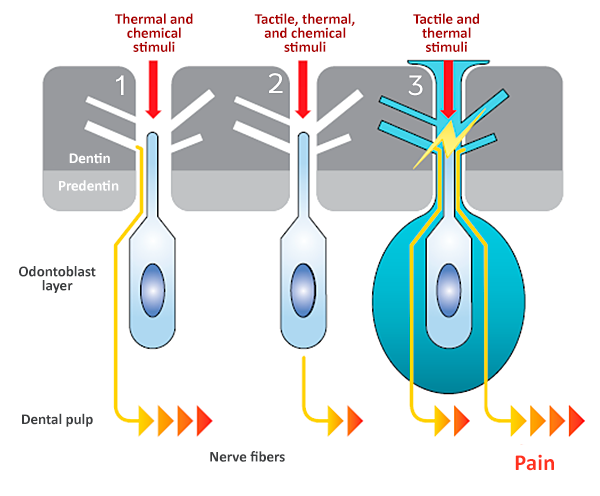
Theories of tooth hypersensitivity
Tooth hypersensitivity is a condition in which teeth respond inadequately to ordinary physical and chemical stimuli. There are several theories that describe dentin hypersensitivity.
Hide
In general, two ways to reduce sensitivity can be distinguished: altering the ability of neurons to generate impulses and protecting receptors from irritants.


