Product catalog

filters
product search
filters

Description

Active ingredients
Properties

RIA

Clinical trials

Ingredients

Application
Description
Features
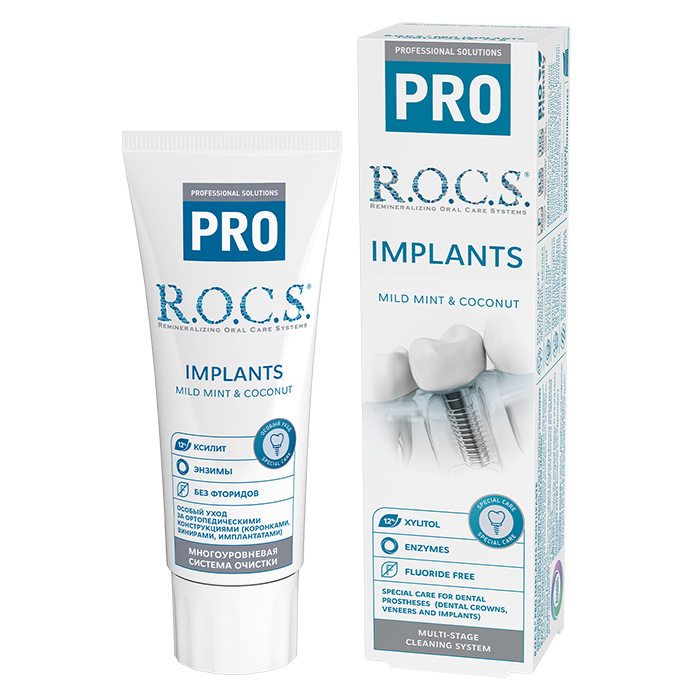
The unique R.O.C.S. PRO Implants toothpaste delivers thorough hygiene and enhanced care for soft tissues, helping prevent gum inflammation — especially important around implants and other prosthetic appliances, where it helps preserve and extend their service life.
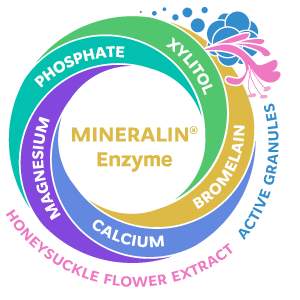
Bromelain combined with xylitol reduces bacterial adhesion, tackling the local drivers of inflammation and keeping teeth and gums clean for longer.
Oral antimicrobial protection is boosted by honeysuckle flower extract, which also has tissue-protective properties.
The formula is also enhanced with taurine to normalize energy metabolism in periodontal tissues.
The toothpaste's mineralizing complex strengthens tooth enamel and increases its caries resistance.
Indications
- Daily care with implants, crowns, and veneers.
- Cleaning removable dentures.
Organoleptic properties
A cream-colored toothpaste with white granules and a mild, refreshing flavor. The color may range from cream to brown due to its plant-based ingredients. Contains no artificial colorants.
Active ingredients


Properties
- Effectively yet gently cleans teeth and prosthetic appliances.
- Slows plaque formation, keeping the mouth clean until the next brushing.
- Normalizes the oral microflora and reduces pathogenic bacterial load.
- Reduces gum inflammation and bleeding.
- Strengthens teeth by saturating them with minerals.
- Provides a high level of protection against caries and inflammatory periodontal diseases.
- Reduces the risk of peri-implantitis.
RIA

* Russian Abrasivity Index reflects the cleaning capacity level of oral care products and polishing pastes. Products with a higher RIA value have enhanced cleaning properties, but are also a risk factor for the development of non-carious dental lesions, therefore the choice of toothpaste should be guided by the condition of the hard dental tissues.
Russian Abrasivity Index (RIA): a new stage in oral hygiene standardization
The DRC group of companies, in collaboration with the Institute of Digital Dentistry of the RUDN Medical Institute, has developed and is implementing a new toothpaste abrasivity measurement standard in Russia that meets the highest requirements: safety, accuracy, reproducibility. Принято. This methodology is an alternative to the RDA measurement method and offers a number of advantages. Its effectiveness has been confirmed by a large-scale experimental and clinical study involving 534 patients.
The methodology is based on a rotary machine and digital technologies developed by a research group of dentists, physicists, and digital modeling specialists. QLF diagnostics, intraoral scanning, and digital analysis were used in the work, which made it possible to obtain objective data on tooth wear and the influence of abrasivity over time.
Download RIA research protocol (in Russian):

Clinical trials
R.O.C.S. toothpaste with bromelain significantly improves oral hygiene, slows plaque formation and reduces its cariogenicity, provides a long-lasting clean feeling, and reduces gum inflammation and bleeding:
The study aimed to compare the effects of two toothpastes: one containing the broad-spectrum antiseptic triclosan and sodium fluoride ([F⁻] = 0.145%), and the other containing xylitol, bromelain, calcium glycerophosphate, and magnesium chloride. The study examined their impact on the hygienic state of the oral cavity, plaque formation rates, cariesogenicity, and gingivitis intensity. Over a period of three months, 60 volunteers aged 18–45 years of both sexes brushed their teeth with a sample of one of the toothpastes. R.O.C.S. toothpaste was more effective in all measured areas
R.O.C.S. toothpaste with a MINERALIN Enzyme complex slows down the formation of dental plaque, provides high cleaning efficacy and preventive action against dental caries and inflammatory periodontal diseases, and can be recommended to patients for the individual prevention of the most common dental diseases.
Download the article for free in Russian:
Adult volunteers (aged 22–40) brushed their teeth twice a day (morning and evening) with samples of toothpaste from different price categories for two months. All participants were provided with the same toothbrushes and received training in a standardised oral hygiene care method. The results of the study showed that the condition of the participants' oral cavities depended on the toothpaste used. Statistically significant positive changes were only observed when using enzyme-containing toothpastes from the medium and higher price categories, such as R.O.C.S. and Rembrandt. Using R.O.C.S. and Rembrandt toothpastes resulted in significant improvements in the oral hygiene of all participants. After two weeks from the start of the study, the anti-inflammatory efficacy of these toothpastes was 44.8% and 38.5%, respectively. During the R.O.C.S. toothpaste trial, many participants also reported that their teeth felt smooth for longer – until the next brushing.
Download the article for free in Russian:
The present study aimed to evaluate the effect of R.O.C.S. enzyme-containing toothpaste with bromelain and xylitol on the adhesion of microorganisms in the human oral cavity. A positive control was created using R.O.C.S. toothpaste with xylitol, but without the enzyme.
Anti-adhesive activity was studied using a culture of human embryonic musculocutaneous fibroblasts.
The test microorganism cultures were clinical strains of microorganisms isolated from the oral cavities of volunteers: Staphylococcus aureus, Streptococcus salivarius, Streptococcus sanguis and Streptococcus sobrinus.
A sample of the toothpaste at a dilution of 1:20,000 (in the presence of 50% human serum) and a culture of the test strain at a dose of 10⁸ KOU/ml were added to the cell culture and incubated at 37 °C. After incubation, the monolayer cells were washed to remove unattached bacteria by repeatedly changing the Eagle's medium. The cells were then fixed with ethyl alcohol, stained with Romanowsky-Giemsa, and examined under a microscope.
The degree of microbial adhesion was determined by the microbial load relative to the control, which was taken as 100%.
The study was carried out using the blind method. All studies were carried out three times.
After three minutes of incubation, which corresponds to the duration of normal tooth brushing, the suppression of adhesion was as follows:
- S.aureus - 80%
- Str.salivarius - 80%
- Str.sangius - 83%
- Str.sobrinius - 79%
However, when the exposure time was increased to 2 hours, the anti-adhesive efficacy decreased significantly. This seems to be due to the adhesion becoming reversible shortly after the strains were introduced into the model system, as adhesion usually becomes irreversible after 1–2 hours.

Fig. 1. Control fibroblast cells

Fig. 2. Cells + Str. salivarius

Fig. 3. Cells + S. salivarius + bromelain paste
(exposure 2h.)

Fig. 4. Cells + Str.salivarius + paste with bromelain
(exposure 3 min.)
Download the article for free in Russian:
In older patients with chronic periodontitis, using toothpaste with honeysuckle extract, xylitol, and bromelain improves oral hygiene and reduces gum inflammation:
A key aspect of oral aging is periodontal involvement. Periodontal diseases in older age groups occur against the background of a chronic low-intensity inflammatory process. Individual oral hygiene plays an important role in the treatment of inflammatory periodontal diseases and in maintaining stable remission. Due to the clinical and pathogenetic features of chronic periodontitis, individual oral hygiene products for elderly patients should have their own specific characteristics.
The study involved 175 elderly patients diagnosed with "chronic periodontitis" (ICD-10: K05.3; EFP, 2018: periodontitis grade I–II, type A–B). The patients underwent a comprehensive dental examination, as well as laboratory testing of oral fluid and buccal epithelium.
The results of the clinical and laboratory examination of elderly patients showed that the best cleansing and anti-inflammatory properties were found with the use of a preventive toothpaste containing honeysuckle extract, xylitol, and bromelain (R.O.C.S. PRO Implants).
When using this toothpaste in elderly patients with inflammatory periodontal diseases, a 43% reduction in OHI-S and an 18% reduction in the PMA index were observed. The effectiveness of the toothpaste is also confirmed by a 58% decrease in the oral fluid level of CRP, as well as a 51% decrease in the apoptosis index.
Download this article for free in Russian:
Effectiveness of R.O.C.S. toothpaste with bromelain in patients with removable dentures:
The study involved 30 patients over 40 years of age using removable prosthetic appliances (partial and complete removable plate dentures). The patients were advised to brush their teeth and removable acrylic appliances twice a day with R.O.C.S. toothpaste containing the proteolytic enzyme bromelain. After 2 weeks of using the toothpaste, the proportion of pathogenic microorganisms in the oral microflora decreased by 2.4 times, the number of cultured Candida albicans strains decreased by 76%, and in the majority of patients this strain was completely eliminated. Inflammatory symptoms in the mucosa of the denture-bearing area disappeared in the majority of patients (93% of cases). The results obtained in the study allow recommending toothpaste with the bromelain enzyme for continuous hygiene care in patients using partial and complete removable dentures.
Download this article for free in Russian:
R.O.C.S. toothpaste with active minerals (calcium glycerophosphate + magnesium chloride) and xylitol saturates enamel with minerals and increases caries resistance and the rate of tooth remineralization:
The study found that R.O.C.S. toothpaste containing sources of calcium, phosphate, and magnesium, without fluoride, enhances caries resistance of teeth no less effectively than a toothpaste containing sodium fluoride at maximum concentrations (1500 ppm F–).
R.O.C.S. toothpaste significantly increases the rate of remineralization of teeth exposed to acid, and, due to its ability to limit plaque growth, allows achieving a good level of oral hygiene within one week of use.
Download the article for free in Russian:
Enamel tunnels are microstructures that curve in an S-shape along the bundles of enamel prisms and extend to the dentin, penetrating it in the form of enamel bridges, where metabolic exchange between the enamel and dentin takes place. On the enamel surface, these tunnels open as enamel pores. X-ray spectral microanalysis and planar spectrograms show that the walls of enamel tunnels and the areas near them contain mainly mineral components (Ca, Ba, Cd, Sr, P, Si, As, C, K, Br, I, Cl), while the lumen contains organic components. It has been established that the mineral component of R.O.C.S. toothpastes actively penetrates through the enamel tunnels into the area of the enamel-dentin junction and the superficial layers of the dentin, exerting a positive effect on the structural and functional caries resistance of teeth.
Download this article for free in Russian:
The study found that R.O.C.S. toothpaste containing sources of calcium, phosphate, and magnesium, without fluoride, enhances caries resistance of teeth no less effectively than a toothpaste containing sodium fluoride at maximum concentrations (1500 ppm F–).
R.O.C.S. toothpaste significantly increases the rate of remineralization of teeth exposed to acid, and, due to its ability to limit plaque growth, allows achieving a good level of oral hygiene within one week of use.
Download the article for free in Russian:
A long-term study confirming the anti-caries effect of R.O.C.S. toothpaste with xylitol and active minerals (calcium glycerophosphate + magnesium chloride):
A two-year program of supervised toothbrushing carried out in schools on children aged 6-7 using R.O.C.S. (Re-mineralizing Oral Care System) toothpastes has shown very effective results in reducing the OHI-S index scores by 53-57%, the GI index scores by 57-73% and the 2-year DMFT scores by 29-32%. Remineralizing toothpastes with-out fluorine, containing 500 ppm AmF or 1000 ppm NaF, were as effective in terms of improving the oral health of the schoolchildren.
Download the article for free:
Ingredients
Aqua, Glycerin, Silica, Xylitol, Xanthan Gum, Calcium Glyceropospate, Cocamidopropyl Betaine, Sodium Lauroyl Sarcosinate, Aroma, Lonicera Caprifolium Extract, Lonicera Japonica Extract, Bromelain, Taurine, Sodium Benzoate, Sodium Saccharin, Magnesium Chloride, O-Cymen-5-ol.
Application
Brush twice a day (morning and evening). Recommended toothbrushing time is 2-3 minutes.
Suitable for all ages, with no time restrictions on use.
Description
Active ingredients
Properties
RIA
Clinical trials
Ingredients
Application
Description
Features
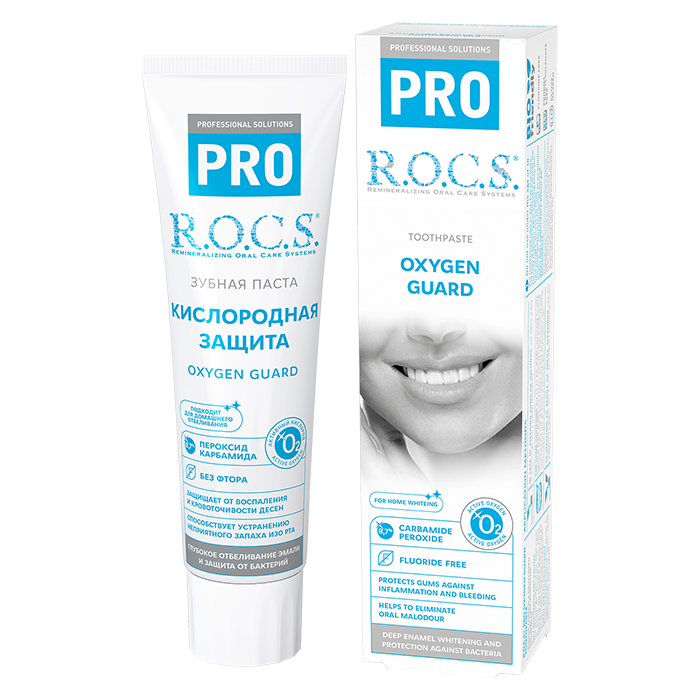
When R.O.C.S. PRO Oxygen Protection toothpaste meets saliva, it releases atomic oxygen, which suppresses the periodontopathogenic bacteria responsible for gum inflammation, bleeding, and bad breath.
The toothpaste whitens the way professional treatments do: active oxygen penetrates deep into the enamel and breaks down dark pigments.
Indications
- At-home tooth whitening
- Maintaining the results of in-office whitening
- Antibacterial gum protection
- Eliminating bad breath
Organoleptic properties
A gel-like toothpaste with a refreshing mint flavor.
Active ingredients

Properties
- When used in trays, whitens teeth by 1.5 to 3 shades on the Vita scale
- Locks in the results of in-office whitening
- Provides antibacterial action
- Reduces gum inflammation and bleeding
- Helps eliminate bad breath
RIA

* Russian Abrasivity Index reflects the cleaning capacity level of oral care products and polishing pastes. Products with a higher RIA value have enhanced cleaning properties, but are also a risk factor for the development of non-carious dental lesions, therefore the choice of toothpaste should be guided by the condition of the hard dental tissues.
Russian Abrasivity Index (RIA): a new stage in oral hygiene standardization
The DRC group of companies, in collaboration with the Institute of Digital Dentistry of the RUDN Medical Institute, has developed and is implementing a new toothpaste abrasivity measurement standard in Russia that meets the highest requirements: safety, accuracy, reproducibility. Принято. This methodology is an alternative to the RDA measurement method and offers a number of advantages. Its effectiveness has been confirmed by a large-scale experimental and clinical study involving 534 patients.
The methodology is based on a rotary machine and digital technologies developed by a research group of dentists, physicists, and digital modeling specialists. QLF diagnostics, intraoral scanning, and digital analysis were used in the work, which made it possible to obtain objective data on tooth wear and the influence of abrasivity over time.
Download RIA research protocol (in Russian):
Clinical trials
Evidence of the whitening potential of carbamide peroxide toothpaste:
The home whitening system, which includes a gel-like R.O.C.S. PRO toothpaste with carbamide peroxide used in trays for one hour in the evening after toothbrushing with R.O.C.S. PRO Delicate Whitening toothpaste with enhanced cleansing and polishing properties, is highly effective for at-home tooth whitening. Tooth color change toward lightening was noted in all patients. The range of change was from 1.5 to 3 shades on the Vita scale.
Download this article for free in Russian:
The article discusses the problem of prolonging the results of in-office tooth whitening. An enzyme-based toothpaste and a toothpaste containing 8.5% carbamide peroxide without added polishing agents are sufficient to maintain the result of clinical depigmentation.
Download this article for free in Russian:
Evidence of the antibacterial properties of carbamide peroxide:
The use of oral hygiene products of various types in comprehensive oral care promotes cleansing and creates conditions that prevent the accumulation of dental plaque microorganisms around prostheses fixed on implants. The results obtained indicate the promising potential of using a set of oral hygiene products consisting of three R.O.C.S. brand toothpastes: "Bionica" with licorice root extract, "Double Mint" with bromelain and xylitol, and R.O.C.S. PRO "Oxygen Whitening" with carbamide peroxide. The active components in these toothpastes have a positive (normalizing) effect on the species composition of the microbiome of the implant-gingival and prosthetic junction.
When interacting with saliva, carbamide peroxide releases active oxygen, which suppresses the activity of oral bacteria responsible for the development of bleeding and bad breath (periodontopathogenic species). These properties of the toothpaste help improve the gum condition and solve the problem of halitosis associated with the presence of intraoral appliances in various types of prosthodontic treatment.
Download this article for free in Russian:
Ingredients
Glycerin, Propylene Glycol, Polyethylene, Carbamide Peroxide, Carbomer, PEG-40 Hydrogenated Castor Oil, Aroma, Tromethamine, Calcium Glycerophosphate, H2O2 no more than 5%.
Application

For at-home tooth whitening, apply in a custom-fitted dental tray after brushing. Application time is 1 hour. Course duration is 10–14 days. To prevent tooth hypersensitivity and enhance the whitening effect, apply R.O.C.S. Medical Minerals gel in the same trays for 30 minutes after whitening.

To maintain in-office whitening results and brighten and boost enamel shine, use alongside or alternating with R.O.C.S. PRO Delicate Whitening toothpaste twice a day for a month.

For gum bleeding and bad breath, use twice a day or alternate with a regular toothpaste.
Do not use in persons under 18 years of age.
The lack of a protective membrane and the tube being filled to two-thirds are due to the formulation. The tube may bulge. Once you start using it, store the tube upright with the cap facing up.
Description
Active ingredients
Properties
RIA
Clinical trials
Ingredients
Application
Description
Features
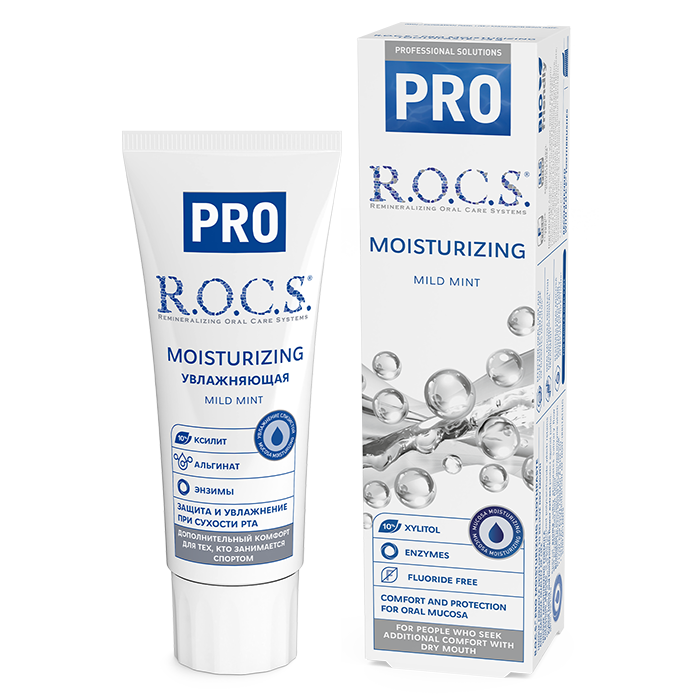
When saliva production drops, oral microorganisms damage the mucosa, and the risk of caries and periodontal disease rises sharply.
The combination of xylitol and potassium alginate creates a moisture-retaining layer on the mucosal surface and shields the tissues from microbes. Clinical studies have shown that R.O.C.S. PRO Moisturizing toothpaste, which contains this complex, relieves dry mouth, including in patients with diabetes and post-COVID syndrome. The alginate-xylitol complex can also reduce the severity of mucositis caused by cancer chemotherapy and help prevent candidiasis by inhibiting the adhesion of Candida fungi.
Indications
-
PREVENTION AND TREATMENT
- When taking medications that reduce saliva production (more than 700 drugs);
- For mouth breathers;
- During menopause or andropause;
- In older adults and removable denture wearers;
- With diabetes and other conditions that reduce salivary secretion;
- When there's a high risk of mucositis during chemotherapy.
-
COMFORT
- During intense physical activity;
- During long periods of speaking;
- Under chronic stress.
Organoleptic properties
It has a mild, refreshing flavor with green tea notes. The color (cream to brown) comes from its plant-based ingredients. Contains no artificial colorants.
Active ingredients


Properties
- Boosts saliva flow.
- Reduces saliva viscosity.
- Enhances the protective function of saliva.
- Normalizes the composition of the oral microflora.
- Effectively cleans teeth and slows plaque formation.
- Has an anti-inflammatory effect.
RIA
* Russian Abrasivity Index reflects the cleaning capacity level of oral care products and polishing pastes. Products with a higher RIA value have enhanced cleaning properties, but are also a risk factor for the development of non-carious dental lesions, therefore the choice of toothpaste should be guided by the condition of the hard dental tissues.
Russian Abrasivity Index (RIA): a new stage in oral hygiene standardization
The DRC group of companies, in collaboration with the Institute of Digital Dentistry of the RUDN Medical Institute, has developed and is implementing a new toothpaste abrasivity measurement standard in Russia that meets the highest requirements: safety, accuracy, reproducibility. Принято. This methodology is an alternative to the RDA measurement method and offers a number of advantages. Its effectiveness has been confirmed by a large-scale experimental and clinical study involving 534 patients.
The methodology is based on a rotary machine and digital technologies developed by a research group of dentists, physicists, and digital modeling specialists. QLF diagnostics, intraoral scanning, and digital analysis were used in the work, which made it possible to obtain objective data on tooth wear and the influence of abrasivity over time.
Download RIA research protocol (in Russian):
Clinical trials
Evidence of increased saliva flow, improved saliva quality, and better hygiene and periodontal status:
The manifestations of SARS-CoV-2 in the oral cavity during the course of the disease are well understood. However, only a few studies have examined the dental status of patients with post-COVID syndrome.
This study aims to determine the hygiene index and some indicators of oral fluid in patients with PKS when using different toothpastes.
Sixty-eight patients aged 27–40 years who had recovered from coronavirus infection no more than six months prior to the start of the study were examined. During the period of illness, all patients who had recovered from coronavirus infection used the same treatment regimen, including anticoagulants, antibiotics, and vitamins. All patients were diagnosed with Post-COVID-19 Condition (ICD-10 U09.9) by their general practitioner.
The distribution into groups was based on questionnaire data and depended on the toothpaste used during the six months after the illness:
- The first group included 24 patients with post-COVID syndrome who used R.O.C.S. Moisturising toothpaste (the toothpaste does not contain chlorhexidine or lauryl sulphate).
- The second group consisted of 21 patients who used toothpaste with chlorhexidine (without sodium lauryl sulphate).
- The 23 patients in the third group used toothpaste with lauryl sulphate.
The control group consisted of patients who had not had coronavirus infection (16 people).
The study found that the oral fluid indicators in patients with post-COVID syndrome differed significantly from those in the comparison group (Table 1). The differences between the three groups of patients using different hygiene products were also significant for all indicators (р < 0,05).
Table 1. Hygiene index and some indicators of oral fluid
| Parameter | Patients with post-COVID syndrome | Control group | |||
|---|---|---|---|---|---|
| Group 1 | Group 2 | Group 3 | Average | ||
| Salivation rate, ml/min | 0,56 ± 0,03 | 0,32 ± 0,02 | 0,31 ± 0,09 | 0,41 ± 0,03 | 0,54 ± 0,02 |
| Saliva viscosity, relative units | 1,12 ± 0,05 | 1,96 ± 0,04 | 2,08 ± 0,05 | 1,98 ±0,04 | 1,43 ±0,03 |
| Oral fluid pH | 7,24 ± 0,18 | 6,12 ± 0,12 | 6,35 ± 0,27 | 6,95 ±0,16 | 7,12 ±0,15 |
| Saliva mineralising potential, points | 2,24 ± 0,07 | 1,32 ± 0,17 | 1,67 ± 0,05 | 1,26 ±0,06 | 2,34 ± 0,08 |
| Lysozyme activity, % | 42,23 ± 2,65 | 31,42 ± 3,09 | 34,12 ± 2,72 | 32,26 ± 2,09 | 41,64 ±3,18 |
| Catalysin LL37 in oral fluid, μg/ml | 27,43 ±1,38 | 12,32 ± 2,63 | 16,38 ± 2,19 | 13,43 ±1,26 | 29,42 ± 2,47 |
| O'Leary hygiene index, % | 36,46 ± 2,48 | 68,79 ± 4,72 | 52,57 ± 4,67 | 53,64 ± 2,76 | 46,13 ±3,87 |
It has been established that certain indicators of oral fluid are significantly altered in patients with post-COVID syndrome.
It has been reliably demonstrated that the choice of toothpaste has an impact on these indicators. The use of R.O.C.S. Moisturising toothpaste improves the properties of oral fluid in patients with post-COVID syndrome.
Download the article for free in Russian:
A total of 40 people with moderate chronic generalized periodontitis (CGP) and type 2 diabetes mellitus (DM) suffering from xerostomia were examined. All patients completed a questionnaire, underwent a dental examination, index-based assessment of periodontal status, a course of professional oral hygiene, sialometry, and oral fluid pH testing. The patients were randomly divided into two groups: experimental and control. Patients in the experimental group received recommendations to use a toothpaste containing xylitol and alginate, while patients in the control group continued using their previously used toothpastes without xylitol. A follow-up examination was conducted three months later.
In the experimental group of patients, improvement was found in all studied parameters: hygienic and periodontal status, salivary flow rate, and oral fluid pH values, as well as the absence of any irritating effect of the toothpaste on the sensitive oral mucosa.
Download this article for free in Russian:
A long-term study showed that patients with type 2 diabetes mellitus under the dynamic supervision of a dentist who regularly used "R.O.C.S. PRO Moisturizing" therapeutic and preventive toothpaste, as well as "R.O.C.S. Whitening Black Edition" mouthwash, after 2–2.5 years of follow-up, in the vast majority of cases did not require treatment for hard dental tissue pathology (90.91%), had good individual oral hygiene (Hygiene Index — 0.88±0.24), and remission of periodontal tissue pathology (87.27%) with a satisfactory level of dental care (Dental Care Index — 66.24%), unlike elderly people with T2DM who visited the dentist only when problems arose.
Download this article for free in Russian:
The aim of the study was to evaluate the effectiveness of the combined use of a moisturizing toothpaste and an oxygen mouthwash in patients with chronic generalized periodontitis (CGP) and cardiovascular diseases (CVD) suffering from xerostomia and halitosis. The study involved 42 patients (mean age 57 years), divided into a study group (n=22) and a comparison group (n=20). The follow-up lasted 3 months with assessment of hygiene indices, salivary flow rate, and oral fluid pH.
A total of 42 people (15 men and 27 women) with moderate chronic generalized periodontitis and cardiovascular diseases, in whom xerostomia and halitosis were identified based on subjective sensations, sialometry values, and halitometer readings, were followed.
Patient groups:
- Study group No. 1 (n=22): patients used R.O.C.S. Pro Moisturizing toothpaste (RDA 60) and R.O.C.S. Whitening Black Edition oxygen mouthwash.
- Comparison group No. 2 (n=20): patients selected their own oral hygiene products.
All participants were given identical toothbrushing instructions — twice a day, after meals, for at least 3.5–4 minutes, using a soft R.O.C.S. PRO toothbrush and interdental hygiene products.
The clinical examination included: analysis of complaints, medical history data, visual examination, assessment of the Silness–Loe hygiene index (Silness–Loe, 1962), the Muhlemann inflammation index (H.R. Muhlemann, 1971), sialometry of unstimulated saliva, and pH measurement of the oral fluid. The follow-up was carried out for 3 months with repeat examinations after 14 days, 1 month, and 3 months.
The use of the moisturizing toothpaste and oxygen mouthwash combination in the study group showed significant improvement in all evaluated parameters:
- The reduction in the Silness–Loe hygiene index was 75% (vs. 53% in the comparison group).
- The reduction in the Muhlemann inflammation index was 80% (vs. 29% in the comparison group).
- An increase in the unstimulated salivary flow rate: from 0.10±0.02 mL/min to 0.13±0.02 mL/min (p<0.05).
- A shift in oral fluid pH toward the alkaline side: from 6.35±0.29 to 6.72±0.02 (p<0.05).
According to the survey, patients in the study group reported a significant reduction in dry mouth, decreased halitosis, and improved overall comfort. No significant changes in these parameters were observed in the comparison group. No irritating or allergenic effects of the test products on the oral mucosa were detected.
- The long-lasting moisturizing effect of the toothpaste formulation and the use of the oxygen mouthwash improved the quality of life of patients with CVD and symptoms of xerostomia and halitosis.
- The use of the test hygiene products for 3 months contributed to the improvement of the hygienic state of the oral cavity, a reduction in periodontal tissue inflammation, normalization of the acid-base state of the oral fluid, and an increase in the salivary flow rate.
- It is recommended to develop special individual prevention programs for patients with cardiovascular diseases, including oral hygiene training and mandatory professional oral hygiene at least once every 6 months.
Download this article for free in Russian:
Proven reduction in xerostomia symptoms, improved local immunity and antimicrobial activity of saliva, and protection against the periodontopathogens Treponema denticola and Prevotella intermedia:
The presence of dry mouth syndrome in a patient is a risk factor for the development of inflammatory processes in the tissues surrounding dental implants, since such patients have objective prerequisites in the form of impaired microbiota and mucosal immunity of the oral cavity. These parameters can be optimized through rational oral hygiene using the special moisturizing toothpaste R.O.C.S. PRO MOISTURIZING.
Thirty days after the start of the study, patients with hyposalivation showed a trend toward improvement in dental status: at that time point, mild focal hyperemia of the oral mucosa was detected in only 3 (20%) individuals, and the mean xerostomia severity score decreased from 0.8 to 0.2 conventional units.
Positive dynamics were found in the parameters characterizing local oral immunity and the antimicrobial activity of saliva: the content of secretory immunoglobulin A (sIgA) in mixed saliva significantly increased by 67.21%, while the content of the antimicrobial peptide cathelicidin LL-37 decreased by 15.79%.
A significant decrease in the prevalence of the two studied periodontopathogens — Treponema denticola and Prevotella intermedia — was also noted.
Download this article for free in Russian:
Effectiveness of the alginate-xylitol complex for treating mucositis, normalizing microflora, and protecting against Candida fungi:
The use of R.O.C.S. toothpastes with the MINERALIN Enzyme complex followed by applications of "R.O.C.S. Mild care with camomile" toothpaste during high-intensity polychemotherapy prevents the development of severe forms of oral mucositis, reduces mucosal healing time to 5–7 days, alleviates pain, and normalizes the microbiocenosis by reducing the growth of pathogenic microflora (including Candida and coliform bacteria) and the frequency of cariogenic streptococci.
A total of 46 patients aged 12–17 years diagnosed with osteosarcoma and Ewing's sarcoma, receiving inpatient treatment at the Blokhin Research Institute of Pediatric Oncology and Hematology, were examined. The patients received high-intensity chemotherapy regimens (methotrexate, doxorubicin, ifosfamide, etoposide, vincristine, cisplatin).
Patient groups:
- Group 1 (25 people): R.O.C.S. toothpastes with the MINERALIN Enzyme complex (containing bromelain, xylitol, calcium glycerophosphate, magnesium chloride) were used for twice-daily oral hygiene. Additionally, after each brushing, 30-minute applications of "R.O.C.S. Mild care with camomile" toothpaste (containing alginates, 10% xylitol, chamomile extract) were performed.
- Group 2 (21 people): twice-daily toothbrushing with preventive toothpastes without anti-inflammatory components was recommended. Additionally, drug therapy using "Miramistin" as a rinse after each meal was carried out.
To study the microbiocenosis, oral fluid samples were collected three times: before the start of treatment, and 7 and 14 days after the start of chemotherapy. A total of 138 oral fluid samples were studied.
Baseline study (before the start of polychemotherapy): 330 microbial strains were isolated. Streptococci accounted for 32.4% of cases, staphylococci for 15.8% (S. epidermidis — 54%, S. aureus — 44%). Lactobacilli were isolated in only 13% of patients. A high level (8.8%) of coliform bacteria was detected. Candida fungi were found in 8.2% of cases. The species composition of streptococci: Str. salivarius (17.2%), Str. mutans (13.8%), Str. viridans (11%), Str. oralis (11%), Str. mitis (6.9%). Enterococci were isolated in 26.2% of cases.
Group 1 (after 14 days): a decrease in cariogenic streptococci was noted (Str. mutans — from 5.8% to 4.2%; Str. mitis — from 4.3% to 3.1%; Str. oralis — from 5% to 2.1%). The frequency of Candida detection decreased (from 6.5% to 4.2%), as did coliform bacteria (from 10.9% to 5.3%). A dysbiotic shift was observed in 80% of cases, grade I–II dysbiosis in 20% of cases, and no patients with grade III were present. A reduction in pain and a decrease in mucositis duration to 5–7 days, predominantly grade II severity, were noted.
Group 2 (after 14 days): an increase in the frequency of Str. mitis (from 2.1% to 6.6%), Str. β-haemolyticus (from 2.1% to 5%), and S. aureus (from 4.3% to 6.1%) was observed. The frequency of Candida detection increased (from 7.4% to 10%), as did coliform bacteria (from 7.4% to 8.8%). Patients with grade III mucositis predominated, and healing time increased to 12–14 days. Grade I–II dysbiosis was observed in 76% of patients, and grade III dysbiosis in 24%.
- Children with oncological diseases undergoing polychemotherapy develop pronounced dysbiotic changes in the oral cavity: a decrease in the level of normal microflora (lactobacilli) and an increase in the frequency of detection of pathogenic and opportunistic microorganisms (S. aureus, enterococci, coliform bacteria, Candida fungi).
- The use of local preventive measures with R.O.C.S. toothpaste containing the MINERALIN Enzyme complex and applications of "R.O.C.S. Mild care with camomile" toothpaste can significantly reduce the percentage of severe forms of mucositis, alleviate pain, and normalize the oral microbiocenosis.
- The use of antiseptic rinses (Miramistin) without a specific effect on the oral microflora does not prevent the progression of dysbiotic changes and severe forms of mucositis.
- It is recommended to include local products that normalize the oral microbiocenosis in the comprehensive therapy of children with oncological diseases to improve the tolerability of polychemotherapy.
Download this article for free in Russian:
Evidence of the prebiotic and anti-adhesive properties of xylitol (normalization of microflora, protection against cariogenic bacteria and Candida fungi):
The high prevalence of caries in young children necessitates the use of therapeutic and preventive products that target the primary etiopathogenetic factor of this disease — pathogenic microflora. This study presents comparative data on the antimicrobial effectiveness of products containing xylitol and chlorhexidine, as well as their effect on the microbiocenosis composition of the dental biofilm.
A total of 30 patients aged 12 to 36 months with early childhood caries (18 boys and 12 girls) were followed for one month. The patients were divided into two equal groups using a blinded method:
- Patients in group 1 used R.O.C.S. Medical Minerals gel for local antimicrobial and remineralizing therapy over the course of one month.
- Patients in group 2 were prescribed daily one- to two-minute applications of a 0.1% chlorhexidine solution once a day for 7–10 days as local antimicrobial therapy. "Belagel Ca/P" gel was used daily for one month as remineralizing therapy.
It was recommended that the remineralizing gels be applied 4–5 times a day after toothbrushing. All procedures were performed by the patients' parents at home after receiving prior instruction.
At baseline and at the end of the prescribed treatment course, all patients underwent molecular biology testing using multiplex PCR at the NIMSI laboratory.
In group 1, a significant reduction in colonization by cariogenic species was detected, along with a positive effect of the R.O.C.S. Medical Minerals remineralizing gel components on the ratio of cariogenic to resident species, as well as a decrease in the quantity and frequency of detection of certain periodontopathogenic anaerobic bacteria (Table 1). An important positive feature of the change in the dental biofilm microbiocenosis composition in the first group was also the disappearance of Candida fungi.
Examination of the microbial flora of dental plaque in group 2 patients one month after treatment showed only some positive shifts in the ratio of cariogenic to normal flora, and a decrease in the frequency of detection of certain virulent strains. At the same time, the quantity and frequency of detection of representatives of the resident bacterial group — enterococci — decreased. In addition, the detection rate of the yeast-like fungus Candida albicans increased, with a statistically significant rise in the fungal colonization of dental plaque. These data indicate the development of dysbiosis with the use of chlorhexidine.
Table 1. Comparative assessment of changes in the frequency of detection of microbial flora in dental plaque between the two groups after a course of therapy
| Genus, species of bacteria | 0.1% chlorhexidine | R.O.C.S. Medical Minerals with xylitol |
|---|---|---|
| Streptococcus mutans (cariogenic strain) | no change | 45.4% reduction |
| Actinomyces spp. (cariogenic strain) | 33.3% reduction | 44.5% reduction |
| Veillonella parvula (resident) | 24.7% increase | 40.2% increase |
| Porphyromonas gingivalis (periodontopathogen) | 66.5% reduction | no change |
| Prevotella melaninogenica (virulent strain) | 20% increase | 44.5% reduction |
| Fusobacterium nucleatum (periodontopathogen) | 4.8-fold increase | 33.5% reduction |
| Candida albicans (fungus, pathogen) | 49.8% increase | complete disappearance |
A clinical examination after one month showed no new carious cavities or demineralization foci in group 1 patients; existing chalky spots regained their luster; the progression of carious defects was halted; and signs of catarrhal gingivitis disappeared.
During the clinical examination of group 2 patients, no new carious cavities were recorded either; the disappearance of catarrhal gingivitis signs was observed in 80% of patients (of those who had it at baseline).
The inclusion of both xylitol and chlorhexidine as antimicrobial therapy in the comprehensive treatment plan for early childhood caries leads to a reduction in the detection frequency and colonization level of cariogenic and periodontopathogenic flora in dental plaque.
The data presented indicate a more physiological action of xylitol; it has a positive effect on the microbiocenosis composition of the dental biofilm, normalizing the qualitative (species) composition and the quantitative bacterial load of both cariogenic and stabilizing resident species.
Download this article for free:
Very few substances are known today that can significantly affect the caries-causing environment in the mouth and reduce the risk of tooth decay. One of the most widely studied substances with an anti-caries effect is xylitol. However, the antibacterial mechanism of xylitol is not fully understood. This study provides data confirming xylitol's ability to significantly inhibit the adhesion of oral streptococci, the primary formers of dental plaque. These bacteria delay the development of caries- and periodontal disease-causing bacteria on tooth surfaces through a mechanism called co-adhesion. We also revealed the ability of xylitol to inhibit the adhesion of Streptococcus sobrinus, a microorganism associated with caries, and Staphylococcus aureus, which increases the virulence level of dental plaque. This mechanism of action is realised in toothpaste within the time period traditionally recommended for brushing teeth.
Download the article for free in Russian:
R.O.C.S. toothpaste with bromelain significantly improves oral hygiene, slows plaque formation and reduces its cariogenicity, provides a long-lasting clean feeling, and reduces gum inflammation and bleeding:
The study aimed to compare the effects of two toothpastes: one containing the broad-spectrum antiseptic triclosan and sodium fluoride ([F⁻] = 0.145%), and the other containing xylitol, bromelain, calcium glycerophosphate, and magnesium chloride. The study examined their impact on the hygienic state of the oral cavity, plaque formation rates, cariesogenicity, and gingivitis intensity. Over a period of three months, 60 volunteers aged 18–45 years of both sexes brushed their teeth with a sample of one of the toothpastes. R.O.C.S. toothpaste was more effective in all measured areas
R.O.C.S. toothpaste with a MINERALIN Enzyme complex slows down the formation of dental plaque, provides high cleaning efficacy and preventive action against dental caries and inflammatory periodontal diseases, and can be recommended to patients for the individual prevention of the most common dental diseases.
Download the article for free in Russian:
Adult volunteers (aged 22–40) brushed their teeth twice a day (morning and evening) with samples of toothpaste from different price categories for two months. All participants were provided with the same toothbrushes and received training in a standardised oral hygiene care method. The results of the study showed that the condition of the participants' oral cavities depended on the toothpaste used. Statistically significant positive changes were only observed when using enzyme-containing toothpastes from the medium and higher price categories, such as R.O.C.S. and Rembrandt. Using R.O.C.S. and Rembrandt toothpastes resulted in significant improvements in the oral hygiene of all participants. After two weeks from the start of the study, the anti-inflammatory efficacy of these toothpastes was 44.8% and 38.5%, respectively. During the R.O.C.S. toothpaste trial, many participants also reported that their teeth felt smooth for longer – until the next brushing.
Download the article for free in Russian:
The present study aimed to evaluate the effect of R.O.C.S. enzyme-containing toothpaste with bromelain and xylitol on the adhesion of microorganisms in the human oral cavity. A positive control was created using R.O.C.S. toothpaste with xylitol, but without the enzyme.
Anti-adhesive activity was studied using a culture of human embryonic musculocutaneous fibroblasts.
The test microorganism cultures were clinical strains of microorganisms isolated from the oral cavities of volunteers: Staphylococcus aureus, Streptococcus salivarius, Streptococcus sanguis and Streptococcus sobrinus.
A sample of the toothpaste at a dilution of 1:20,000 (in the presence of 50% human serum) and a culture of the test strain at a dose of 10⁸ KOU/ml were added to the cell culture and incubated at 37 °C. After incubation, the monolayer cells were washed to remove unattached bacteria by repeatedly changing the Eagle's medium. The cells were then fixed with ethyl alcohol, stained with Romanowsky-Giemsa, and examined under a microscope.
The degree of microbial adhesion was determined by the microbial load relative to the control, which was taken as 100%.
The study was carried out using the blind method. All studies were carried out three times.
After three minutes of incubation, which corresponds to the duration of normal tooth brushing, the suppression of adhesion was as follows:
- S.aureus - 80%
- Str.salivarius - 80%
- Str.sangius - 83%
- Str.sobrinius - 79%
However, when the exposure time was increased to 2 hours, the anti-adhesive efficacy decreased significantly. This seems to be due to the adhesion becoming reversible shortly after the strains were introduced into the model system, as adhesion usually becomes irreversible after 1–2 hours.
Fig. 1. Control fibroblast cells
Fig. 2. Cells + Str. salivarius
Fig. 3. Cells + S. salivarius + bromelain paste
(exposure 2h.)
Fig. 4. Cells + Str.salivarius + paste with bromelain
(exposure 3 min.)
Download the article for free in Russian:
Ingredients
Aqua, Glycerin, Xylitol, Silica, Potassium Alginate, Aroma, Lonicera Japonica Extract, Lonicera Caprifolium Extract, Cocamidopropyl Betaine, Sodium Lauroyl Sarcosinate, Bromelain, Sodium Benzoate, Potassium Sorbate, Xanthan Gum, Sodium Saccharin, Stevioside, O-cymen-5-ol, Limonene.
Application
Brush twice a day (morning and evening) with a soft (or medium) toothbrush. Recommended toothbrushing time is 2-3 minutes.
Suitable for all ages, with no time restrictions on use.
When saliva production drops or saliva loses its mineralizing power, the risk of dental problems (caries, erosion, and more) rises sharply. That's why we recommend using R.O.C.S. Medical Minerals remineralizing gel after every brushing.
Description
Active ingredients
Properties
RIA
Clinical trials
Ingredients
Application
Description
Features
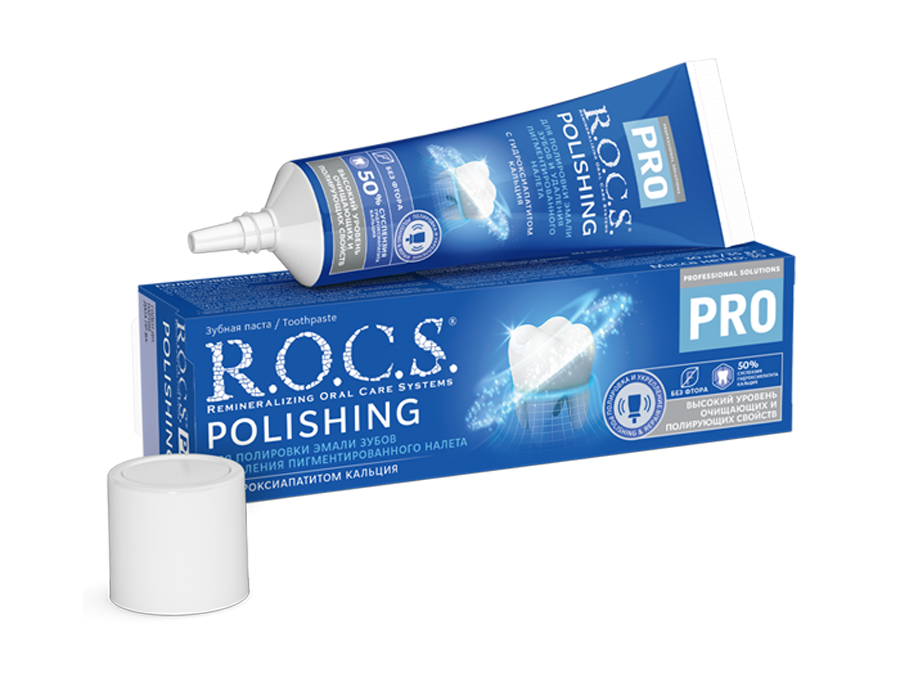
R.O.C.S. PRO POLISHING toothpaste has strong cleaning power and handles various types of stained dental plaque. Its PCR (stained pellicle removal) index is 93.
The toothpaste has a high polishing potential thanks to a special abrasive. Ultrafine silica with a particle size of 2–3 microns doesn't scratch treated surfaces.
A 50% hydroxyapatite suspension (7.5% on a dry basis) and calcium glycerophosphate remineralize and strengthen the structures of the hard dental tissues.
Indications
-
PROFESSIONAL USE
- Suitable for polishing natural teeth as part of professional oral hygiene;
- Reduces the risk of tooth sensitivity after procedures (scaling, Air Flow, professional tooth whitening, enamel polishing after braces removal).
-
AT-HOME USE
- Intensive care to maintain the shine and whiteness of teeth.
Organoleptic properties
A white toothpaste with a natural lemon balm flavoring.
Active ingredients


Properties
- Removes stained plaque.
- Gives tooth enamel a mirror-like shine.
- Reduces the risk of tooth hypersensitivity after dental procedures.
- Doesn't scratch composite restorations.
RIA

* Russian Abrasivity Index reflects the cleaning capacity level of oral care products and polishing pastes. Products with a higher RIA value have enhanced cleaning properties, but are also a risk factor for the development of non-carious dental lesions, therefore the choice of toothpaste should be guided by the condition of the hard dental tissues.
Russian Abrasivity Index (RIA): a new stage in oral hygiene standardization
The DRC group of companies, in collaboration with the Institute of Digital Dentistry of the RUDN Medical Institute, has developed and is implementing a new toothpaste abrasivity measurement standard in Russia that meets the highest requirements: safety, accuracy, reproducibility. Принято. This methodology is an alternative to the RDA measurement method and offers a number of advantages. Its effectiveness has been confirmed by a large-scale experimental and clinical study involving 534 patients.
The methodology is based on a rotary machine and digital technologies developed by a research group of dentists, physicists, and digital modeling specialists. QLF diagnostics, intraoral scanning, and digital analysis were used in the work, which made it possible to obtain objective data on tooth wear and the influence of abrasivity over time.
Download RIA research protocol (in Russian):
Clinical trials
The toothpaste's abrasivity (RDA) and cleaning properties (PCR) were tested at Indiana University (USA):
Sample No. 12 "R.O.C.S. Dental polishing"
Determination of the relative dentin abrasion level of dentifrices
The reports present experimentally measured RDA (relative dentin abrasion) and PCR (pellicle cleaning ratio) indices of some R.O.C.S. toothpastes.
Download the protocol (RDA):
Download the protocol (PCR):
Using R.O.C.S. PRO POLISHING to polish teeth as part of professional oral hygiene reduced tooth hypersensitivity and improved enamel structure in a high-risk group:
The study involved 39 patients of both sexes aged 18 to 45 years with hard tissue discoloration who were exposed to harmful occupational factors and had no tooth hypersensitivity. The patients were divided into three equal groups. Professional oral hygiene was performed in each group using one of the polishing pastes: corundum-based, perlite-based, or ultrafine silica-based (R.O.C.S. PRO POLISHING).
The most pronounced hypersensitivity was observed with the corundum-based polishing paste, while the least was seen with R.O.C.S. PRO POLISHING paste, which contains a 50% hydroxyapatite suspension.
When comparing the morphological changes in the enamel before and after polishing, R.O.C.S. PRO POLISHING paste showed the most pronounced positive changes: a smooth enamel surface, a denser enamel structure, and no areas of damage affecting the deeper layers of the enamel. Thus, the polishing paste based on ultrafine silica proved to be the most preferable for professional oral hygiene.
Download this article for free in Russian:
Ingredients
Aqua, Glycerin, Silica, Hydroxyapatite, Xanthan Gum, Calcium Glycerophosphate, Polysorbate-20, Aroma, Sodium Lauryl Sulfate, Sodium Methylparaben, Sodium Saccharin, Sodium Benzoate, Sodium Propylparaben, O-Cymen-5-ol, Potassium Hydroxide, Limonene, Citral.
Application
For professional polishing, soft rotating rubber cups (caps) and large-diameter soft end brushes can be used.
For at-home use, use 1–2 times a week instead of your regular toothpaste with a manual or electric toothbrush with soft bristles.
Description
Active ingredients
Properties
RIA
Clinical trials
Ingredients
Application
Description
Features
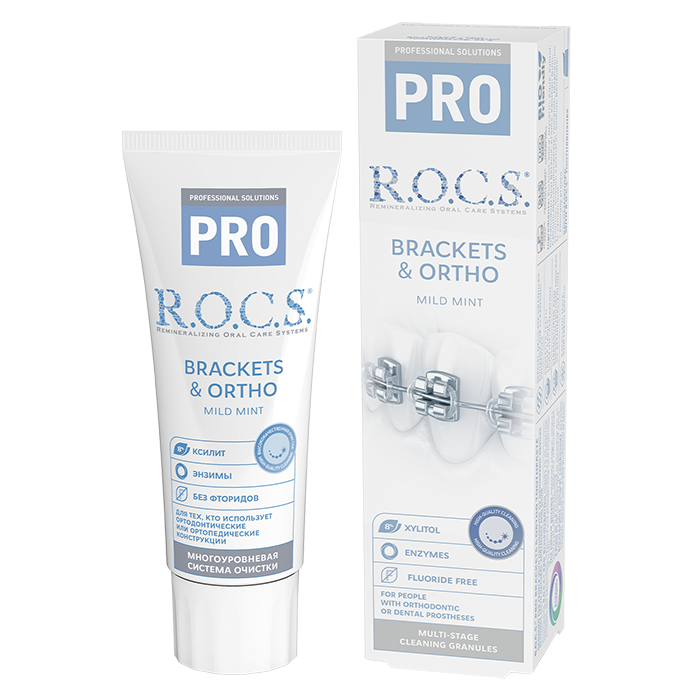
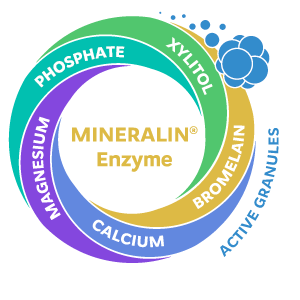
The unique R.O.C.S. PRO Brackets & Ortho toothpaste contains the proteolytic enzyme bromelain, which cleans areas a toothbrush can't reach. Special gentle granules boost the toothpaste's cleaning power.
Bromelain combined with xylitol reduces bacterial adhesion, tackling the drivers of inflammation and keeping teeth and gums clean for longer. Bromelain also has a direct anti-inflammatory effect, which matters most right after braces are adjusted.
The toothpaste's mineralizing complex strengthens enamel and increases its caries resistance.
Indications
- Daily care during orthodontic treatment.
- Daily care with prosthetic appliances.
- Cleaning removable dentures.
Organoleptic properties
A cream-colored toothpaste with white granules and a mild, refreshing flavor. The color may range from cream to brown due to its plant-based ingredients. Contains no artificial colorants.
Active ingredients
Properties
- Effectively cleans teeth, orthodontic appliances, and prosthetic appliances.
- Slows plaque formation, keeping the mouth clean until the next brushing.
- Reduces gum inflammation and bleeding.
- Normalizes the composition of the oral microflora.
- Strengthens teeth by saturating them with minerals.
- Protects against caries.
RIA

* Russian Abrasivity Index reflects the cleaning capacity level of oral care products and polishing pastes. Products with a higher RIA value have enhanced cleaning properties, but are also a risk factor for the development of non-carious dental lesions, therefore the choice of toothpaste should be guided by the condition of the hard dental tissues.
Russian Abrasivity Index (RIA): a new stage in oral hygiene standardization
The DRC group of companies, in collaboration with the Institute of Digital Dentistry of the RUDN Medical Institute, has developed and is implementing a new toothpaste abrasivity measurement standard in Russia that meets the highest requirements: safety, accuracy, reproducibility. Принято. This methodology is an alternative to the RDA measurement method and offers a number of advantages. Its effectiveness has been confirmed by a large-scale experimental and clinical study involving 534 patients.
The methodology is based on a rotary machine and digital technologies developed by a research group of dentists, physicists, and digital modeling specialists. QLF diagnostics, intraoral scanning, and digital analysis were used in the work, which made it possible to obtain objective data on tooth wear and the influence of abrasivity over time.
Download RIA research protocol (in Russian):
Clinical trials
Effectiveness of R.O.C.S. toothpaste with bromelain during orthodontic treatment:
The study assessed the level of oral hygiene using the OHI-S and PHP hygiene indices before and after two weeks of using various toothpastes in patients with removable orthodontic appliances. The indices improved significantly as a result of using various hygiene products. The anti-inflammatory effect was observed only after using toothpastes containing bromelain and an antiseptic. Given the duration of orthodontic treatment, the use of enzyme-based toothpastes is more promising for maintaining the good condition of the hard dental tissues and periodontal tissues in children, since the long-term use of toothpastes with antiseptics (more than two weeks) is not recommended.
Download this article for free in Russian:
The study involved patients aged 6 to 12 years undergoing treatment with removable orthodontic appliances. After 4 weeks of using a toothpaste containing the enzyme bromelain and xylitol, the proportion of pathogenic microorganisms in the oral microflora decreased by 1.8 times, complete elimination of Candida and Aspergillus fungi was achieved, and no negative effect on the quantitative composition of the normal microflora was recorded. The results obtained in the study allow recommending the toothpaste with the bromelain enzyme and xylitol for continuous oral care and care of orthodontic appliances in children.
Download this article for free in Russian:
Effectiveness of R.O.C.S. toothpaste with bromelain in patients with removable dentures:
The study involved 30 patients over 40 years of age using removable prosthetic appliances (partial and complete removable plate dentures). The patients were advised to brush their teeth and removable acrylic appliances twice a day with R.O.C.S. toothpaste containing the proteolytic enzyme bromelain. After 2 weeks of using the toothpaste, the proportion of pathogenic microorganisms in the oral microflora decreased by 2.4 times, the number of cultured Candida albicans strains decreased by 76%, and in the majority of patients this strain was completely eliminated. Inflammatory symptoms in the mucosa of the denture-bearing area disappeared in the majority of patients (93% of cases). The results obtained in the study allow recommending toothpaste with the bromelain enzyme for continuous hygiene care in patients using partial and complete removable dentures.
Download this article for free in Russian:
R.O.C.S. toothpaste with bromelain significantly improves oral hygiene, slows plaque formation and reduces its cariogenicity, provides a long-lasting clean feeling, and reduces gum inflammation and bleeding:
The study aimed to compare the effects of two toothpastes: one containing the broad-spectrum antiseptic triclosan and sodium fluoride ([F⁻] = 0.145%), and the other containing xylitol, bromelain, calcium glycerophosphate, and magnesium chloride. The study examined their impact on the hygienic state of the oral cavity, plaque formation rates, cariesogenicity, and gingivitis intensity. Over a period of three months, 60 volunteers aged 18–45 years of both sexes brushed their teeth with a sample of one of the toothpastes. R.O.C.S. toothpaste was more effective in all measured areas
R.O.C.S. toothpaste with a MINERALIN Enzyme complex slows down the formation of dental plaque, provides high cleaning efficacy and preventive action against dental caries and inflammatory periodontal diseases, and can be recommended to patients for the individual prevention of the most common dental diseases.
Download the article for free in Russian:
Adult volunteers (aged 22–40) brushed their teeth twice a day (morning and evening) with samples of toothpaste from different price categories for two months. All participants were provided with the same toothbrushes and received training in a standardised oral hygiene care method. The results of the study showed that the condition of the participants' oral cavities depended on the toothpaste used. Statistically significant positive changes were only observed when using enzyme-containing toothpastes from the medium and higher price categories, such as R.O.C.S. and Rembrandt. Using R.O.C.S. and Rembrandt toothpastes resulted in significant improvements in the oral hygiene of all participants. After two weeks from the start of the study, the anti-inflammatory efficacy of these toothpastes was 44.8% and 38.5%, respectively. During the R.O.C.S. toothpaste trial, many participants also reported that their teeth felt smooth for longer – until the next brushing.
Download the article for free in Russian:
The present study aimed to evaluate the effect of R.O.C.S. enzyme-containing toothpaste with bromelain and xylitol on the adhesion of microorganisms in the human oral cavity. A positive control was created using R.O.C.S. toothpaste with xylitol, but without the enzyme.
Anti-adhesive activity was studied using a culture of human embryonic musculocutaneous fibroblasts.
The test microorganism cultures were clinical strains of microorganisms isolated from the oral cavities of volunteers: Staphylococcus aureus, Streptococcus salivarius, Streptococcus sanguis and Streptococcus sobrinus.
A sample of the toothpaste at a dilution of 1:20,000 (in the presence of 50% human serum) and a culture of the test strain at a dose of 10⁸ KOU/ml were added to the cell culture and incubated at 37 °C. After incubation, the monolayer cells were washed to remove unattached bacteria by repeatedly changing the Eagle's medium. The cells were then fixed with ethyl alcohol, stained with Romanowsky-Giemsa, and examined under a microscope.
The degree of microbial adhesion was determined by the microbial load relative to the control, which was taken as 100%.
The study was carried out using the blind method. All studies were carried out three times.
After three minutes of incubation, which corresponds to the duration of normal tooth brushing, the suppression of adhesion was as follows:
- S.aureus - 80%
- Str.salivarius - 80%
- Str.sangius - 83%
- Str.sobrinius - 79%
However, when the exposure time was increased to 2 hours, the anti-adhesive efficacy decreased significantly. This seems to be due to the adhesion becoming reversible shortly after the strains were introduced into the model system, as adhesion usually becomes irreversible after 1–2 hours.
Fig. 1. Control fibroblast cells
Fig. 2. Cells + Str. salivarius
Fig. 3. Cells + S. salivarius + bromelain paste
(exposure 2h.)
Fig. 4. Cells + Str.salivarius + paste with bromelain
(exposure 3 min.)
Download the article for free in Russian:
R.O.C.S. toothpaste with active minerals (calcium glycerophosphate + magnesium chloride) and xylitol saturates enamel with minerals and increases caries resistance and the rate of tooth remineralization:
The study found that R.O.C.S. toothpaste containing sources of calcium, phosphate, and magnesium, without fluoride, enhances caries resistance of teeth no less effectively than a toothpaste containing sodium fluoride at maximum concentrations (1500 ppm F–).
R.O.C.S. toothpaste significantly increases the rate of remineralization of teeth exposed to acid, and, due to its ability to limit plaque growth, allows achieving a good level of oral hygiene within one week of use.
Download the article for free in Russian:
Enamel tunnels are microstructures that curve in an S-shape along the bundles of enamel prisms and extend to the dentin, penetrating it in the form of enamel bridges, where metabolic exchange between the enamel and dentin takes place. On the enamel surface, these tunnels open as enamel pores. X-ray spectral microanalysis and planar spectrograms show that the walls of enamel tunnels and the areas near them contain mainly mineral components (Ca, Ba, Cd, Sr, P, Si, As, C, K, Br, I, Cl), while the lumen contains organic components. It has been established that the mineral component of R.O.C.S. toothpastes actively penetrates through the enamel tunnels into the area of the enamel-dentin junction and the superficial layers of the dentin, exerting a positive effect on the structural and functional caries resistance of teeth.
Download this article for free in Russian:
A long-term study confirming the anti-caries effect of R.O.C.S. toothpaste with xylitol and active minerals (calcium glycerophosphate + magnesium chloride):
A two-year program of supervised toothbrushing carried out in schools on children aged 6-7 using R.O.C.S. (Re-mineralizing Oral Care System) toothpastes has shown very effective results in reducing the OHI-S index scores by 53-57%, the GI index scores by 57-73% and the 2-year DMFT scores by 29-32%. Remineralizing toothpastes with-out fluorine, containing 500 ppm AmF or 1000 ppm NaF, were as effective in terms of improving the oral health of the schoolchildren.
Download the article for free:
Ingredients
Sorbitol, Silica, Glycerin, Aqua, Xylitol, Cocamidopropyl Betaine, Aroma, Xanthan Gum, Calcium Glycerophosphate, Bromelain, Magnesium Chloride, Sodium Saccharin, Sodium Benzoate, O-Cymen-5-ol.
Application
Brush twice a day (morning and evening). Recommended toothbrushing time is 2-3 minutes.
Suitable for all ages, with no time restrictions on use.
If you have fixed orthodontic appliances, we recommend brushing with the specialized R.O.C.S. PRO Brackets & Ortho toothbrush, designed with a special bristle trim, along with the R.O.C.S. PRO Mono single-tuft brush.
Description
Active ingredients
Properties
RIA
Clinical trials
Ingredients
Application
Description
Features
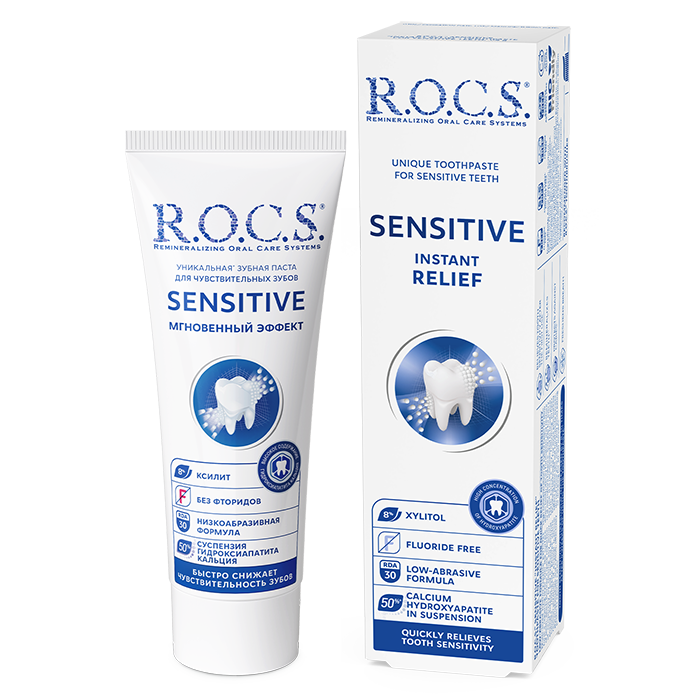
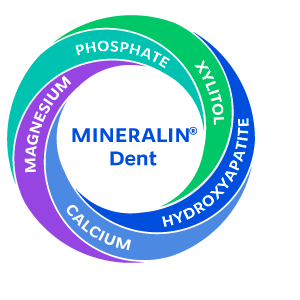
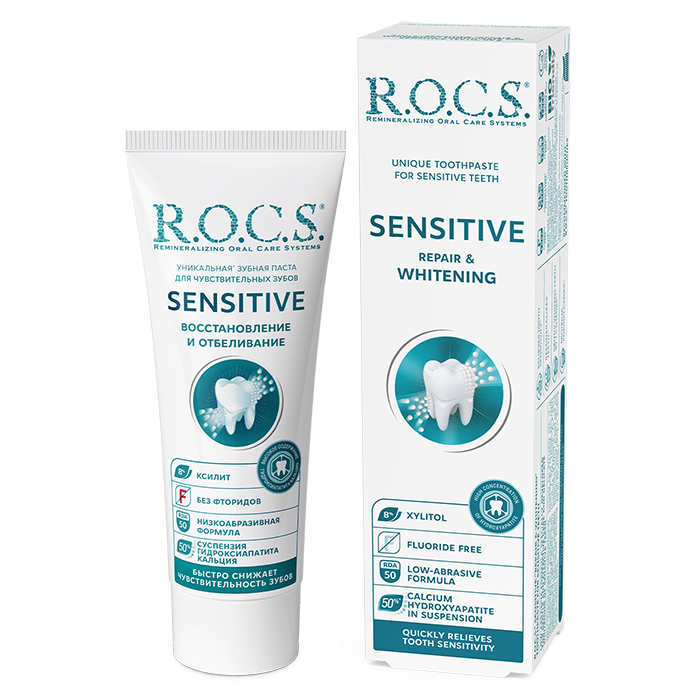
R.O.C.S. SENSITIVE Instant Relief toothpaste is 50% hydroxyapatite suspension, synthesized using a unique patented technology and with a high affinity for tooth tissues. Fast sensitivity relief comes from sealing the tiniest enamel defects and exposed dentinal tubules, followed by effective remineralization.
Indications
The toothpaste's low abrasivity makes it suitable for cases of pronounced dentin hypersensitivity.
Organoleptic properties
A white, uniform toothpaste with a classic mint flavor.
Active ingredients
Properties
- Rapidly relieves tooth sensitivity.
- The low-abrasion formula cleans gently without damaging enamel or dentin.
- Saturates enamel with minerals.
- Protects against caries.
- Normalizes the composition of the oral microflora.
- Whitens teeth by an average of 1.5 shades after 1 month of use.
RIA

* Russian Abrasivity Index reflects the cleaning capacity level of oral care products and polishing pastes. Products with a higher RIA value have enhanced cleaning properties, but are also a risk factor for the development of non-carious dental lesions, therefore the choice of toothpaste should be guided by the condition of the hard dental tissues.
Russian Abrasivity Index (RIA): a new stage in oral hygiene standardization
The DRC group of companies, in collaboration with the Institute of Digital Dentistry of the RUDN Medical Institute, has developed and is implementing a new toothpaste abrasivity measurement standard in Russia that meets the highest requirements: safety, accuracy, reproducibility. Принято. This methodology is an alternative to the RDA measurement method and offers a number of advantages. Its effectiveness has been confirmed by a large-scale experimental and clinical study involving 534 patients.
The methodology is based on a rotary machine and digital technologies developed by a research group of dentists, physicists, and digital modeling specialists. QLF diagnostics, intraoral scanning, and digital analysis were used in the work, which made it possible to obtain objective data on tooth wear and the influence of abrasivity over time.
Download RIA research protocol (in Russian):
Clinical trials
Toothpaste based on hydroxyapatite and calcium glycerophosphate has been proven to reduce dentin hypersensitivity and whiten teeth by an average of 1.5 shades after 1 month of use:
www.dentaljournal.by
The aim of the study was to evaluate the effectiveness of a non-abrasive toothpaste containing hydroxyapatite particles and calcium glycerophosphate in patients with dentin hypersensitivity.
The study included 89 patients (26 men and 63 women) aged 20–65 years who presented to the clinic with complaints of tooth pain sensitivity. The patients were divided into two groups:
- Patients in the first group used R.O.C.S. Sensitive Instant Relief toothpaste in combination with a R.O.C.S. Sensitive soft toothbrush for twice-daily oral hygiene for 1 month.
- Patients in the second (control) group received four applications of fluoride varnish at a dental appointment with a 3-day interval, according to the fluoride varnish manufacturer's instructions. The second treatment regimen also included the use of a toothpaste without active components and a soft toothbrush for twice-daily oral hygiene for 1 month.
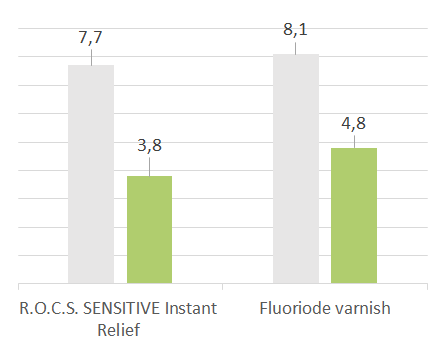
Fig. 1. Cold air stimulus
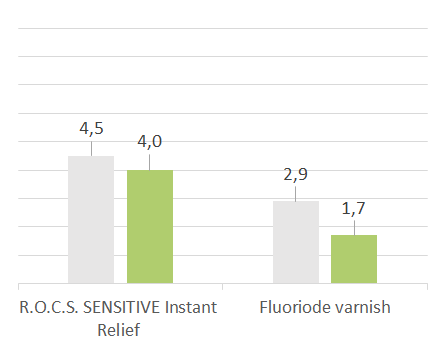
Fig. 2. Probing with a dental probe
Daily use (for one month) of R.O.C.S. Sensitive Instant Relief toothpaste containing hydroxyapatite and calcium glycerophosphate in combination with a soft toothbrush leads to a statistically significant (p=0.001) reduction in pain sensitivity scores in response to a cold stimulus. The results obtained with this type of treatment are similar to those of a treatment regimen that includes four applications of fluoride varnish at three-day intervals.
Download this article for free in Russian:
The aim of this study was to evaluate the effectiveness of a toothpaste based on calcium hydroxyapatite, silica, and calcium glycerophosphate in reducing dentin hypersensitivity caused by the loss of hard dental tissues (erosion, wedge-shaped defects, microfractures, chips, abrasion, etc.).
The study group included 30 people aged 20 to 56 years with pronounced symptoms of tooth sensitivity and enamel integrity defects.
The subjects used R.O.C.S. SENSITIVE REPAIR & WHITENING toothpaste daily for one month. The level of dentin hypersensitivity was determined by an instrumental method (YeapleProbes device) and subjectively (Schiff scale). Tooth color was determined using a VITA Easyshade Compact spectrophotometer (VITA Zahnfabrik, Germany). The parameters were recorded at baseline and after 4 weeks.
based on the instrumental recording method
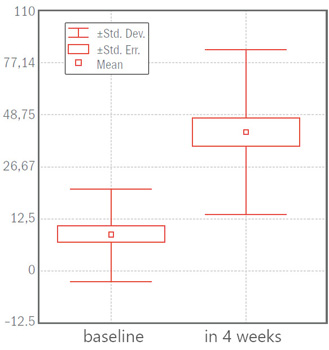
Fig. 1. Upper jaw
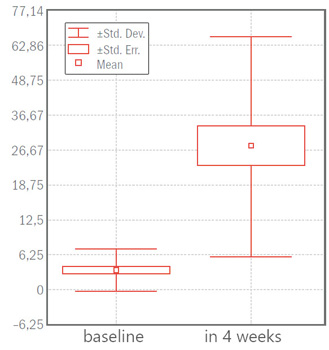
Fig. 2. Lower jaw
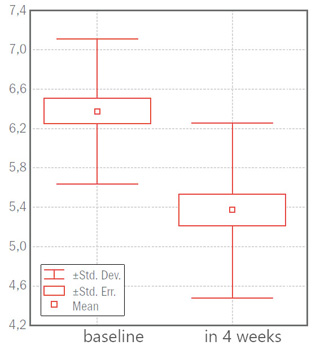
Fig. 3. Upper jaw
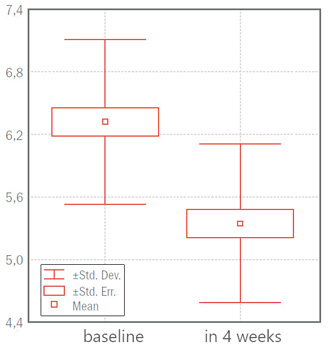
Fig. 4. Lower jaw
During the use of the test toothpaste, a significant improvement in the studied parameters of the hard dental tissues was recorded in all subjects. The toothpaste based on mineral components (hydroxyapatite and calcium glycerophosphate) demonstrated high clinical effectiveness for patients with hypersensitivity of the hard dental tissues.
The dynamics of instrumental tooth color recording before and after the use of the test toothpaste and the subjective impressions of patients showed that, in addition to reducing sensitivity, the use of this toothpaste improves the color of the tooth enamel.
Download this article for free in Russian:
R.O.C.S. toothpaste with active minerals (calcium glycerophosphate + magnesium chloride) and xylitol saturates enamel with minerals and increases caries resistance and the rate of tooth remineralization:
The study found that R.O.C.S. toothpaste containing sources of calcium, phosphate, and magnesium, without fluoride, enhances caries resistance of teeth no less effectively than a toothpaste containing sodium fluoride at maximum concentrations (1500 ppm F–).
R.O.C.S. toothpaste significantly increases the rate of remineralization of teeth exposed to acid, and, due to its ability to limit plaque growth, allows achieving a good level of oral hygiene within one week of use.
Download the article for free in Russian:
Enamel tunnels are microstructures that curve in an S-shape along the bundles of enamel prisms and extend to the dentin, penetrating it in the form of enamel bridges, where metabolic exchange between the enamel and dentin takes place. On the enamel surface, these tunnels open as enamel pores. X-ray spectral microanalysis and planar spectrograms show that the walls of enamel tunnels and the areas near them contain mainly mineral components (Ca, Ba, Cd, Sr, P, Si, As, C, K, Br, I, Cl), while the lumen contains organic components. It has been established that the mineral component of R.O.C.S. toothpastes actively penetrates through the enamel tunnels into the area of the enamel-dentin junction and the superficial layers of the dentin, exerting a positive effect on the structural and functional caries resistance of teeth.
Download this article for free in Russian:
Confirmation of the prebiotic and anti-adhesive properties of xylitol (normalization of microflora, protection against cariogenic bacteria and Candida fungi):
The high prevalence of caries in young children necessitates the use of therapeutic and preventive products that target the primary etiopathogenetic factor of this disease — pathogenic microflora. This study presents comparative data on the antimicrobial effectiveness of products containing xylitol and chlorhexidine, as well as their effect on the microbiocenosis composition of the dental biofilm.
A total of 30 patients aged 12 to 36 months with early childhood caries (18 boys and 12 girls) were followed for one month. The patients were divided into two equal groups using a blinded method:
- Patients in group 1 used R.O.C.S. Medical Minerals gel for local antimicrobial and remineralizing therapy over the course of one month.
- Patients in group 2 were prescribed daily one- to two-minute applications of a 0.1% chlorhexidine solution once a day for 7–10 days as local antimicrobial therapy. "Belagel Ca/P" gel was used daily for one month as remineralizing therapy.
It was recommended that the remineralizing gels be applied 4–5 times a day after toothbrushing. All procedures were performed by the patients' parents at home after receiving prior instruction.
At baseline and at the end of the prescribed treatment course, all patients underwent molecular biology testing using multiplex PCR at the NIMSI laboratory.
In group 1, a significant reduction in colonization by cariogenic species was detected, along with a positive effect of the R.O.C.S. Medical Minerals remineralizing gel components on the ratio of cariogenic to resident species, as well as a decrease in the quantity and frequency of detection of certain periodontopathogenic anaerobic bacteria (Table 1). An important positive feature of the change in the dental biofilm microbiocenosis composition in the first group was also the disappearance of Candida fungi.
Examination of the microbial flora of dental plaque in group 2 patients one month after treatment showed only some positive shifts in the ratio of cariogenic to normal flora, and a decrease in the frequency of detection of certain virulent strains. At the same time, the quantity and frequency of detection of representatives of the resident bacterial group — enterococci — decreased. In addition, the detection rate of the yeast-like fungus Candida albicans increased, with a statistically significant rise in the fungal colonization of dental plaque. These data indicate the development of dysbiosis with the use of chlorhexidine.
Table 1. Comparative assessment of changes in the frequency of detection of microbial flora in dental plaque between the two groups after a course of therapy
| Genus, species of bacteria | 0.1% chlorhexidine | R.O.C.S. Medical Minerals with xylitol |
|---|---|---|
| Streptococcus mutans (cariogenic strain) | no change | 45.4% reduction |
| Actinomyces spp. (cariogenic strain) | 33.3% reduction | 44.5% reduction |
| Veillonella parvula (resident) | 24.7% increase | 40.2% increase |
| Porphyromonas gingivalis (periodontopathogen) | 66.5% reduction | no change |
| Prevotella melaninogenica (virulent strain) | 20% increase | 44.5% reduction |
| Fusobacterium nucleatum (periodontopathogen) | 4.8-fold increase | 33.5% reduction |
| Candida albicans (fungus, pathogen) | 49.8% increase | complete disappearance |
A clinical examination after one month showed no new carious cavities or demineralization foci in group 1 patients; existing chalky spots regained their luster; the progression of carious defects was halted; and signs of catarrhal gingivitis disappeared.
During the clinical examination of group 2 patients, no new carious cavities were recorded either; the disappearance of catarrhal gingivitis signs was observed in 80% of patients (of those who had it at baseline).
The inclusion of both xylitol and chlorhexidine as antimicrobial therapy in the comprehensive treatment plan for early childhood caries leads to a reduction in the detection frequency and colonization level of cariogenic and periodontopathogenic flora in dental plaque.
The data presented indicate a more physiological action of xylitol; it has a positive effect on the microbiocenosis composition of the dental biofilm, normalizing the qualitative (species) composition and the quantitative bacterial load of both cariogenic and stabilizing resident species.
Download this article for free:
Very few substances are known today that can significantly affect the caries-causing environment in the mouth and reduce the risk of tooth decay. One of the most widely studied substances with an anti-caries effect is xylitol. However, the antibacterial mechanism of xylitol is not fully understood. This study provides data confirming xylitol's ability to significantly inhibit the adhesion of oral streptococci, the primary formers of dental plaque. These bacteria delay the development of caries- and periodontal disease-causing bacteria on tooth surfaces through a mechanism called co-adhesion. We also revealed the ability of xylitol to inhibit the adhesion of Streptococcus sobrinus, a microorganism associated with caries, and Staphylococcus aureus, which increases the virulence level of dental plaque. This mechanism of action is realised in toothpaste within the time period traditionally recommended for brushing teeth.
Download the article for free in Russian:
Ingredients
Aqua, Glycerin, Sorbitol, Dicalcium Phosphate Dihydrate, Xylitol, Hydroxyapatite, Silica, Xanthan Gum, Aroma, Calcium Glycerophosphate, Cocamidopropyl Betaine, Sodium Lauroyl Sarcosinate, Hydroxyacetophenone, Sodium Benzoate, Sodium Saccharine, Magnesium Chloride, Sodium Methylparaben, Sodium Propylparaben, O-cymen-5-ol, Limonene.
Application
Use twice a day (morning and evening) with a soft toothbrush. Recommended toothbrushing time is 2-3 minutes.
Suitable for all ages, with no time restrictions on use.
Description
Active ingredients
Properties
RIA
Clinical trials
Ingredients
Application
Description
Features
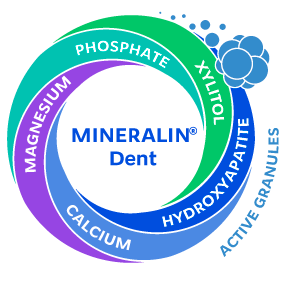
R.O.C.S. SENSITIVE Repair & Whitening toothpaste's unique cleaning system with macrogranules whitens and adds shine to teeth without increasing their sensitivity. With low abrasivity for both dentin and enamel, it delivers excellent cleaning power (PCR=80) and is suitable for long-term daily use.
Indications
Whitening of sensitive teeth.
Organoleptic properties
A white toothpaste with blue granules. Contains a natural lemon balm flavoring.
Active ingredients
Properties
- Rapidly relieves tooth sensitivity.
- The low-abrasion formula cleans gently without damaging enamel or dentin.
- Saturates enamel with minerals.
- Protects against caries.
- Normalizes the composition of the oral microflora.
- Whitens teeth by an average of 1.5 shades after 1 month of use.
- Leaves teeth looking healthy and shiny.
RIA

* Russian Abrasivity Index reflects the cleaning capacity level of oral care products and polishing pastes. Products with a higher RIA value have enhanced cleaning properties, but are also a risk factor for the development of non-carious dental lesions, therefore the choice of toothpaste should be guided by the condition of the hard dental tissues.
Russian Abrasivity Index (RIA): a new stage in oral hygiene standardization
The DRC group of companies, in collaboration with the Institute of Digital Dentistry of the RUDN Medical Institute, has developed and is implementing a new toothpaste abrasivity measurement standard in Russia that meets the highest requirements: safety, accuracy, reproducibility. Принято. This methodology is an alternative to the RDA measurement method and offers a number of advantages. Its effectiveness has been confirmed by a large-scale experimental and clinical study involving 534 patients.
The methodology is based on a rotary machine and digital technologies developed by a research group of dentists, physicists, and digital modeling specialists. QLF diagnostics, intraoral scanning, and digital analysis were used in the work, which made it possible to obtain objective data on tooth wear and the influence of abrasivity over time.
Download RIA research protocol (in Russian):
Clinical trials
Toothpaste based on hydroxyapatite and calcium glycerophosphate has been proven to reduce dentin hypersensitivity and whiten teeth by an average of 1.5 shades after 1 month of use:
www.dentaljournal.by
The aim of the study was to evaluate the effectiveness of a non-abrasive toothpaste containing hydroxyapatite particles and calcium glycerophosphate in patients with dentin hypersensitivity.
The study included 89 patients (26 men and 63 women) aged 20–65 years who presented to the clinic with complaints of tooth pain sensitivity. The patients were divided into two groups:
- Patients in the first group used R.O.C.S. Sensitive Instant Relief toothpaste in combination with a R.O.C.S. Sensitive soft toothbrush for twice-daily oral hygiene for 1 month.
- Patients in the second (control) group received four applications of fluoride varnish at a dental appointment with a 3-day interval, according to the fluoride varnish manufacturer's instructions. The second treatment regimen also included the use of a toothpaste without active components and a soft toothbrush for twice-daily oral hygiene for 1 month.
Fig. 1. Cold air stimulus
Fig. 2. Probing with a dental probe
Daily use (for one month) of R.O.C.S. Sensitive Instant Relief toothpaste containing hydroxyapatite and calcium glycerophosphate in combination with a soft toothbrush leads to a statistically significant (p=0.001) reduction in pain sensitivity scores in response to a cold stimulus. The results obtained with this type of treatment are similar to those of a treatment regimen that includes four applications of fluoride varnish at three-day intervals.
Download this article for free in Russian:
The aim of this study was to evaluate the effectiveness of a toothpaste based on calcium hydroxyapatite, silica, and calcium glycerophosphate in reducing dentin hypersensitivity caused by the loss of hard dental tissues (erosion, wedge-shaped defects, microfractures, chips, abrasion, etc.).
The study group included 30 people aged 20 to 56 years with pronounced symptoms of tooth sensitivity and enamel integrity defects.
The subjects used R.O.C.S. SENSITIVE REPAIR & WHITENING toothpaste daily for one month. The level of dentin hypersensitivity was determined by an instrumental method (YeapleProbes device) and subjectively (Schiff scale). Tooth color was determined using a VITA Easyshade Compact spectrophotometer (VITA Zahnfabrik, Germany). The parameters were recorded at baseline and after 4 weeks.
based on the instrumental recording method
Fig. 1. Upper jaw
Fig. 2. Lower jaw
Fig. 3. Upper jaw
Fig. 4. Lower jaw
During the use of the test toothpaste, a significant improvement in the studied parameters of the hard dental tissues was recorded in all subjects. The toothpaste based on mineral components (hydroxyapatite and calcium glycerophosphate) demonstrated high clinical effectiveness for patients with hypersensitivity of the hard dental tissues.
The dynamics of instrumental tooth color recording before and after the use of the test toothpaste and the subjective impressions of patients showed that, in addition to reducing sensitivity, the use of this toothpaste improves the color of the tooth enamel.
Download this article for free in Russian:
R.O.C.S. toothpaste with active minerals (calcium glycerophosphate + magnesium chloride) and xylitol saturates enamel with minerals and increases caries resistance and the rate of tooth remineralization:
The study found that R.O.C.S. toothpaste containing sources of calcium, phosphate, and magnesium, without fluoride, enhances caries resistance of teeth no less effectively than a toothpaste containing sodium fluoride at maximum concentrations (1500 ppm F–).
R.O.C.S. toothpaste significantly increases the rate of remineralization of teeth exposed to acid, and, due to its ability to limit plaque growth, allows achieving a good level of oral hygiene within one week of use.
Download the article for free in Russian:
Enamel tunnels are microstructures that curve in an S-shape along the bundles of enamel prisms and extend to the dentin, penetrating it in the form of enamel bridges, where metabolic exchange between the enamel and dentin takes place. On the enamel surface, these tunnels open as enamel pores. X-ray spectral microanalysis and planar spectrograms show that the walls of enamel tunnels and the areas near them contain mainly mineral components (Ca, Ba, Cd, Sr, P, Si, As, C, K, Br, I, Cl), while the lumen contains organic components. It has been established that the mineral component of R.O.C.S. toothpastes actively penetrates through the enamel tunnels into the area of the enamel-dentin junction and the superficial layers of the dentin, exerting a positive effect on the structural and functional caries resistance of teeth.
Download this article for free in Russian:
Confirmation of the prebiotic and anti-adhesive properties of xylitol (normalization of microflora, protection against cariogenic bacteria and Candida fungi):
The high prevalence of caries in young children necessitates the use of therapeutic and preventive products that target the primary etiopathogenetic factor of this disease — pathogenic microflora. This study presents comparative data on the antimicrobial effectiveness of products containing xylitol and chlorhexidine, as well as their effect on the microbiocenosis composition of the dental biofilm.
A total of 30 patients aged 12 to 36 months with early childhood caries (18 boys and 12 girls) were followed for one month. The patients were divided into two equal groups using a blinded method:
- Patients in group 1 used R.O.C.S. Medical Minerals gel for local antimicrobial and remineralizing therapy over the course of one month.
- Patients in group 2 were prescribed daily one- to two-minute applications of a 0.1% chlorhexidine solution once a day for 7–10 days as local antimicrobial therapy. "Belagel Ca/P" gel was used daily for one month as remineralizing therapy.
It was recommended that the remineralizing gels be applied 4–5 times a day after toothbrushing. All procedures were performed by the patients' parents at home after receiving prior instruction.
At baseline and at the end of the prescribed treatment course, all patients underwent molecular biology testing using multiplex PCR at the NIMSI laboratory.
In group 1, a significant reduction in colonization by cariogenic species was detected, along with a positive effect of the R.O.C.S. Medical Minerals remineralizing gel components on the ratio of cariogenic to resident species, as well as a decrease in the quantity and frequency of detection of certain periodontopathogenic anaerobic bacteria (Table 1). An important positive feature of the change in the dental biofilm microbiocenosis composition in the first group was also the disappearance of Candida fungi.
Examination of the microbial flora of dental plaque in group 2 patients one month after treatment showed only some positive shifts in the ratio of cariogenic to normal flora, and a decrease in the frequency of detection of certain virulent strains. At the same time, the quantity and frequency of detection of representatives of the resident bacterial group — enterococci — decreased. In addition, the detection rate of the yeast-like fungus Candida albicans increased, with a statistically significant rise in the fungal colonization of dental plaque. These data indicate the development of dysbiosis with the use of chlorhexidine.
Table 1. Comparative assessment of changes in the frequency of detection of microbial flora in dental plaque between the two groups after a course of therapy
| Genus, species of bacteria | 0.1% chlorhexidine | R.O.C.S. Medical Minerals with xylitol |
|---|---|---|
| Streptococcus mutans (cariogenic strain) | no change | 45.4% reduction |
| Actinomyces spp. (cariogenic strain) | 33.3% reduction | 44.5% reduction |
| Veillonella parvula (resident) | 24.7% increase | 40.2% increase |
| Porphyromonas gingivalis (periodontopathogen) | 66.5% reduction | no change |
| Prevotella melaninogenica (virulent strain) | 20% increase | 44.5% reduction |
| Fusobacterium nucleatum (periodontopathogen) | 4.8-fold increase | 33.5% reduction |
| Candida albicans (fungus, pathogen) | 49.8% increase | complete disappearance |
A clinical examination after one month showed no new carious cavities or demineralization foci in group 1 patients; existing chalky spots regained their luster; the progression of carious defects was halted; and signs of catarrhal gingivitis disappeared.
During the clinical examination of group 2 patients, no new carious cavities were recorded either; the disappearance of catarrhal gingivitis signs was observed in 80% of patients (of those who had it at baseline).
The inclusion of both xylitol and chlorhexidine as antimicrobial therapy in the comprehensive treatment plan for early childhood caries leads to a reduction in the detection frequency and colonization level of cariogenic and periodontopathogenic flora in dental plaque.
The data presented indicate a more physiological action of xylitol; it has a positive effect on the microbiocenosis composition of the dental biofilm, normalizing the qualitative (species) composition and the quantitative bacterial load of both cariogenic and stabilizing resident species.
Download this article for free:
Very few substances are known today that can significantly affect the caries-causing environment in the mouth and reduce the risk of tooth decay. One of the most widely studied substances with an anti-caries effect is xylitol. However, the antibacterial mechanism of xylitol is not fully understood. This study provides data confirming xylitol's ability to significantly inhibit the adhesion of oral streptococci, the primary formers of dental plaque. These bacteria delay the development of caries- and periodontal disease-causing bacteria on tooth surfaces through a mechanism called co-adhesion. We also revealed the ability of xylitol to inhibit the adhesion of Streptococcus sobrinus, a microorganism associated with caries, and Staphylococcus aureus, which increases the virulence level of dental plaque. This mechanism of action is realised in toothpaste within the time period traditionally recommended for brushing teeth.
Download the article for free in Russian:
Ingredients
Aqua, Silica, Glycerin, Sorbitol, Xylitol, Hydroxyapatite, Xanthan Gum, Aroma, Calcium Glycerophosphate, Cocamidopropyl Betaine, Sodium Lauroyl Sarcosinate, Hydroxyacetophenone, Sodium Benzoate, Sodium Saccharine, Magnesium Chloride, Sodium Methylparaben, Sodium Propylparaben, O-cymen-5-ol, CI 74160, Limonene.
Application
Use twice a day (morning and evening) with a soft toothbrush. Recommended toothbrushing time is 2-3 minutes.
Suitable for all ages, with no time restrictions on use.
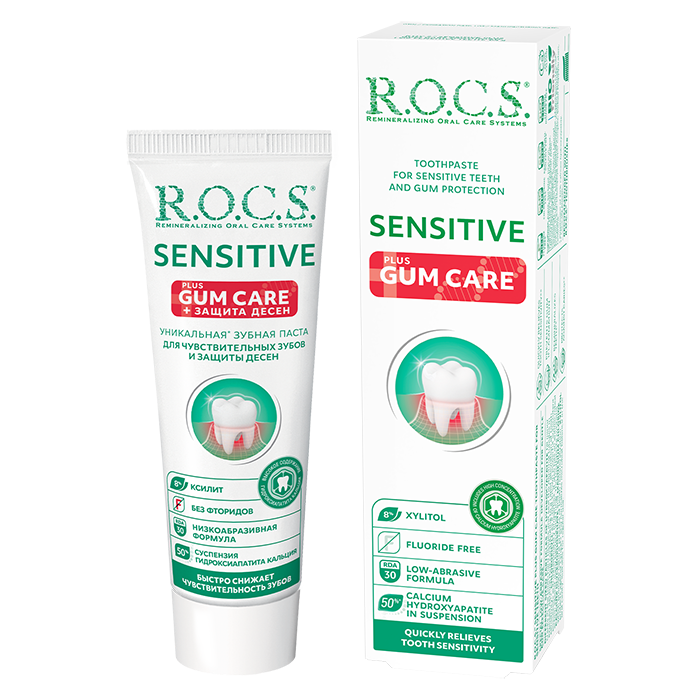
Description
Active ingredients
Properties
RIA
Clinical trials
Ingredients
Application
Description
Features
Like every toothpaste in the SENSITIVE line, R.O.C.S. SENSITIVE Plus GUM CARE contains a 50% hydroxyapatite suspension. Its formula is further enhanced with chlorophyll to protect the gums and reduce inflammation.
Indications
Daily oral care for sensitive teeth and gums.
Organoleptic properties
A mint flavor with notes of eucalyptus. The toothpaste's greenish color comes from a natural colorant.
Active ingredients

Properties
- Rapidly relieves tooth sensitivity.
- The low-abrasion formula cleans gently without damaging enamel or dentin.
- Saturates enamel with minerals.
- Protects against caries.
- Normalizes the composition of the oral microflora.
- Whitens teeth by an average of 1.5 shades after 1 month of use.
- Protects gums from inflammation.
RIA
* Russian Abrasivity Index reflects the cleaning capacity level of oral care products and polishing pastes. Products with a higher RIA value have enhanced cleaning properties, but are also a risk factor for the development of non-carious dental lesions, therefore the choice of toothpaste should be guided by the condition of the hard dental tissues.
Russian Abrasivity Index (RIA): a new stage in oral hygiene standardization
The DRC group of companies, in collaboration with the Institute of Digital Dentistry of the RUDN Medical Institute, has developed and is implementing a new toothpaste abrasivity measurement standard in Russia that meets the highest requirements: safety, accuracy, reproducibility. Принято. This methodology is an alternative to the RDA measurement method and offers a number of advantages. Its effectiveness has been confirmed by a large-scale experimental and clinical study involving 534 patients.
The methodology is based on a rotary machine and digital technologies developed by a research group of dentists, physicists, and digital modeling specialists. QLF diagnostics, intraoral scanning, and digital analysis were used in the work, which made it possible to obtain objective data on tooth wear and the influence of abrasivity over time.
Download RIA research protocol (in Russian):
Clinical trials
Toothpaste based on hydroxyapatite and calcium glycerophosphate has been proven to reduce dentin hypersensitivity and whiten teeth by an average of 1.5 shades after 1 month of use:
www.dentaljournal.by
The aim of the study was to evaluate the effectiveness of a non-abrasive toothpaste containing hydroxyapatite particles and calcium glycerophosphate in patients with dentin hypersensitivity.
The study included 89 patients (26 men and 63 women) aged 20–65 years who presented to the clinic with complaints of tooth pain sensitivity. The patients were divided into two groups:
- Patients in the first group used R.O.C.S. Sensitive Instant Relief toothpaste in combination with a R.O.C.S. Sensitive soft toothbrush for twice-daily oral hygiene for 1 month.
- Patients in the second (control) group received four applications of fluoride varnish at a dental appointment with a 3-day interval, according to the fluoride varnish manufacturer's instructions. The second treatment regimen also included the use of a toothpaste without active components and a soft toothbrush for twice-daily oral hygiene for 1 month.
Fig. 1. Cold air stimulus
Fig. 2. Probing with a dental probe
Daily use (for one month) of R.O.C.S. Sensitive Instant Relief toothpaste containing hydroxyapatite and calcium glycerophosphate in combination with a soft toothbrush leads to a statistically significant (p=0.001) reduction in pain sensitivity scores in response to a cold stimulus. The results obtained with this type of treatment are similar to those of a treatment regimen that includes four applications of fluoride varnish at three-day intervals.
Download this article for free in Russian:
The aim of this study was to evaluate the effectiveness of a toothpaste based on calcium hydroxyapatite, silica, and calcium glycerophosphate in reducing dentin hypersensitivity caused by the loss of hard dental tissues (erosion, wedge-shaped defects, microfractures, chips, abrasion, etc.).
The study group included 30 people aged 20 to 56 years with pronounced symptoms of tooth sensitivity and enamel integrity defects.
The subjects used R.O.C.S. SENSITIVE REPAIR & WHITENING toothpaste daily for one month. The level of dentin hypersensitivity was determined by an instrumental method (YeapleProbes device) and subjectively (Schiff scale). Tooth color was determined using a VITA Easyshade Compact spectrophotometer (VITA Zahnfabrik, Germany). The parameters were recorded at baseline and after 4 weeks.
based on the instrumental recording method
Fig. 1. Upper jaw
Fig. 2. Lower jaw
Fig. 3. Upper jaw
Fig. 4. Lower jaw
During the use of the test toothpaste, a significant improvement in the studied parameters of the hard dental tissues was recorded in all subjects. The toothpaste based on mineral components (hydroxyapatite and calcium glycerophosphate) demonstrated high clinical effectiveness for patients with hypersensitivity of the hard dental tissues.
The dynamics of instrumental tooth color recording before and after the use of the test toothpaste and the subjective impressions of patients showed that, in addition to reducing sensitivity, the use of this toothpaste improves the color of the tooth enamel.
Download this article for free in Russian:
R.O.C.S. toothpaste with active minerals (calcium glycerophosphate + magnesium chloride) and xylitol saturates enamel with minerals and increases caries resistance and the rate of tooth remineralization:
The study found that R.O.C.S. toothpaste containing sources of calcium, phosphate, and magnesium, without fluoride, enhances caries resistance of teeth no less effectively than a toothpaste containing sodium fluoride at maximum concentrations (1500 ppm F–).
R.O.C.S. toothpaste significantly increases the rate of remineralization of teeth exposed to acid, and, due to its ability to limit plaque growth, allows achieving a good level of oral hygiene within one week of use.
Download the article for free in Russian:
Enamel tunnels are microstructures that curve in an S-shape along the bundles of enamel prisms and extend to the dentin, penetrating it in the form of enamel bridges, where metabolic exchange between the enamel and dentin takes place. On the enamel surface, these tunnels open as enamel pores. X-ray spectral microanalysis and planar spectrograms show that the walls of enamel tunnels and the areas near them contain mainly mineral components (Ca, Ba, Cd, Sr, P, Si, As, C, K, Br, I, Cl), while the lumen contains organic components. It has been established that the mineral component of R.O.C.S. toothpastes actively penetrates through the enamel tunnels into the area of the enamel-dentin junction and the superficial layers of the dentin, exerting a positive effect on the structural and functional caries resistance of teeth.
Download this article for free in Russian:
Confirmation of the prebiotic and anti-adhesive properties of xylitol (normalization of microflora, protection against cariogenic bacteria and Candida fungi):
The high prevalence of caries in young children necessitates the use of therapeutic and preventive products that target the primary etiopathogenetic factor of this disease — pathogenic microflora. This study presents comparative data on the antimicrobial effectiveness of products containing xylitol and chlorhexidine, as well as their effect on the microbiocenosis composition of the dental biofilm.
A total of 30 patients aged 12 to 36 months with early childhood caries (18 boys and 12 girls) were followed for one month. The patients were divided into two equal groups using a blinded method:
- Patients in group 1 used R.O.C.S. Medical Minerals gel for local antimicrobial and remineralizing therapy over the course of one month.
- Patients in group 2 were prescribed daily one- to two-minute applications of a 0.1% chlorhexidine solution once a day for 7–10 days as local antimicrobial therapy. "Belagel Ca/P" gel was used daily for one month as remineralizing therapy.
It was recommended that the remineralizing gels be applied 4–5 times a day after toothbrushing. All procedures were performed by the patients' parents at home after receiving prior instruction.
At baseline and at the end of the prescribed treatment course, all patients underwent molecular biology testing using multiplex PCR at the NIMSI laboratory.
In group 1, a significant reduction in colonization by cariogenic species was detected, along with a positive effect of the R.O.C.S. Medical Minerals remineralizing gel components on the ratio of cariogenic to resident species, as well as a decrease in the quantity and frequency of detection of certain periodontopathogenic anaerobic bacteria (Table 1). An important positive feature of the change in the dental biofilm microbiocenosis composition in the first group was also the disappearance of Candida fungi.
Examination of the microbial flora of dental plaque in group 2 patients one month after treatment showed only some positive shifts in the ratio of cariogenic to normal flora, and a decrease in the frequency of detection of certain virulent strains. At the same time, the quantity and frequency of detection of representatives of the resident bacterial group — enterococci — decreased. In addition, the detection rate of the yeast-like fungus Candida albicans increased, with a statistically significant rise in the fungal colonization of dental plaque. These data indicate the development of dysbiosis with the use of chlorhexidine.
Table 1. Comparative assessment of changes in the frequency of detection of microbial flora in dental plaque between the two groups after a course of therapy
| Genus, species of bacteria | 0.1% chlorhexidine | R.O.C.S. Medical Minerals with xylitol |
|---|---|---|
| Streptococcus mutans (cariogenic strain) | no change | 45.4% reduction |
| Actinomyces spp. (cariogenic strain) | 33.3% reduction | 44.5% reduction |
| Veillonella parvula (resident) | 24.7% increase | 40.2% increase |
| Porphyromonas gingivalis (periodontopathogen) | 66.5% reduction | no change |
| Prevotella melaninogenica (virulent strain) | 20% increase | 44.5% reduction |
| Fusobacterium nucleatum (periodontopathogen) | 4.8-fold increase | 33.5% reduction |
| Candida albicans (fungus, pathogen) | 49.8% increase | complete disappearance |
A clinical examination after one month showed no new carious cavities or demineralization foci in group 1 patients; existing chalky spots regained their luster; the progression of carious defects was halted; and signs of catarrhal gingivitis disappeared.
During the clinical examination of group 2 patients, no new carious cavities were recorded either; the disappearance of catarrhal gingivitis signs was observed in 80% of patients (of those who had it at baseline).
The inclusion of both xylitol and chlorhexidine as antimicrobial therapy in the comprehensive treatment plan for early childhood caries leads to a reduction in the detection frequency and colonization level of cariogenic and periodontopathogenic flora in dental plaque.
The data presented indicate a more physiological action of xylitol; it has a positive effect on the microbiocenosis composition of the dental biofilm, normalizing the qualitative (species) composition and the quantitative bacterial load of both cariogenic and stabilizing resident species.
Download this article for free:
Very few substances are known today that can significantly affect the caries-causing environment in the mouth and reduce the risk of tooth decay. One of the most widely studied substances with an anti-caries effect is xylitol. However, the antibacterial mechanism of xylitol is not fully understood. This study provides data confirming xylitol's ability to significantly inhibit the adhesion of oral streptococci, the primary formers of dental plaque. These bacteria delay the development of caries- and periodontal disease-causing bacteria on tooth surfaces through a mechanism called co-adhesion. We also revealed the ability of xylitol to inhibit the adhesion of Streptococcus sobrinus, a microorganism associated with caries, and Staphylococcus aureus, which increases the virulence level of dental plaque. This mechanism of action is realised in toothpaste within the time period traditionally recommended for brushing teeth.
Download the article for free in Russian:
Ingredients
Aqua, Sorbitol, Glycerin, Dicalcium Phosphate Dihydrate, Xylitol, Hydroxyapatite, Silica, Xanthan Gum, Calcium Glycerophosphate, Cocamidopropyl Betaine, Sodium Lauroyl Sarcosinate, Aroma, Hydroxyacetophenone, Magnesium Chloride, Sodium Saccharin, Sodium Methylparaben, Sodium Benzoate, O-Cymen-5-ol, Chlorophyll-Copper Complex, Sodium Propylparaben, Limonene.
Application
Use twice a day (morning and evening) with a soft toothbrush. Recommended toothbrushing time is 2-3 minutes.
Suitable for all ages, with no time restrictions on use.
Description
Active ingredients
Properties
RIA
Clinical trials
Ingredients
Application
Description
Features
R.O.C.S. PERIODONT toothpaste is a comprehensive solution for managing the symptoms of inflammatory periodontal diseases, as well as tooth hypersensitivity associated with these conditions.
The plant extracts have a pronounced anti-inflammatory effect on periodontal tissues, reduce gum bleeding and possess a broad spectrum of antimicrobial action. Sodium bicarbonate provides a decongestant effect.
Hydroxyapatite and active minerals help protect hard dental tissues and alleviate tooth sensitivity when the tooth neck is exposed.
Indications
Comprehensive care for teeth and gums in cases of inflammatory periodontal diseases.
Organoleptic properties
A white toothpaste with a mild mint flavor that does not cause a burning sensation.
Active ingredients


Properties
- Reduces gum inflammation and bleeding.
- Helps maintain stable periodontal tissue levels.
- Eliminates tooth hypersensitivity.
- Saturates enamel with minerals.
- Protects against caries.
- Normalizes the composition of the oral microflora.
RIA

* Russian Abrasivity Index reflects the cleaning capacity level of oral care products and polishing pastes. Products with a higher RIA value have enhanced cleaning properties, but are also a risk factor for the development of non-carious dental lesions, therefore the choice of toothpaste should be guided by the condition of the hard dental tissues.
Russian Abrasivity Index (RIA): a new stage in oral hygiene standardization
The DRC group of companies, in collaboration with the Institute of Digital Dentistry of the RUDN Medical Institute, has developed and is implementing a new toothpaste abrasivity measurement standard in Russia that meets the highest requirements: safety, accuracy, reproducibility. Принято. This methodology is an alternative to the RDA measurement method and offers a number of advantages. Its effectiveness has been confirmed by a large-scale experimental and clinical study involving 534 patients.
The methodology is based on a rotary machine and digital technologies developed by a research group of dentists, physicists, and digital modeling specialists. QLF diagnostics, intraoral scanning, and digital analysis were used in the work, which made it possible to obtain objective data on tooth wear and the influence of abrasivity over time.
Download RIA research protocol (in Russian):
Clinical trials
Study of the properties of R.O.C.S. Periodont toothpaste:
This study investigated the efficacy and safety of R.O.C.S. Periodont toothpaste for the oral care of patients with chronic periodontitis and dental hard tissue hypersensitivity.
The study involved 32 people (mean age: 31.8 years) aged between 20 and 45 years with chronic periodontitis of mild to moderate severity combined with catarrhal gingivitis and hypersensitivity of dental hard tissues.
All patients were instructed in proper brushing techniques and underwent professional oral hygiene treatment. All patients used R.O.C.S. Periodont toothpaste for two months.
The oral hygiene index of patients in the study group improved significantly after two weeks of use and remained at this level throughout the observation period (Fig. 1).
The decrease in the inflammatory process of the gums (Fig. 2) could be partly due to professional oral hygiene, but using the toothpaste allowed the periodontal index to remain stable for 2 months.
Using Periodont toothpaste levelled the increase in sensitivity of the hard tissues of the teeth, which often occurs after professional oral hygiene. After two months, it reduced the intensity of sensitivity (Fig. 3).

Fig. 1. O'Leary hygiene index, %

Fig. 2. PMA index, %

Fig. 3. Air-cold test, points
In all cases of gingival inflammation (PMA index > 25%), fluorescence diagnostics using the Proof attachment on the VistaCam (405 nm) revealed the presence of plaque in the vestibular region and in areas of inflamed periodontium (Fig. 4,6).

Fig. 4. Patient M., aged 34. Plaque accumulation in the vestibular region of the teeth with transition to the inflamed gingiva. Complaints of bleeding gums and tooth sensitivity.

Fig. 5. Patient M., aged 34. Status two months after the start of the study: no plaque present. The periodontium shows no signs of inflammation.

Fig. 6. Patient N., aged 35. Plaque is present on the inflamed gums around all teeth. The patient complains of bleeding gums and tooth sensitivity. Hard tissue sensitivity: 3 points.

Fig. 7. Patient N., 35 years old. Condition 2 months after beginning to use the toothpaste. No plaque was detected and the periodontium showed no signs of inflammation. Sensitivity of hard tissues: 1 point.
During the safety study of the toothpaste, it was found that the activation coefficient of peripheral blood basophils in patients in the study group was within the normal range (1.05 ± 0.02).
Using R.O.C.S. Periodont toothpaste in patients with chronic periodontitis:
- significantly improves the hygienic level of the oral cavity;
- maintains a stable level of periodontal tissue;
- reduces the sensitivity of the hard tissues of the teeth;
- does not cause allergic reactions.
Download the article for free in Russian:
R.O.C.S. toothpaste with active minerals (calcium glycerophosphate + magnesium chloride) and xylitol saturates enamel with minerals, increases caries resistance and the rate of tooth remineralization:
The study found that R.O.C.S. toothpaste containing sources of calcium, phosphate, and magnesium, without fluoride, enhances caries resistance of teeth no less effectively than a toothpaste containing sodium fluoride at maximum concentrations (1500 ppm F–).
R.O.C.S. toothpaste significantly increases the rate of remineralization of teeth exposed to acid, and, due to its ability to limit plaque growth, allows achieving a good level of oral hygiene within one week of use.
Download the article for free in Russian:
Enamel tunnels are microstructures that curve in an S-shape along the bundles of enamel prisms and extend to the dentin, penetrating it in the form of enamel bridges, where metabolic exchange between the enamel and dentin takes place. On the enamel surface, these tunnels open as enamel pores. X-ray spectral microanalysis and planar spectrograms show that the walls of enamel tunnels and the areas near them contain mainly mineral components (Ca, Ba, Cd, Sr, P, Si, As, C, K, Br, I, Cl), while the lumen contains organic components. It has been established that the mineral component of R.O.C.S. toothpastes actively penetrates through the enamel tunnels into the area of the enamel-dentin junction and the superficial layers of the dentin, exerting a positive effect on the structural and functional caries resistance of teeth.
Download this article for free in Russian:
Confirmation of the prebiotic and anti-adhesive properties of xylitol (normalization of microflora, protection against cariogenic bacteria and Candida fungi):
The high prevalence of caries in young children necessitates the use of therapeutic and preventive products that target the primary etiopathogenetic factor of this disease — pathogenic microflora. This study presents comparative data on the antimicrobial effectiveness of products containing xylitol and chlorhexidine, as well as their effect on the microbiocenosis composition of the dental biofilm.
A total of 30 patients aged 12 to 36 months with early childhood caries (18 boys and 12 girls) were followed for one month. The patients were divided into two equal groups using a blinded method:
- Patients in group 1 used R.O.C.S. Medical Minerals gel for local antimicrobial and remineralizing therapy over the course of one month.
- Patients in group 2 were prescribed daily one- to two-minute applications of a 0.1% chlorhexidine solution once a day for 7–10 days as local antimicrobial therapy. "Belagel Ca/P" gel was used daily for one month as remineralizing therapy.
It was recommended that the remineralizing gels be applied 4–5 times a day after toothbrushing. All procedures were performed by the patients' parents at home after receiving prior instruction.
At baseline and at the end of the prescribed treatment course, all patients underwent molecular biology testing using multiplex PCR at the NIMSI laboratory.
In group 1, a significant reduction in colonization by cariogenic species was detected, along with a positive effect of the R.O.C.S. Medical Minerals remineralizing gel components on the ratio of cariogenic to resident species, as well as a decrease in the quantity and frequency of detection of certain periodontopathogenic anaerobic bacteria (Table 1). An important positive feature of the change in the dental biofilm microbiocenosis composition in the first group was also the disappearance of Candida fungi.
Examination of the microbial flora of dental plaque in group 2 patients one month after treatment showed only some positive shifts in the ratio of cariogenic to normal flora, and a decrease in the frequency of detection of certain virulent strains. At the same time, the quantity and frequency of detection of representatives of the resident bacterial group — enterococci — decreased. In addition, the detection rate of the yeast-like fungus Candida albicans increased, with a statistically significant rise in the fungal colonization of dental plaque. These data indicate the development of dysbiosis with the use of chlorhexidine.
Table 1. Comparative assessment of changes in the frequency of detection of microbial flora in dental plaque between the two groups after a course of therapy
| Genus, species of bacteria | 0.1% chlorhexidine | R.O.C.S. Medical Minerals with xylitol |
|---|---|---|
| Streptococcus mutans (cariogenic strain) | no change | 45.4% reduction |
| Actinomyces spp. (cariogenic strain) | 33.3% reduction | 44.5% reduction |
| Veillonella parvula (resident) | 24.7% increase | 40.2% increase |
| Porphyromonas gingivalis (periodontopathogen) | 66.5% reduction | no change |
| Prevotella melaninogenica (virulent strain) | 20% increase | 44.5% reduction |
| Fusobacterium nucleatum (periodontopathogen) | 4.8-fold increase | 33.5% reduction |
| Candida albicans (fungus, pathogen) | 49.8% increase | complete disappearance |
A clinical examination after one month showed no new carious cavities or demineralization foci in group 1 patients; existing chalky spots regained their luster; the progression of carious defects was halted; and signs of catarrhal gingivitis disappeared.
During the clinical examination of group 2 patients, no new carious cavities were recorded either; the disappearance of catarrhal gingivitis signs was observed in 80% of patients (of those who had it at baseline).
The inclusion of both xylitol and chlorhexidine as antimicrobial therapy in the comprehensive treatment plan for early childhood caries leads to a reduction in the detection frequency and colonization level of cariogenic and periodontopathogenic flora in dental plaque.
The data presented indicate a more physiological action of xylitol; it has a positive effect on the microbiocenosis composition of the dental biofilm, normalizing the qualitative (species) composition and the quantitative bacterial load of both cariogenic and stabilizing resident species.
Download this article for free:
Very few substances are known today that can significantly affect the caries-causing environment in the mouth and reduce the risk of tooth decay. One of the most widely studied substances with an anti-caries effect is xylitol. However, the antibacterial mechanism of xylitol is not fully understood. This study provides data confirming xylitol's ability to significantly inhibit the adhesion of oral streptococci, the primary formers of dental plaque. These bacteria delay the development of caries- and periodontal disease-causing bacteria on tooth surfaces through a mechanism called co-adhesion. We also revealed the ability of xylitol to inhibit the adhesion of Streptococcus sobrinus, a microorganism associated with caries, and Staphylococcus aureus, which increases the virulence level of dental plaque. This mechanism of action is realised in toothpaste within the time period traditionally recommended for brushing teeth.
Download the article for free in Russian:
Ingredients
Aqua, Glycerin, Silica, Xylitol, Sodium Bicarbonate, Hydroxyapatite, Populus Tremuloides Bark Extract, Xanthan Gum, Aroma, Cocamidopropyl Betaine, Lonicera Caprifolium Extract, Lonicera Japonica Extract, Calcium Glycerophosphate, Sodium Lauroyl Sarcosinate, Sodium saccharin, Sodium Benzoate, Sodium Methylparaben, Sodium Propylparaben, O-cymen-5-ol, Magnesium Chloride, Potassium Hydroxide, Limonene, Linalool.
Application
Use twice a day (morning and evening) with a soft or medium-bristled toothbrush. Brushing time is 2-3 minutes.
Suitable for all ages, with no time restrictions on use.
After toothbrushing, as well as after each meal, we recommend using R.O.C.S. mouthwash with plant extracts or the R.O.C.S. Whitening Black Edition peroxide-containing mouthwash.
Description
Active ingredients
Properties
RIA
Clinical trials
Ingredients
Application
Description
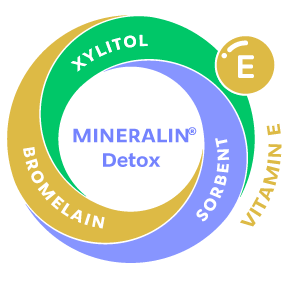
Features
R.O.C.S. Coffee and Tobacco toothpaste was developed with the specific pathological processes of a smoker's oral cavity in mind. It delivers a high level of comprehensive protection for teeth and gums. With medium abrasivity, it gently removes surface stains, restoring the enamel's natural whiteness, and slows the formation of dental plaque and tartar. Its multi-component flavor neutralizes the smell of tobacco smoke.
Indications
- The toothpaste is intended for regular daily use to counteract the negative effects of smoking.
- It is also suitable for those who enjoy coffee, strong tea, red wine, and other products that darken tooth enamel.
Organoleptic properties
A cream-colored toothpaste with a refreshing mint flavor. Contains no artificial colorants.
Active ingredients


Properties
- Prevents dark plaque and tartar formation.
- Effectively cleans teeth and slows plaque formation.
- Normalizes the composition of the oral microflora.
- Reduces gum inflammation and bleeding.
- Neutralizes the smell of tobacco smoke.
- Keeps breath fresh for longer.
RIA

* Russian Abrasivity Index reflects the cleaning capacity level of oral care products and polishing pastes. Products with a higher RIA value have enhanced cleaning properties, but are also a risk factor for the development of non-carious dental lesions, therefore the choice of toothpaste should be guided by the condition of the hard dental tissues.
Russian Abrasivity Index (RIA): a new stage in oral hygiene standardization
The DRC group of companies, in collaboration with the Institute of Digital Dentistry of the RUDN Medical Institute, has developed and is implementing a new toothpaste abrasivity measurement standard in Russia that meets the highest requirements: safety, accuracy, reproducibility. Принято. This methodology is an alternative to the RDA measurement method and offers a number of advantages. Its effectiveness has been confirmed by a large-scale experimental and clinical study involving 534 patients.
The methodology is based on a rotary machine and digital technologies developed by a research group of dentists, physicists, and digital modeling specialists. QLF diagnostics, intraoral scanning, and digital analysis were used in the work, which made it possible to obtain objective data on tooth wear and the influence of abrasivity over time.
Download RIA research protocol (in Russian):
Clinical trials
Bromelain toothpaste has been proven to reduce bacterial adhesion and, as a result, slow the rate of dental plaque formation:
The present study aimed to evaluate the effect of R.O.C.S. enzyme-containing toothpaste with bromelain and xylitol on the adhesion of microorganisms in the human oral cavity. A positive control was created using R.O.C.S. toothpaste with xylitol, but without the enzyme.
Anti-adhesive activity was studied using a culture of human embryonic musculocutaneous fibroblasts.
The test microorganism cultures were clinical strains of microorganisms isolated from the oral cavities of volunteers: Staphylococcus aureus, Streptococcus salivarius, Streptococcus sanguis and Streptococcus sobrinus.
A sample of the toothpaste at a dilution of 1:20,000 (in the presence of 50% human serum) and a culture of the test strain at a dose of 10⁸ KOU/ml were added to the cell culture and incubated at 37 °C. After incubation, the monolayer cells were washed to remove unattached bacteria by repeatedly changing the Eagle's medium. The cells were then fixed with ethyl alcohol, stained with Romanowsky-Giemsa, and examined under a microscope.
The degree of microbial adhesion was determined by the microbial load relative to the control, which was taken as 100%.
The study was carried out using the blind method. All studies were carried out three times.
After three minutes of incubation, which corresponds to the duration of normal tooth brushing, the suppression of adhesion was as follows:
- S.aureus - 80%
- Str.salivarius - 80%
- Str.sangius - 83%
- Str.sobrinius - 79%
However, when the exposure time was increased to 2 hours, the anti-adhesive efficacy decreased significantly. This seems to be due to the adhesion becoming reversible shortly after the strains were introduced into the model system, as adhesion usually becomes irreversible after 1–2 hours.
Fig. 1. Control fibroblast cells
Fig. 2. Cells + Str. salivarius
Fig. 3. Cells + S. salivarius + bromelain paste
(exposure 2h.)
Fig. 4. Cells + Str.salivarius + paste with bromelain
(exposure 3 min.)
Download the article for free in Russian:
Anti-inflammatory activity of bromelain:
Toothpastes containing antiseptic substances such as triclosan, chlorhexidine, aluminium and zinc salts are among the hygiene products capable of inhibiting plaque formation. However, their high antimicrobial activity can lead to oral dysbacteriosis with long-term use, reducing the effectiveness of treatment. An alternative are hygiene products whose antimicrobial action is realised due to enzyme-containing components.
Over a period of two months, 40 patients, aged 18–36 years and of both sexes, with chronic catarrhal gingivitis were examined. The patients were randomly divided into two groups:
- Group 1 patients used R.O.C.S. toothpaste containing the patented MINERALIN Enzyme complex (calcium glycerophosphate, magnesium chloride, xylitol and the proteolytic enzyme bromelain).
- Group 2 patients used Enzycal toothpaste containing the enzymes amyl oxidase, glucose oxidase, amylglycosidase and sodium fluoride (1450 ppm).
Within each group, two subgroups were identified according to the toothbrush used:
- standard medium-hard toothbrush,
- Curаprox soft toothbrush.
The toothpaste studies were conducted using a double-blind method. Repeated examinations, including an assessment of indices and diagnostic tests, were carried out after one and two weeks and again after one and two months.
Following the initial visual examination and calculation of the indices, it was found that acute and chronic catarrhal gingivitis of a mild degree were predominant in both groups.
As early as the 14th day of the study, PMA index values decreased from 29.5% to 2% and 1.5% in subgroups A and B, respectively. In group 2, the index values decreased to 3% and 2% (see Fig. 4). The best results in subgroup B were due to the use of a soft toothbrush.
Bleeding disappeared in all subjects, indicating the achievement of an anti-inflammatory effect in periodontal tissues (Fig. 3).
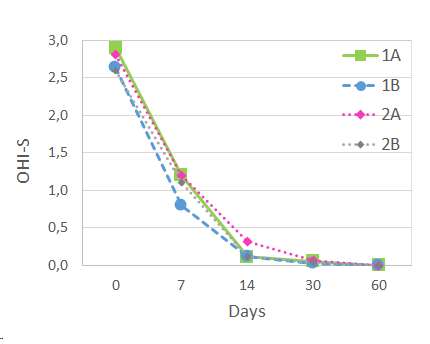
Fig. 1. Level of oral hygiene
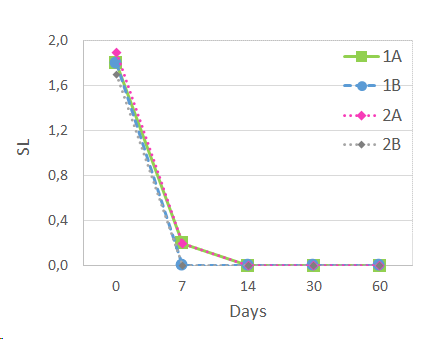
Fig. 2. Amount of plaque in the gingival region
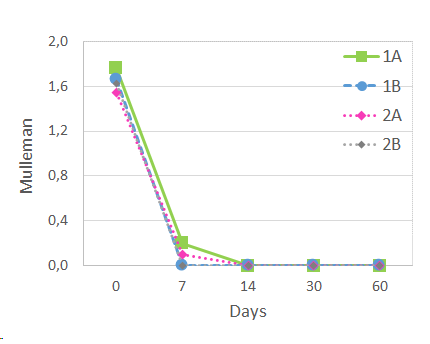
Fig. 3. Bleeding index
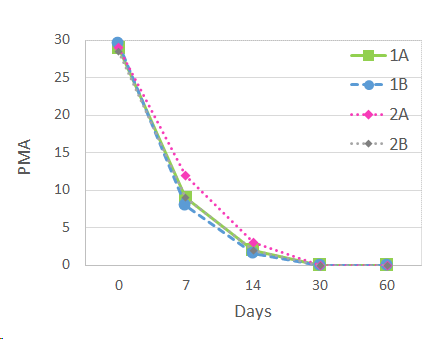
Fig. 4. Gingivitis severity score
The study of the effect of enzyme-containing toothpastes on the initial forms of inflammatory periodontal diseases, characterised by an increased tendency to plaque formation, confirmed their high efficiency.
With regular brushing using a soft brush, a pronounced anti-inflammatory effect on the periodontium was observed within a week.
After two weeks of using R.O.C.S. toothpaste, significant improvements in oral hygiene and a pronounced anti-inflammatory effect were observed, as evaluated by hygiene indices and PMA.
At the follow-up examination after two months, no deterioration in the results was observed in either group.
No cases of local irritation or allergic reactions to the oral mucosa were recorded during the entire application period.
Download the article for free in Russian:
Ingredients
Aqua, Silica, Glycerin, Xylitol, Cocamidopropyl Betaine, Xanthan Gum, Aroma, PVP, Bromelain, Tocopheryl Acetate, Sodium Saccharin, Methylparaben, Disodium EDTA, Propylparaben, Limonene.
Application
Use twice a day (morning and evening). Recommended toothbrushing time is 2-3 minutes.
Suitable for all ages, with no time restrictions on use.
For better removal of dark plaque, use together with the R.O.C.S. SMOKERS toothbrush.
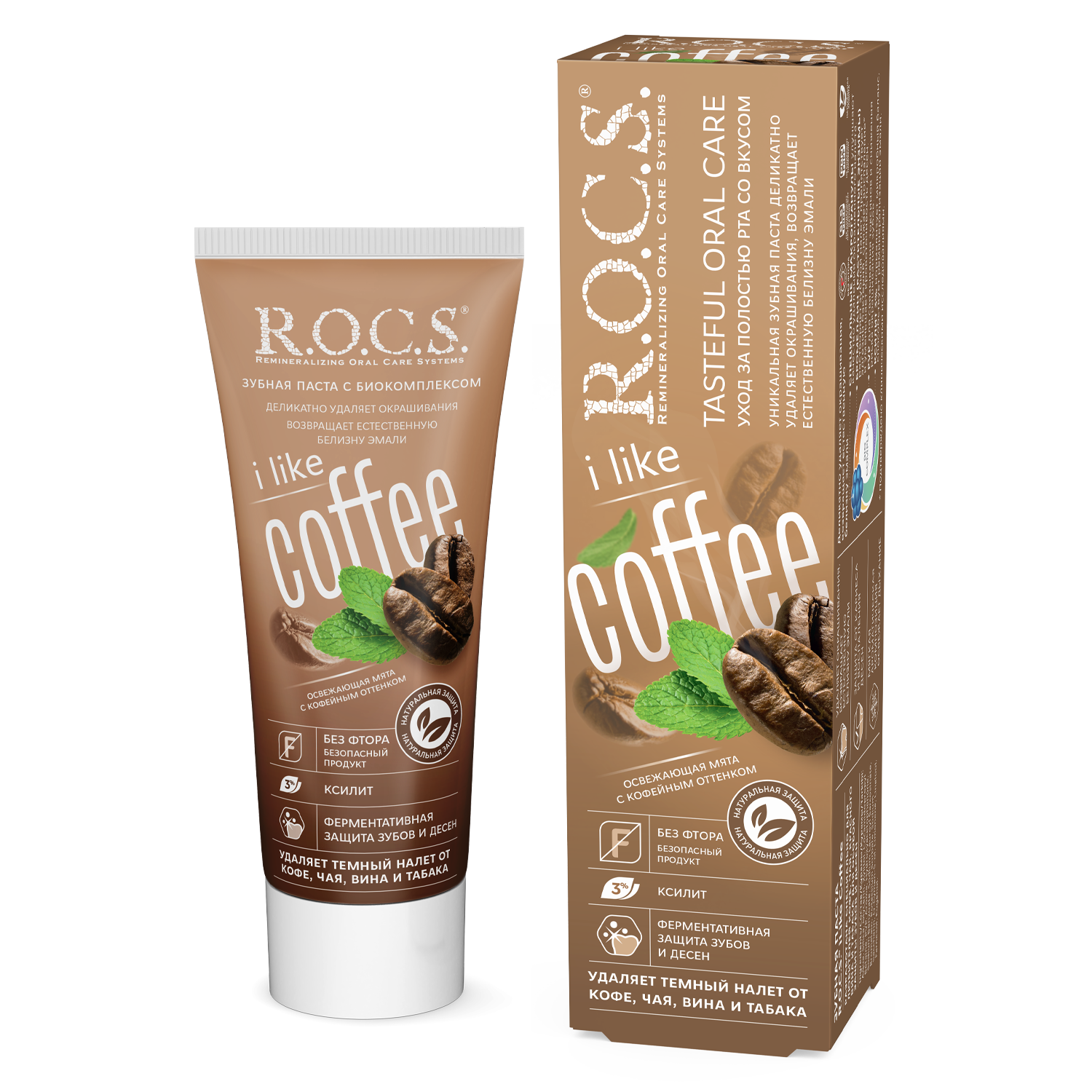
Description
Active ingredients
Properties
RIA
Clinical trials
Ingredients
Application
Description
Features
R.O.C.S. iLike Coffee toothpaste contains the patented MINERALIN Detox complex and active cleansing granules.
Regular use of the toothpaste helps remove surface enamel stains and slows the formation of dental plaque and tartar.
Indications
- Regular oral care.
- For those who enjoy tobacco, coffee, strong tea, red wine, and other products that darken tooth enamel.
Organoleptic properties
A cream-colored toothpaste with a mild, refreshing mint flavor with coffee notes. Contains no artificial colorants.
Active ingredients
Properties
- Prevents dark plaque and tartar formation.
- Effectively cleans teeth and slows plaque formation.
- Helps normalize the composition of the oral microflora.
- Reduces gum inflammation and bleeding.
RIA

* Russian Abrasivity Index reflects the cleaning capacity level of oral care products and polishing pastes. Products with a higher RIA value have enhanced cleaning properties, but are also a risk factor for the development of non-carious dental lesions, therefore the choice of toothpaste should be guided by the condition of the hard dental tissues.
Russian Abrasivity Index (RIA): a new stage in oral hygiene standardization
The DRC group of companies, in collaboration with the Institute of Digital Dentistry of the RUDN Medical Institute, has developed and is implementing a new toothpaste abrasivity measurement standard in Russia that meets the highest requirements: safety, accuracy, reproducibility. Принято. This methodology is an alternative to the RDA measurement method and offers a number of advantages. Its effectiveness has been confirmed by a large-scale experimental and clinical study involving 534 patients.
The methodology is based on a rotary machine and digital technologies developed by a research group of dentists, physicists, and digital modeling specialists. QLF diagnostics, intraoral scanning, and digital analysis were used in the work, which made it possible to obtain objective data on tooth wear and the influence of abrasivity over time.
Download RIA research protocol (in Russian):
Clinical trials
Bromelain toothpaste has been proven to reduce bacterial adhesion and, as a result, slow the rate of dental plaque formation:
The present study aimed to evaluate the effect of R.O.C.S. enzyme-containing toothpaste with bromelain and xylitol on the adhesion of microorganisms in the human oral cavity. A positive control was created using R.O.C.S. toothpaste with xylitol, but without the enzyme.
Anti-adhesive activity was studied using a culture of human embryonic musculocutaneous fibroblasts.
The test microorganism cultures were clinical strains of microorganisms isolated from the oral cavities of volunteers: Staphylococcus aureus, Streptococcus salivarius, Streptococcus sanguis and Streptococcus sobrinus.
A sample of the toothpaste at a dilution of 1:20,000 (in the presence of 50% human serum) and a culture of the test strain at a dose of 10⁸ KOU/ml were added to the cell culture and incubated at 37 °C. After incubation, the monolayer cells were washed to remove unattached bacteria by repeatedly changing the Eagle's medium. The cells were then fixed with ethyl alcohol, stained with Romanowsky-Giemsa, and examined under a microscope.
The degree of microbial adhesion was determined by the microbial load relative to the control, which was taken as 100%.
The study was carried out using the blind method. All studies were carried out three times.
After three minutes of incubation, which corresponds to the duration of normal tooth brushing, the suppression of adhesion was as follows:
- S.aureus - 80%
- Str.salivarius - 80%
- Str.sangius - 83%
- Str.sobrinius - 79%
However, when the exposure time was increased to 2 hours, the anti-adhesive efficacy decreased significantly. This seems to be due to the adhesion becoming reversible shortly after the strains were introduced into the model system, as adhesion usually becomes irreversible after 1–2 hours.
Fig. 1. Control fibroblast cells
Fig. 2. Cells + Str. salivarius
Fig. 3. Cells + S. salivarius + bromelain paste
(exposure 2h.)
Fig. 4. Cells + Str.salivarius + paste with bromelain
(exposure 3 min.)
Download the article for free in Russian:
Anti-inflammatory activity of bromelain:
Toothpastes containing antiseptic substances such as triclosan, chlorhexidine, aluminium and zinc salts are among the hygiene products capable of inhibiting plaque formation. However, their high antimicrobial activity can lead to oral dysbacteriosis with long-term use, reducing the effectiveness of treatment. An alternative are hygiene products whose antimicrobial action is realised due to enzyme-containing components.
Over a period of two months, 40 patients, aged 18–36 years and of both sexes, with chronic catarrhal gingivitis were examined. The patients were randomly divided into two groups:
- Group 1 patients used R.O.C.S. toothpaste containing the patented MINERALIN Enzyme complex (calcium glycerophosphate, magnesium chloride, xylitol and the proteolytic enzyme bromelain).
- Group 2 patients used Enzycal toothpaste containing the enzymes amyl oxidase, glucose oxidase, amylglycosidase and sodium fluoride (1450 ppm).
Within each group, two subgroups were identified according to the toothbrush used:
- standard medium-hard toothbrush,
- Curаprox soft toothbrush.
The toothpaste studies were conducted using a double-blind method. Repeated examinations, including an assessment of indices and diagnostic tests, were carried out after one and two weeks and again after one and two months.
Following the initial visual examination and calculation of the indices, it was found that acute and chronic catarrhal gingivitis of a mild degree were predominant in both groups.
As early as the 14th day of the study, PMA index values decreased from 29.5% to 2% and 1.5% in subgroups A and B, respectively. In group 2, the index values decreased to 3% and 2% (see Fig. 4). The best results in subgroup B were due to the use of a soft toothbrush.
Bleeding disappeared in all subjects, indicating the achievement of an anti-inflammatory effect in periodontal tissues (Fig. 3).
Fig. 1. Level of oral hygiene
Fig. 2. Amount of plaque in the gingival region
Fig. 3. Bleeding index
Fig. 4. Gingivitis severity score
The study of the effect of enzyme-containing toothpastes on the initial forms of inflammatory periodontal diseases, characterised by an increased tendency to plaque formation, confirmed their high efficiency.
With regular brushing using a soft brush, a pronounced anti-inflammatory effect on the periodontium was observed within a week.
After two weeks of using R.O.C.S. toothpaste, significant improvements in oral hygiene and a pronounced anti-inflammatory effect were observed, as evaluated by hygiene indices and PMA.
At the follow-up examination after two months, no deterioration in the results was observed in either group.
No cases of local irritation or allergic reactions to the oral mucosa were recorded during the entire application period.
Download the article for free in Russian:
Ingredients
Aqua, Silica, Glycerin, Xylitol, Cocamidopropyl, Betaine, PVP, Aroma, Hydroxyacetophenone, Sodium,Benzoate, Sodium Lauroyl Sarcosinate, Bromelain, Potassium Sorbate, Sodium Saccharin, O-Cymen-5-ol, Limonene, Linalool, Farnesol, Eugenol.
Application
Use twice a day (morning and evening). Recommended toothbrushing time is 2-3 minutes.
Suitable for all ages, with no time restrictions on use.
For better removal of dark plaque, use together with the R.O.C.S. SMOKERS or R.O.C.S. PRO WHITENING toothbrush.
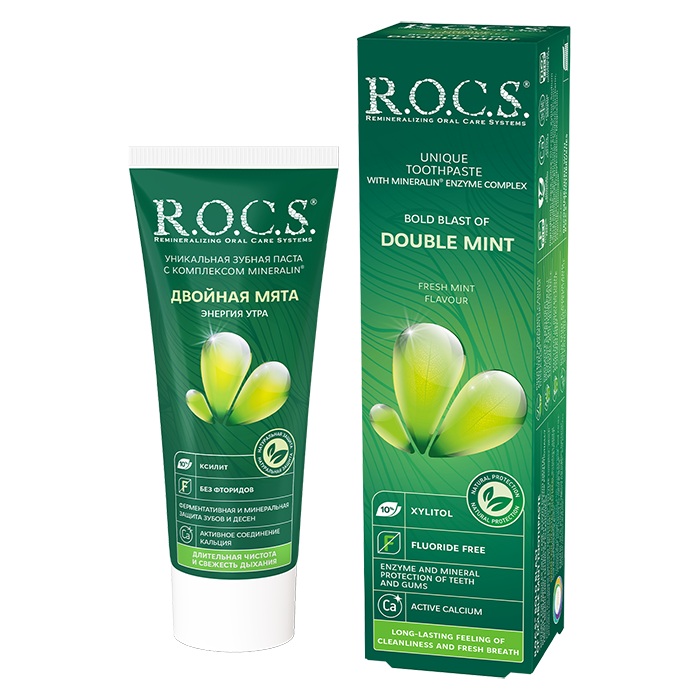
Description
Active ingredients
Properties
RIA
Clinical trials
Ingredients
Application
Description
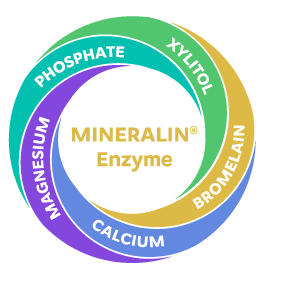
Features
R.O.C.S. Double Mint adult toothpaste contains the patented MINERALIN Enzyme complex, which delivers a high level of protection for teeth and gums.
The active components of the complex work better together than apart, enhancing each other's effects. Bromelain and xylitol are responsible for plaque control and normalizing the microflora. In turn, remineralization of plaque-free enamel proceeds more efficiently and continues for some time after brushing.
Indications
- Regular oral care and comprehensive protection for teeth and gums.
Organoleptic properties
The toothpaste has a bright, sweet mint taste. The color ranges from cream to brown (the plant enzyme gives the toothpaste its darker shade).
Active ingredients
Properties
- Effectively cleans teeth and slows plaque formation.
- Normalizes the composition of the oral microflora.
- Protects against caries.
- Reduces gum inflammation and bleeding.
- Whitens teeth by an average of 1.7 shades after 1 month of use.
RIA

* Russian Abrasivity Index reflects the cleaning capacity level of oral care products and polishing pastes. Products with a higher RIA value have enhanced cleaning properties, but are also a risk factor for the development of non-carious dental lesions, therefore the choice of toothpaste should be guided by the condition of the hard dental tissues.
Russian Abrasivity Index (RIA): a new stage in oral hygiene standardization
The DRC group of companies, in collaboration with the Institute of Digital Dentistry of the RUDN Medical Institute, has developed and is implementing a new toothpaste abrasivity measurement standard in Russia that meets the highest requirements: safety, accuracy, reproducibility. Принято. This methodology is an alternative to the RDA measurement method and offers a number of advantages. Its effectiveness has been confirmed by a large-scale experimental and clinical study involving 534 patients.
The methodology is based on a rotary machine and digital technologies developed by a research group of dentists, physicists, and digital modeling specialists. QLF diagnostics, intraoral scanning, and digital analysis were used in the work, which made it possible to obtain objective data on tooth wear and the influence of abrasivity over time.
Download RIA research protocol (in Russian):
Clinical trials
Bromelain toothpaste has been proven to reduce bacterial adhesion and, as a result, slow the rate of dental plaque formation:
The present study aimed to evaluate the effect of R.O.C.S. enzyme-containing toothpaste with bromelain and xylitol on the adhesion of microorganisms in the human oral cavity. A positive control was created using R.O.C.S. toothpaste with xylitol, but without the enzyme.
Anti-adhesive activity was studied using a culture of human embryonic musculocutaneous fibroblasts.
The test microorganism cultures were clinical strains of microorganisms isolated from the oral cavities of volunteers: Staphylococcus aureus, Streptococcus salivarius, Streptococcus sanguis and Streptococcus sobrinus.
A sample of the toothpaste at a dilution of 1:20,000 (in the presence of 50% human serum) and a culture of the test strain at a dose of 10⁸ KOU/ml were added to the cell culture and incubated at 37 °C. After incubation, the monolayer cells were washed to remove unattached bacteria by repeatedly changing the Eagle's medium. The cells were then fixed with ethyl alcohol, stained with Romanowsky-Giemsa, and examined under a microscope.
The degree of microbial adhesion was determined by the microbial load relative to the control, which was taken as 100%.
The study was carried out using the blind method. All studies were carried out three times.
After three minutes of incubation, which corresponds to the duration of normal tooth brushing, the suppression of adhesion was as follows:
- S.aureus - 80%
- Str.salivarius - 80%
- Str.sangius - 83%
- Str.sobrinius - 79%
However, when the exposure time was increased to 2 hours, the anti-adhesive efficacy decreased significantly. This seems to be due to the adhesion becoming reversible shortly after the strains were introduced into the model system, as adhesion usually becomes irreversible after 1–2 hours.
Fig. 1. Control fibroblast cells
Fig. 2. Cells + Str. salivarius
Fig. 3. Cells + S. salivarius + bromelain paste
(exposure 2h.)
Fig. 4. Cells + Str.salivarius + paste with bromelain
(exposure 3 min.)
Download the article for free in Russian:
Anti-inflammatory activity of bromelain:
Toothpastes containing antiseptic substances such as triclosan, chlorhexidine, aluminium and zinc salts are among the hygiene products capable of inhibiting plaque formation. However, their high antimicrobial activity can lead to oral dysbacteriosis with long-term use, reducing the effectiveness of treatment. An alternative are hygiene products whose antimicrobial action is realised due to enzyme-containing components.
Over a period of two months, 40 patients, aged 18–36 years and of both sexes, with chronic catarrhal gingivitis were examined. The patients were randomly divided into two groups:
- Group 1 patients used R.O.C.S. toothpaste containing the patented MINERALIN Enzyme complex (calcium glycerophosphate, magnesium chloride, xylitol and the proteolytic enzyme bromelain).
- Group 2 patients used Enzycal toothpaste containing the enzymes amyl oxidase, glucose oxidase, amylglycosidase and sodium fluoride (1450 ppm).
Within each group, two subgroups were identified according to the toothbrush used:
- standard medium-hard toothbrush,
- Curаprox soft toothbrush.
The toothpaste studies were conducted using a double-blind method. Repeated examinations, including an assessment of indices and diagnostic tests, were carried out after one and two weeks and again after one and two months.
Following the initial visual examination and calculation of the indices, it was found that acute and chronic catarrhal gingivitis of a mild degree were predominant in both groups.
As early as the 14th day of the study, PMA index values decreased from 29.5% to 2% and 1.5% in subgroups A and B, respectively. In group 2, the index values decreased to 3% and 2% (see Fig. 4). The best results in subgroup B were due to the use of a soft toothbrush.
Bleeding disappeared in all subjects, indicating the achievement of an anti-inflammatory effect in periodontal tissues (Fig. 3).
Fig. 1. Level of oral hygiene
Fig. 2. Amount of plaque in the gingival region
Fig. 3. Bleeding index
Fig. 4. Gingivitis severity score
The study of the effect of enzyme-containing toothpastes on the initial forms of inflammatory periodontal diseases, characterised by an increased tendency to plaque formation, confirmed their high efficiency.
With regular brushing using a soft brush, a pronounced anti-inflammatory effect on the periodontium was observed within a week.
After two weeks of using R.O.C.S. toothpaste, significant improvements in oral hygiene and a pronounced anti-inflammatory effect were observed, as evaluated by hygiene indices and PMA.
At the follow-up examination after two months, no deterioration in the results was observed in either group.
No cases of local irritation or allergic reactions to the oral mucosa were recorded during the entire application period.
Download the article for free in Russian:
Confirmation of the prebiotic and anti-adhesive properties of xylitol (normalization of microflora, protection against cariogenic bacteria and Candida fungi):
The high prevalence of caries in young children necessitates the use of therapeutic and preventive products that target the primary etiopathogenetic factor of this disease — pathogenic microflora. This study presents comparative data on the antimicrobial effectiveness of products containing xylitol and chlorhexidine, as well as their effect on the microbiocenosis composition of the dental biofilm.
A total of 30 patients aged 12 to 36 months with early childhood caries (18 boys and 12 girls) were followed for one month. The patients were divided into two equal groups using a blinded method:
- Patients in group 1 used R.O.C.S. Medical Minerals gel for local antimicrobial and remineralizing therapy over the course of one month.
- Patients in group 2 were prescribed daily one- to two-minute applications of a 0.1% chlorhexidine solution once a day for 7–10 days as local antimicrobial therapy. "Belagel Ca/P" gel was used daily for one month as remineralizing therapy.
It was recommended that the remineralizing gels be applied 4–5 times a day after toothbrushing. All procedures were performed by the patients' parents at home after receiving prior instruction.
At baseline and at the end of the prescribed treatment course, all patients underwent molecular biology testing using multiplex PCR at the NIMSI laboratory.
In group 1, a significant reduction in colonization by cariogenic species was detected, along with a positive effect of the R.O.C.S. Medical Minerals remineralizing gel components on the ratio of cariogenic to resident species, as well as a decrease in the quantity and frequency of detection of certain periodontopathogenic anaerobic bacteria (Table 1). An important positive feature of the change in the dental biofilm microbiocenosis composition in the first group was also the disappearance of Candida fungi.
Examination of the microbial flora of dental plaque in group 2 patients one month after treatment showed only some positive shifts in the ratio of cariogenic to normal flora, and a decrease in the frequency of detection of certain virulent strains. At the same time, the quantity and frequency of detection of representatives of the resident bacterial group — enterococci — decreased. In addition, the detection rate of the yeast-like fungus Candida albicans increased, with a statistically significant rise in the fungal colonization of dental plaque. These data indicate the development of dysbiosis with the use of chlorhexidine.
Table 1. Comparative assessment of changes in the frequency of detection of microbial flora in dental plaque between the two groups after a course of therapy
| Genus, species of bacteria | 0.1% chlorhexidine | R.O.C.S. Medical Minerals with xylitol |
|---|---|---|
| Streptococcus mutans (cariogenic strain) | no change | 45.4% reduction |
| Actinomyces spp. (cariogenic strain) | 33.3% reduction | 44.5% reduction |
| Veillonella parvula (resident) | 24.7% increase | 40.2% increase |
| Porphyromonas gingivalis (periodontopathogen) | 66.5% reduction | no change |
| Prevotella melaninogenica (virulent strain) | 20% increase | 44.5% reduction |
| Fusobacterium nucleatum (periodontopathogen) | 4.8-fold increase | 33.5% reduction |
| Candida albicans (fungus, pathogen) | 49.8% increase | complete disappearance |
A clinical examination after one month showed no new carious cavities or demineralization foci in group 1 patients; existing chalky spots regained their luster; the progression of carious defects was halted; and signs of catarrhal gingivitis disappeared.
During the clinical examination of group 2 patients, no new carious cavities were recorded either; the disappearance of catarrhal gingivitis signs was observed in 80% of patients (of those who had it at baseline).
The inclusion of both xylitol and chlorhexidine as antimicrobial therapy in the comprehensive treatment plan for early childhood caries leads to a reduction in the detection frequency and colonization level of cariogenic and periodontopathogenic flora in dental plaque.
The data presented indicate a more physiological action of xylitol; it has a positive effect on the microbiocenosis composition of the dental biofilm, normalizing the qualitative (species) composition and the quantitative bacterial load of both cariogenic and stabilizing resident species.
Download this article for free:
Very few substances are known today that can significantly affect the caries-causing environment in the mouth and reduce the risk of tooth decay. One of the most widely studied substances with an anti-caries effect is xylitol. However, the antibacterial mechanism of xylitol is not fully understood. This study provides data confirming xylitol's ability to significantly inhibit the adhesion of oral streptococci, the primary formers of dental plaque. These bacteria delay the development of caries- and periodontal disease-causing bacteria on tooth surfaces through a mechanism called co-adhesion. We also revealed the ability of xylitol to inhibit the adhesion of Streptococcus sobrinus, a microorganism associated with caries, and Staphylococcus aureus, which increases the virulence level of dental plaque. This mechanism of action is realised in toothpaste within the time period traditionally recommended for brushing teeth.
Download the article for free in Russian:
A long-term study confirming the anti-caries effect of R.O.C.S. toothpaste with xylitol and active minerals (calcium glycerophosphate + magnesium chloride):
A two-year program of supervised toothbrushing carried out in schools on children aged 6-7 using R.O.C.S. (Re-mineralizing Oral Care System) toothpastes has shown very effective results in reducing the OHI-S index scores by 53-57%, the GI index scores by 57-73% and the 2-year DMFT scores by 29-32%. Remineralizing toothpastes with-out fluorine, containing 500 ppm AmF or 1000 ppm NaF, were as effective in terms of improving the oral health of the schoolchildren.
Download the article for free:
Low-abrasion toothpastes with the MINERALIN complex promote gentle enamel lightening and help maintain the results of in-office whitening:
The study presents a comparative characterization of the whitening effectiveness of three toothpastes containing various active components that contribute to enamel lightening. The approach to selecting hygiene products for achieving a tooth whitening effect is substantiated.
The study involved 75 people aged 18–45 years with no inflammatory periodontal diseases in the acute stage and no contraindications to tooth whitening. All participants were issued toothpastes in identical tubes with sequential numbering, and their individual oral hygiene skills were checked. The assigned toothpaste was to be used for toothbrushing twice a day.
Depending on the toothpaste received, the subjects were divided into three equal groups of 25 people each:
- "R.O.C.S. for Adults" with the MINERALIN complex — a low-abrasion enzyme-containing (bromelain) toothpaste that does not contain polishing abrasives.
- "Rembrandt Plus" toothpaste combines two enamel surface whitening technologies: enzymatic (papain) and abrasive polishing (aluminum oxide).
- "Blend-a-Med 3D White" toothpaste, whose action is based on the cleansing and polishing properties of special grades of silica. Removal of pigmentation from the enamel surface is achieved through mechanical cleaning.
The comparison of the whitening effectiveness of the toothpastes was carried out after 28 days of clinical observation (Table 1). The primary endpoint was the color reduction amplitude of the anterior teeth group, assessed using an instrumental method with the VITA Easyshade™ spectrophotometer (VITA Zahnfabrik, Germany).
Table 1. Color change in the anterior teeth group after 28 days
| Group | Mean color reduction per group |
|---|---|
| R.O.C.S. with MINERALIN complex | 1.69 ± 0.22 |
| Rembrandt Plus | 1.59 ± 0.23 |
| Blend-a-Med 3D White | 1.72 ± 0.23 |
No statistically significant difference was found between the groups. Therefore, the effectiveness of the whitening agents in the three samples is similar.
During the statistical processing of the results, a group of patients with previously whitened teeth was identified. The use of whitening toothpastes in this study did not reveal any positive dynamics in tooth lightening in these patients, but it stabilized the result previously obtained from professional whitening.
An indirect indicator of the safety of whitening toothpastes is the occurrence of hard tissue sensitivity. In groups 1 and 3, sensitivity was observed in 8% of subjects, while in group 2 it was observed in 28% of subjects.
In addition to the lightening effect, specialized toothpastes should have standard cleansing properties. With initially similar baseline levels, over 4 weeks the OHI-s index reduction in all groups was 44–45% from baseline.
The inclusion of proteolytic enzymes as an active component in toothpaste makes it possible to achieve a lightening result similar to that obtained with an abrasive-polishing toothpaste.
Download this article for free in Russian:
Ingredients
Aqua, Silica, Glycerin, Xylitol, Sodium Lauryl Sulfate, Xanthan Gum, Aroma, Calcium Glycerophosphate, Bromelain, Sodium Saccharine, Methylparaben, Propylparaben, Magnesium Chloride, Limonene.
Application
Use twice a day (morning and evening). Recommended toothbrushing time is 2-3 minutes.
Suitable for all ages, with no time restrictions on use.
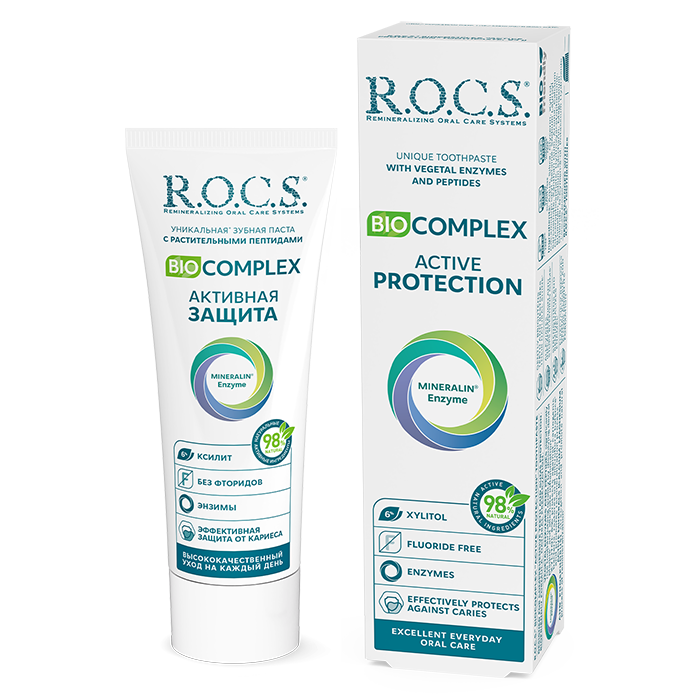
Description
Active ingredients
Properties
RIA
Clinical trials
Ingredients
Application
Description
Features
R.O.C.S. BIOCOMPLEX toothpaste contains a patented complex built on plant peptides, xylitol, and minerals that delivers a high level of protection for both teeth and gums.
Instead of sodium lauryl sulfate, it uses a "green" surfactant (cocamidopropyl betaine) which can matter for people with sensitive mucous membranes.
The formula is as natural as possible, free of antiseptics, parabens, dyes, and harsh abrasives, making it suitable for children from 4 years of age who form plaque quickly.
Indications
- Regular oral care.
- Natural protection for teeth and gums.
Organoleptic properties
The toothpaste has a light mint flavor. The color ranges from cream to brown (the plant enzyme gives the toothpaste its darker shade).
Active ingredients
Properties
- Effectively cleans teeth and slows plaque formation.
- Normalizes the composition of the oral microflora.
- Protects against caries.
- Reduces gum inflammation and bleeding.
- Whitens teeth by an average of 1.7 shades after 1 month of use.
RIA

* Russian Abrasivity Index reflects the cleaning capacity level of oral care products and polishing pastes. Products with a higher RIA value have enhanced cleaning properties, but are also a risk factor for the development of non-carious dental lesions, therefore the choice of toothpaste should be guided by the condition of the hard dental tissues.
Russian Abrasivity Index (RIA): a new stage in oral hygiene standardization
The DRC group of companies, in collaboration with the Institute of Digital Dentistry of the RUDN Medical Institute, has developed and is implementing a new toothpaste abrasivity measurement standard in Russia that meets the highest requirements: safety, accuracy, reproducibility. Принято. This methodology is an alternative to the RDA measurement method and offers a number of advantages. Its effectiveness has been confirmed by a large-scale experimental and clinical study involving 534 patients.
The methodology is based on a rotary machine and digital technologies developed by a research group of dentists, physicists, and digital modeling specialists. QLF diagnostics, intraoral scanning, and digital analysis were used in the work, which made it possible to obtain objective data on tooth wear and the influence of abrasivity over time.
Download RIA research protocol (in Russian):
Clinical trials
>Bromelain toothpaste has been proven to reduce bacterial adhesion and, as a result, slow the rate of dental plaque formation:
The present study aimed to evaluate the effect of R.O.C.S. enzyme-containing toothpaste with bromelain and xylitol on the adhesion of microorganisms in the human oral cavity. A positive control was created using R.O.C.S. toothpaste with xylitol, but without the enzyme.
Anti-adhesive activity was studied using a culture of human embryonic musculocutaneous fibroblasts.
The test microorganism cultures were clinical strains of microorganisms isolated from the oral cavities of volunteers: Staphylococcus aureus, Streptococcus salivarius, Streptococcus sanguis and Streptococcus sobrinus.
A sample of the toothpaste at a dilution of 1:20,000 (in the presence of 50% human serum) and a culture of the test strain at a dose of 10⁸ KOU/ml were added to the cell culture and incubated at 37 °C. After incubation, the monolayer cells were washed to remove unattached bacteria by repeatedly changing the Eagle's medium. The cells were then fixed with ethyl alcohol, stained with Romanowsky-Giemsa, and examined under a microscope.
The degree of microbial adhesion was determined by the microbial load relative to the control, which was taken as 100%.
The study was carried out using the blind method. All studies were carried out three times.
After three minutes of incubation, which corresponds to the duration of normal tooth brushing, the suppression of adhesion was as follows:
- S.aureus - 80%
- Str.salivarius - 80%
- Str.sangius - 83%
- Str.sobrinius - 79%
However, when the exposure time was increased to 2 hours, the anti-adhesive efficacy decreased significantly. This seems to be due to the adhesion becoming reversible shortly after the strains were introduced into the model system, as adhesion usually becomes irreversible after 1–2 hours.
Fig. 1. Control fibroblast cells
Fig. 2. Cells + Str. salivarius
Fig. 3. Cells + S. salivarius + bromelain paste
(exposure 2h.)
Fig. 4. Cells + Str.salivarius + paste with bromelain
(exposure 3 min.)
Download the article for free in Russian:
Anti-inflammatory activity of bromelain:
Toothpastes containing antiseptic substances such as triclosan, chlorhexidine, aluminium and zinc salts are among the hygiene products capable of inhibiting plaque formation. However, their high antimicrobial activity can lead to oral dysbacteriosis with long-term use, reducing the effectiveness of treatment. An alternative are hygiene products whose antimicrobial action is realised due to enzyme-containing components.
Over a period of two months, 40 patients, aged 18–36 years and of both sexes, with chronic catarrhal gingivitis were examined. The patients were randomly divided into two groups:
- Group 1 patients used R.O.C.S. toothpaste containing the patented MINERALIN Enzyme complex (calcium glycerophosphate, magnesium chloride, xylitol and the proteolytic enzyme bromelain).
- Group 2 patients used Enzycal toothpaste containing the enzymes amyl oxidase, glucose oxidase, amylglycosidase and sodium fluoride (1450 ppm).
Within each group, two subgroups were identified according to the toothbrush used:
- standard medium-hard toothbrush,
- Curаprox soft toothbrush.
The toothpaste studies were conducted using a double-blind method. Repeated examinations, including an assessment of indices and diagnostic tests, were carried out after one and two weeks and again after one and two months.
Following the initial visual examination and calculation of the indices, it was found that acute and chronic catarrhal gingivitis of a mild degree were predominant in both groups.
As early as the 14th day of the study, PMA index values decreased from 29.5% to 2% and 1.5% in subgroups A and B, respectively. In group 2, the index values decreased to 3% and 2% (see Fig. 4). The best results in subgroup B were due to the use of a soft toothbrush.
Bleeding disappeared in all subjects, indicating the achievement of an anti-inflammatory effect in periodontal tissues (Fig. 3).
Fig. 1. Level of oral hygiene
Fig. 2. Amount of plaque in the gingival region
Fig. 3. Bleeding index
Fig. 4. Gingivitis severity score
The study of the effect of enzyme-containing toothpastes on the initial forms of inflammatory periodontal diseases, characterised by an increased tendency to plaque formation, confirmed their high efficiency.
With regular brushing using a soft brush, a pronounced anti-inflammatory effect on the periodontium was observed within a week.
After two weeks of using R.O.C.S. toothpaste, significant improvements in oral hygiene and a pronounced anti-inflammatory effect were observed, as evaluated by hygiene indices and PMA.
At the follow-up examination after two months, no deterioration in the results was observed in either group.
No cases of local irritation or allergic reactions to the oral mucosa were recorded during the entire application period.
Download the article for free in Russian:
Confirmation of the prebiotic and anti-adhesive properties of xylitol (normalization of microflora, protection against cariogenic bacteria and Candida fungi):
The high prevalence of caries in young children necessitates the use of therapeutic and preventive products that target the primary etiopathogenetic factor of this disease — pathogenic microflora. This study presents comparative data on the antimicrobial effectiveness of products containing xylitol and chlorhexidine, as well as their effect on the microbiocenosis composition of the dental biofilm.
A total of 30 patients aged 12 to 36 months with early childhood caries (18 boys and 12 girls) were followed for one month. The patients were divided into two equal groups using a blinded method:
- Patients in group 1 used R.O.C.S. Medical Minerals gel for local antimicrobial and remineralizing therapy over the course of one month.
- Patients in group 2 were prescribed daily one- to two-minute applications of a 0.1% chlorhexidine solution once a day for 7–10 days as local antimicrobial therapy. "Belagel Ca/P" gel was used daily for one month as remineralizing therapy.
It was recommended that the remineralizing gels be applied 4–5 times a day after toothbrushing. All procedures were performed by the patients' parents at home after receiving prior instruction.
At baseline and at the end of the prescribed treatment course, all patients underwent molecular biology testing using multiplex PCR at the NIMSI laboratory.
In group 1, a significant reduction in colonization by cariogenic species was detected, along with a positive effect of the R.O.C.S. Medical Minerals remineralizing gel components on the ratio of cariogenic to resident species, as well as a decrease in the quantity and frequency of detection of certain periodontopathogenic anaerobic bacteria (Table 1). An important positive feature of the change in the dental biofilm microbiocenosis composition in the first group was also the disappearance of Candida fungi.
Examination of the microbial flora of dental plaque in group 2 patients one month after treatment showed only some positive shifts in the ratio of cariogenic to normal flora, and a decrease in the frequency of detection of certain virulent strains. At the same time, the quantity and frequency of detection of representatives of the resident bacterial group — enterococci — decreased. In addition, the detection rate of the yeast-like fungus Candida albicans increased, with a statistically significant rise in the fungal colonization of dental plaque. These data indicate the development of dysbiosis with the use of chlorhexidine.
Table 1. Comparative assessment of changes in the frequency of detection of microbial flora in dental plaque between the two groups after a course of therapy
| Genus, species of bacteria | 0.1% chlorhexidine | R.O.C.S. Medical Minerals with xylitol |
|---|---|---|
| Streptococcus mutans (cariogenic strain) | no change | 45.4% reduction |
| Actinomyces spp. (cariogenic strain) | 33.3% reduction | 44.5% reduction |
| Veillonella parvula (resident) | 24.7% increase | 40.2% increase |
| Porphyromonas gingivalis (periodontopathogen) | 66.5% reduction | no change |
| Prevotella melaninogenica (virulent strain) | 20% increase | 44.5% reduction |
| Fusobacterium nucleatum (periodontopathogen) | 4.8-fold increase | 33.5% reduction |
| Candida albicans (fungus, pathogen) | 49.8% increase | complete disappearance |
A clinical examination after one month showed no new carious cavities or demineralization foci in group 1 patients; existing chalky spots regained their luster; the progression of carious defects was halted; and signs of catarrhal gingivitis disappeared.
During the clinical examination of group 2 patients, no new carious cavities were recorded either; the disappearance of catarrhal gingivitis signs was observed in 80% of patients (of those who had it at baseline).
The inclusion of both xylitol and chlorhexidine as antimicrobial therapy in the comprehensive treatment plan for early childhood caries leads to a reduction in the detection frequency and colonization level of cariogenic and periodontopathogenic flora in dental plaque.
The data presented indicate a more physiological action of xylitol; it has a positive effect on the microbiocenosis composition of the dental biofilm, normalizing the qualitative (species) composition and the quantitative bacterial load of both cariogenic and stabilizing resident species.
Download this article for free:
Very few substances are known today that can significantly affect the caries-causing environment in the mouth and reduce the risk of tooth decay. One of the most widely studied substances with an anti-caries effect is xylitol. However, the antibacterial mechanism of xylitol is not fully understood. This study provides data confirming xylitol's ability to significantly inhibit the adhesion of oral streptococci, the primary formers of dental plaque. These bacteria delay the development of caries- and periodontal disease-causing bacteria on tooth surfaces through a mechanism called co-adhesion. We also revealed the ability of xylitol to inhibit the adhesion of Streptococcus sobrinus, a microorganism associated with caries, and Staphylococcus aureus, which increases the virulence level of dental plaque. This mechanism of action is realised in toothpaste within the time period traditionally recommended for brushing teeth.
Download the article for free in Russian:
A long-term study confirming the anti-caries effect of R.O.C.S. toothpaste with xylitol and active minerals (calcium glycerophosphate + magnesium chloride):
A two-year program of supervised toothbrushing carried out in schools on children aged 6-7 using R.O.C.S. (Re-mineralizing Oral Care System) toothpastes has shown very effective results in reducing the OHI-S index scores by 53-57%, the GI index scores by 57-73% and the 2-year DMFT scores by 29-32%. Remineralizing toothpastes with-out fluorine, containing 500 ppm AmF or 1000 ppm NaF, were as effective in terms of improving the oral health of the schoolchildren.
Download the article for free:
Low-abrasion toothpastes with the MINERALIN complex promote gentle enamel lightening and help maintain the results of in-office whitening:
The study presents a comparative characterization of the whitening effectiveness of three toothpastes containing various active components that contribute to enamel lightening. The approach to selecting hygiene products for achieving a tooth whitening effect is substantiated.
The study involved 75 people aged 18–45 years with no inflammatory periodontal diseases in the acute stage and no contraindications to tooth whitening. All participants were issued toothpastes in identical tubes with sequential numbering, and their individual oral hygiene skills were checked. The assigned toothpaste was to be used for toothbrushing twice a day.
Depending on the toothpaste received, the subjects were divided into three equal groups of 25 people each:
- "R.O.C.S. for Adults" with the MINERALIN complex — a low-abrasion enzyme-containing (bromelain) toothpaste that does not contain polishing abrasives.
- "Rembrandt Plus" toothpaste combines two enamel surface whitening technologies: enzymatic (papain) and abrasive polishing (aluminum oxide).
- "Blend-a-Med 3D White" toothpaste, whose action is based on the cleansing and polishing properties of special grades of silica. Removal of pigmentation from the enamel surface is achieved through mechanical cleaning.
The comparison of the whitening effectiveness of the toothpastes was carried out after 28 days of clinical observation (Table 1). The primary endpoint was the color reduction amplitude of the anterior teeth group, assessed using an instrumental method with the VITA Easyshade™ spectrophotometer (VITA Zahnfabrik, Germany).
Table 1. Color change in the anterior teeth group after 28 days
| Group | Mean color reduction per group |
|---|---|
| R.O.C.S. with MINERALIN complex | 1.69 ± 0.22 |
| Rembrandt Plus | 1.59 ± 0.23 |
| Blend-a-Med 3D White | 1.72 ± 0.23 |
No statistically significant difference was found between the groups. Therefore, the effectiveness of the whitening agents in the three samples is similar.
During the statistical processing of the results, a group of patients with previously whitened teeth was identified. The use of whitening toothpastes in this study did not reveal any positive dynamics in tooth lightening in these patients, but it stabilized the result previously obtained from professional whitening.
An indirect indicator of the safety of whitening toothpastes is the occurrence of hard tissue sensitivity. In groups 1 and 3, sensitivity was observed in 8% of subjects, while in group 2 it was observed in 28% of subjects.
In addition to the lightening effect, specialized toothpastes should have standard cleansing properties. With initially similar baseline levels, over 4 weeks the OHI-s index reduction in all groups was 44–45% from baseline.
The inclusion of proteolytic enzymes as an active component in toothpaste makes it possible to achieve a lightening result similar to that obtained with an abrasive-polishing toothpaste.
Download this article for free in Russian:
Ingredients
Aqua, Silica, Glycerin, Xylitol, Cocamidopropyl Betaine, Sodium Lauroyl Sarcosinate, Xanthan Gum, Aroma, Calcium Glycerophosphate, Hydroxyacetophenone, Bromelain, Sodium Saccharin, Magnesium Chloride, O-cymen-5-ol, Potassium Hydroxide.
Application
Use twice a day (morning and evening). Recommended toothbrushing time is 2-3 minutes.
To enhance the effect, it is recommended to spit out excess toothpaste, not rinse the mouth, and refrain from eating and drinking for 30–40 minutes.
Suitable for all ages, with no time restrictions on use.
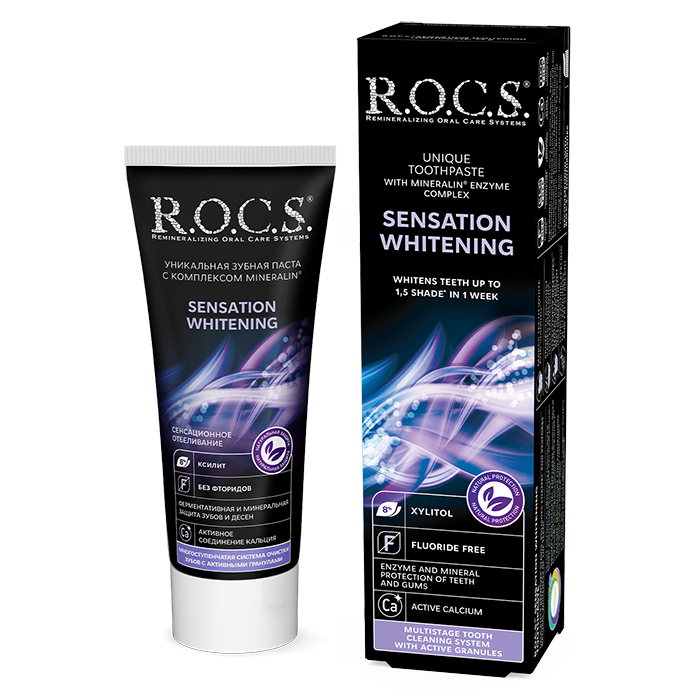
Description
Active ingredients
Properties
RIA
Clinical trials
Ingredients
Application
Description
Features
The unique formula of R.O.C.S. Sensation Whitening toothpaste is built on a multi-step cleaning system: a proteolytic enzyme softens dental plaque, while specially designed cleansing granules help remove it and provide gentle enamel polishing in the final stage of brushing.
The mineral components of the complex strengthen tooth enamel. Through natural remineralization, teeth take on a lighter shade and a healthier look.
Indications
- Maintaining the natural color and shine of tooth enamel.
- Regular oral care.
- Natural protection for teeth and gums.
Organoleptic properties
A cream-colored toothpaste with white granules and a mild, refreshing flavor. The color may range from cream to brown due to its plant-based ingredients. Contains no artificial colorants.
Active ingredients
Properties
- Whitens enamel by 1.54 shades (VITA scale) after 1 week of use.
- Leaves enamel looking naturally healthy and shiny.
- Maintains the results of in-office whitening.
- Effectively cleans teeth and slows plaque formation.
- Normalizes the composition of the oral microflora.
- Protects against caries.
- Reduces gum inflammation and bleeding.
RIA

* Russian Abrasivity Index reflects the cleaning capacity level of oral care products and polishing pastes. Products with a higher RIA value have enhanced cleaning properties, but are also a risk factor for the development of non-carious dental lesions, therefore the choice of toothpaste should be guided by the condition of the hard dental tissues.
Russian Abrasivity Index (RIA): a new stage in oral hygiene standardization
The DRC group of companies, in collaboration with the Institute of Digital Dentistry of the RUDN Medical Institute, has developed and is implementing a new toothpaste abrasivity measurement standard in Russia that meets the highest requirements: safety, accuracy, reproducibility. Принято. This methodology is an alternative to the RDA measurement method and offers a number of advantages. Its effectiveness has been confirmed by a large-scale experimental and clinical study involving 534 patients.
The methodology is based on a rotary machine and digital technologies developed by a research group of dentists, physicists, and digital modeling specialists. QLF diagnostics, intraoral scanning, and digital analysis were used in the work, which made it possible to obtain objective data on tooth wear and the influence of abrasivity over time.
Download RIA research protocol (in Russian):
Clinical trials
Confirmation of the toothpaste's whitening properties:
In a study group of 25 people aged 25–43 years, after one week of using a toothpaste sample with the following composition: bromelain, xylitol, calcium glycerophosphate, and silica-based cleansing granules, enamel lightening amounted to 1.54 shades on the VITA CLASSICAL scale and 1.32 shades as measured with the VITA EASYSHADE spectrophotometer.
Download the report in Russian:
The study presents a comparative characterization of the whitening effectiveness of three toothpastes containing various active components that contribute to enamel lightening. The approach to selecting hygiene products for achieving a tooth whitening effect is substantiated.
The study involved 75 people aged 18–45 years with no inflammatory periodontal diseases in the acute stage and no contraindications to tooth whitening. All participants were issued toothpastes in identical tubes with sequential numbering, and their individual oral hygiene skills were checked. The assigned toothpaste was to be used for toothbrushing twice a day.
Depending on the toothpaste received, the subjects were divided into three equal groups of 25 people each:
- "R.O.C.S. for Adults" with the MINERALIN complex — a low-abrasion enzyme-containing (bromelain) toothpaste that does not contain polishing abrasives.
- "Rembrandt Plus" toothpaste combines two enamel surface whitening technologies: enzymatic (papain) and abrasive polishing (aluminum oxide).
- "Blend-a-Med 3D White" toothpaste, whose action is based on the cleansing and polishing properties of special grades of silica. Removal of pigmentation from the enamel surface is achieved through mechanical cleaning.
The comparison of the whitening effectiveness of the toothpastes was carried out after 28 days of clinical observation (Table 1). The primary endpoint was the color reduction amplitude of the anterior teeth group, assessed using an instrumental method with the VITA Easyshade™ spectrophotometer (VITA Zahnfabrik, Germany).
Table 1. Color change in the anterior teeth group after 28 days
| Group | Mean color reduction per group |
|---|---|
| R.O.C.S. with MINERALIN complex | 1.69 ± 0.22 |
| Rembrandt Plus | 1.59 ± 0.23 |
| Blend-a-Med 3D White | 1.72 ± 0.23 |
No statistically significant difference was found between the groups. Therefore, the effectiveness of the whitening agents in the three samples is similar.
During the statistical processing of the results, a group of patients with previously whitened teeth was identified. The use of whitening toothpastes in this study did not reveal any positive dynamics in tooth lightening in these patients, but it stabilized the result previously obtained from professional whitening.
An indirect indicator of the safety of whitening toothpastes is the occurrence of hard tissue sensitivity. In groups 1 and 3, sensitivity was observed in 8% of subjects, while in group 2 it was observed in 28% of subjects.
In addition to the lightening effect, specialized toothpastes should have standard cleansing properties. With initially similar baseline levels, over 4 weeks the OHI-s index reduction in all groups was 44–45% from baseline.
The inclusion of proteolytic enzymes as an active component in toothpaste makes it possible to achieve a lightening result similar to that obtained with an abrasive-polishing toothpaste.
Download this article for free in Russian:
Bromelain toothpaste has been proven to reduce bacterial adhesion and, as a result, slow the rate of dental plaque formation:
The present study aimed to evaluate the effect of R.O.C.S. enzyme-containing toothpaste with bromelain and xylitol on the adhesion of microorganisms in the human oral cavity. A positive control was created using R.O.C.S. toothpaste with xylitol, but without the enzyme.
Anti-adhesive activity was studied using a culture of human embryonic musculocutaneous fibroblasts.
The test microorganism cultures were clinical strains of microorganisms isolated from the oral cavities of volunteers: Staphylococcus aureus, Streptococcus salivarius, Streptococcus sanguis and Streptococcus sobrinus.
A sample of the toothpaste at a dilution of 1:20,000 (in the presence of 50% human serum) and a culture of the test strain at a dose of 10⁸ KOU/ml were added to the cell culture and incubated at 37 °C. After incubation, the monolayer cells were washed to remove unattached bacteria by repeatedly changing the Eagle's medium. The cells were then fixed with ethyl alcohol, stained with Romanowsky-Giemsa, and examined under a microscope.
The degree of microbial adhesion was determined by the microbial load relative to the control, which was taken as 100%.
The study was carried out using the blind method. All studies were carried out three times.
After three minutes of incubation, which corresponds to the duration of normal tooth brushing, the suppression of adhesion was as follows:
- S.aureus - 80%
- Str.salivarius - 80%
- Str.sangius - 83%
- Str.sobrinius - 79%
However, when the exposure time was increased to 2 hours, the anti-adhesive efficacy decreased significantly. This seems to be due to the adhesion becoming reversible shortly after the strains were introduced into the model system, as adhesion usually becomes irreversible after 1–2 hours.
Fig. 1. Control fibroblast cells
Fig. 2. Cells + Str. salivarius
Fig. 3. Cells + S. salivarius + bromelain paste
(exposure 2h.)
Fig. 4. Cells + Str.salivarius + paste with bromelain
(exposure 3 min.)
Download the article for free in Russian:
Anti-inflammatory activity of bromelain:
Toothpastes containing antiseptic substances such as triclosan, chlorhexidine, aluminium and zinc salts are among the hygiene products capable of inhibiting plaque formation. However, their high antimicrobial activity can lead to oral dysbacteriosis with long-term use, reducing the effectiveness of treatment. An alternative are hygiene products whose antimicrobial action is realised due to enzyme-containing components.
Over a period of two months, 40 patients, aged 18–36 years and of both sexes, with chronic catarrhal gingivitis were examined. The patients were randomly divided into two groups:
- Group 1 patients used R.O.C.S. toothpaste containing the patented MINERALIN Enzyme complex (calcium glycerophosphate, magnesium chloride, xylitol and the proteolytic enzyme bromelain).
- Group 2 patients used Enzycal toothpaste containing the enzymes amyl oxidase, glucose oxidase, amylglycosidase and sodium fluoride (1450 ppm).
Within each group, two subgroups were identified according to the toothbrush used:
- standard medium-hard toothbrush,
- Curаprox soft toothbrush.
The toothpaste studies were conducted using a double-blind method. Repeated examinations, including an assessment of indices and diagnostic tests, were carried out after one and two weeks and again after one and two months.
Following the initial visual examination and calculation of the indices, it was found that acute and chronic catarrhal gingivitis of a mild degree were predominant in both groups.
As early as the 14th day of the study, PMA index values decreased from 29.5% to 2% and 1.5% in subgroups A and B, respectively. In group 2, the index values decreased to 3% and 2% (see Fig. 4). The best results in subgroup B were due to the use of a soft toothbrush.
Bleeding disappeared in all subjects, indicating the achievement of an anti-inflammatory effect in periodontal tissues (Fig. 3).
Fig. 1. Level of oral hygiene
Fig. 2. Amount of plaque in the gingival region
Fig. 3. Bleeding index
Fig. 4. Gingivitis severity score
The study of the effect of enzyme-containing toothpastes on the initial forms of inflammatory periodontal diseases, characterised by an increased tendency to plaque formation, confirmed their high efficiency.
With regular brushing using a soft brush, a pronounced anti-inflammatory effect on the periodontium was observed within a week.
After two weeks of using R.O.C.S. toothpaste, significant improvements in oral hygiene and a pronounced anti-inflammatory effect were observed, as evaluated by hygiene indices and PMA.
At the follow-up examination after two months, no deterioration in the results was observed in either group.
No cases of local irritation or allergic reactions to the oral mucosa were recorded during the entire application period.
Download the article for free in Russian:
Confirmation of the prebiotic and anti-adhesive properties of xylitol (normalization of microflora, protection against cariogenic bacteria and Candida fungi):
The high prevalence of caries in young children necessitates the use of therapeutic and preventive products that target the primary etiopathogenetic factor of this disease — pathogenic microflora. This study presents comparative data on the antimicrobial effectiveness of products containing xylitol and chlorhexidine, as well as their effect on the microbiocenosis composition of the dental biofilm.
A total of 30 patients aged 12 to 36 months with early childhood caries (18 boys and 12 girls) were followed for one month. The patients were divided into two equal groups using a blinded method:
- Patients in group 1 used R.O.C.S. Medical Minerals gel for local antimicrobial and remineralizing therapy over the course of one month.
- Patients in group 2 were prescribed daily one- to two-minute applications of a 0.1% chlorhexidine solution once a day for 7–10 days as local antimicrobial therapy. "Belagel Ca/P" gel was used daily for one month as remineralizing therapy.
It was recommended that the remineralizing gels be applied 4–5 times a day after toothbrushing. All procedures were performed by the patients' parents at home after receiving prior instruction.
At baseline and at the end of the prescribed treatment course, all patients underwent molecular biology testing using multiplex PCR at the NIMSI laboratory.
In group 1, a significant reduction in colonization by cariogenic species was detected, along with a positive effect of the R.O.C.S. Medical Minerals remineralizing gel components on the ratio of cariogenic to resident species, as well as a decrease in the quantity and frequency of detection of certain periodontopathogenic anaerobic bacteria (Table 1). An important positive feature of the change in the dental biofilm microbiocenosis composition in the first group was also the disappearance of Candida fungi.
Examination of the microbial flora of dental plaque in group 2 patients one month after treatment showed only some positive shifts in the ratio of cariogenic to normal flora, and a decrease in the frequency of detection of certain virulent strains. At the same time, the quantity and frequency of detection of representatives of the resident bacterial group — enterococci — decreased. In addition, the detection rate of the yeast-like fungus Candida albicans increased, with a statistically significant rise in the fungal colonization of dental plaque. These data indicate the development of dysbiosis with the use of chlorhexidine.
Table 1. Comparative assessment of changes in the frequency of detection of microbial flora in dental plaque between the two groups after a course of therapy
| Genus, species of bacteria | 0.1% chlorhexidine | R.O.C.S. Medical Minerals with xylitol |
|---|---|---|
| Streptococcus mutans (cariogenic strain) | no change | 45.4% reduction |
| Actinomyces spp. (cariogenic strain) | 33.3% reduction | 44.5% reduction |
| Veillonella parvula (resident) | 24.7% increase | 40.2% increase |
| Porphyromonas gingivalis (periodontopathogen) | 66.5% reduction | no change |
| Prevotella melaninogenica (virulent strain) | 20% increase | 44.5% reduction |
| Fusobacterium nucleatum (periodontopathogen) | 4.8-fold increase | 33.5% reduction |
| Candida albicans (fungus, pathogen) | 49.8% increase | complete disappearance |
A clinical examination after one month showed no new carious cavities or demineralization foci in group 1 patients; existing chalky spots regained their luster; the progression of carious defects was halted; and signs of catarrhal gingivitis disappeared.
During the clinical examination of group 2 patients, no new carious cavities were recorded either; the disappearance of catarrhal gingivitis signs was observed in 80% of patients (of those who had it at baseline).
The inclusion of both xylitol and chlorhexidine as antimicrobial therapy in the comprehensive treatment plan for early childhood caries leads to a reduction in the detection frequency and colonization level of cariogenic and periodontopathogenic flora in dental plaque.
The data presented indicate a more physiological action of xylitol; it has a positive effect on the microbiocenosis composition of the dental biofilm, normalizing the qualitative (species) composition and the quantitative bacterial load of both cariogenic and stabilizing resident species.
Download this article for free:
Very few substances are known today that can significantly affect the caries-causing environment in the mouth and reduce the risk of tooth decay. One of the most widely studied substances with an anti-caries effect is xylitol. However, the antibacterial mechanism of xylitol is not fully understood. This study provides data confirming xylitol's ability to significantly inhibit the adhesion of oral streptococci, the primary formers of dental plaque. These bacteria delay the development of caries- and periodontal disease-causing bacteria on tooth surfaces through a mechanism called co-adhesion. We also revealed the ability of xylitol to inhibit the adhesion of Streptococcus sobrinus, a microorganism associated with caries, and Staphylococcus aureus, which increases the virulence level of dental plaque. This mechanism of action is realised in toothpaste within the time period traditionally recommended for brushing teeth.
Download the article for free in Russian:
A long-term study confirming the anti-caries effect of R.O.C.S. toothpaste with xylitol and active minerals (calcium glycerophosphate + magnesium chloride):
A two-year program of supervised toothbrushing carried out in schools on children aged 6-7 using R.O.C.S. (Re-mineralizing Oral Care System) toothpastes has shown very effective results in reducing the OHI-S index scores by 53-57%, the GI index scores by 57-73% and the 2-year DMFT scores by 29-32%. Remineralizing toothpastes with-out fluorine, containing 500 ppm AmF or 1000 ppm NaF, were as effective in terms of improving the oral health of the schoolchildren.
Download the article for free:
Ingredients
Sorbitol, Silica, Glycerin, Aqua, Xylitol, Cocamidopropyl Betaine, Aroma, Xanthan Gum, Calcium Glycerophosphate, Bromelain, Sodium Benzoate, Magnesium Chloride, Sodium Saccharin, O-Cymen-5-ol.
Application
Use twice a day (morning and evening). Recommended toothbrushing time is 2-3 minutes.
To enhance the whitening effect, use together with the R.O.C.S. PRO WHITENING toothbrush.
Suitable for regular oral care, with no time restrictions on use.
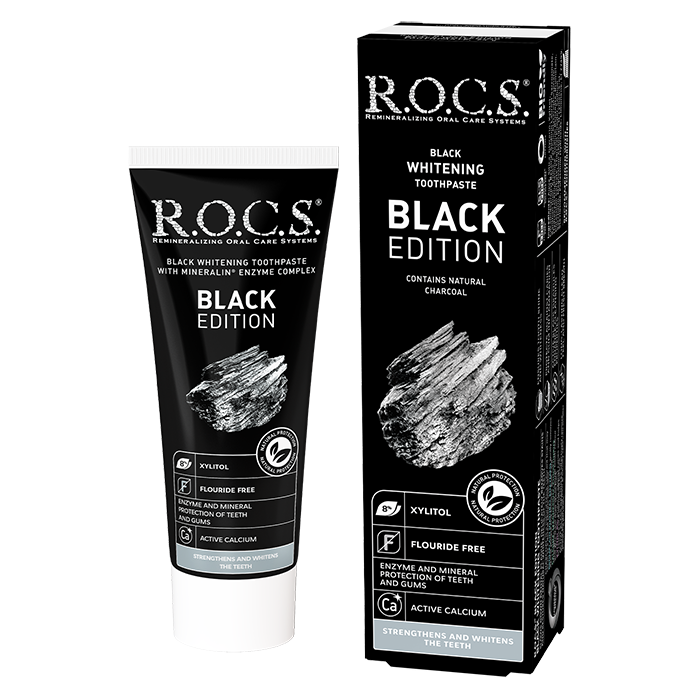
Description
Active ingredients
Properties
Clinical trials
Ingredients
Application
Description
Features
The unique formula of R.O.C.S. BLACK EDITION toothpaste delivers effective teeth cleaning through its plaque control system. Charcoal — a natural, safe pigment — acts as an indicator, tinting any plaque that hasn't been fully removed. It also tends to make people brush for the full three minutes. That's enough time for the proteolytic enzyme to break down the protein component of dental plaque, which helps clean teeth and gums more effectively.
The mineral components of the complex strengthen tooth enamel. Through natural remineralization, teeth take on a lighter shade and a healthier look.
Indications
- Maintaining the natural color and shine of tooth enamel.
- Regular oral care.
- Natural protection for teeth and gums.
Organoleptic properties
A black toothpaste with a classic mint flavor.
Active ingredients
Properties
- Whitens enamel and leaves it looking healthy and shiny.
- Maintains the results of in-office whitening.
- Effectively cleans teeth and slows plaque formation.
- Normalizes the composition of the oral microflora.
- Protects against caries.
- Reduces gum inflammation and bleeding.
Clinical trials
Confirmation of the toothpaste's whitening properties:
The study presents a comparative characterization of the whitening effectiveness of three toothpastes containing various active components that contribute to enamel lightening. The approach to selecting hygiene products for achieving a tooth whitening effect is substantiated.
The study involved 75 people aged 18–45 years with no inflammatory periodontal diseases in the acute stage and no contraindications to tooth whitening. All participants were issued toothpastes in identical tubes with sequential numbering, and their individual oral hygiene skills were checked. The assigned toothpaste was to be used for toothbrushing twice a day.
Depending on the toothpaste received, the subjects were divided into three equal groups of 25 people each:
- "R.O.C.S. for Adults" with the MINERALIN complex — a low-abrasion enzyme-containing (bromelain) toothpaste that does not contain polishing abrasives.
- "Rembrandt Plus" toothpaste combines two enamel surface whitening technologies: enzymatic (papain) and abrasive polishing (aluminum oxide).
- "Blend-a-Med 3D White" toothpaste, whose action is based on the cleansing and polishing properties of special grades of silica. Removal of pigmentation from the enamel surface is achieved through mechanical cleaning.
The comparison of the whitening effectiveness of the toothpastes was carried out after 28 days of clinical observation (Table 1). The primary endpoint was the color reduction amplitude of the anterior teeth group, assessed using an instrumental method with the VITA Easyshade™ spectrophotometer (VITA Zahnfabrik, Germany).
Table 1. Color change in the anterior teeth group after 28 days
| Group | Mean color reduction per group |
|---|---|
| R.O.C.S. with MINERALIN complex | 1.69 ± 0.22 |
| Rembrandt Plus | 1.59 ± 0.23 |
| Blend-a-Med 3D White | 1.72 ± 0.23 |
No statistically significant difference was found between the groups. Therefore, the effectiveness of the whitening agents in the three samples is similar.
During the statistical processing of the results, a group of patients with previously whitened teeth was identified. The use of whitening toothpastes in this study did not reveal any positive dynamics in tooth lightening in these patients, but it stabilized the result previously obtained from professional whitening.
An indirect indicator of the safety of whitening toothpastes is the occurrence of hard tissue sensitivity. In groups 1 and 3, sensitivity was observed in 8% of subjects, while in group 2 it was observed in 28% of subjects.
In addition to the lightening effect, specialized toothpastes should have standard cleansing properties. With initially similar baseline levels, over 4 weeks the OHI-s index reduction in all groups was 44–45% from baseline.
The inclusion of proteolytic enzymes as an active component in toothpaste makes it possible to achieve a lightening result similar to that obtained with an abrasive-polishing toothpaste.
Download this article for free in Russian:
Bromelain toothpaste has been proven to reduce bacterial adhesion and, as a result, slow the rate of dental plaque formation:
The present study aimed to evaluate the effect of R.O.C.S. enzyme-containing toothpaste with bromelain and xylitol on the adhesion of microorganisms in the human oral cavity. A positive control was created using R.O.C.S. toothpaste with xylitol, but without the enzyme.
Anti-adhesive activity was studied using a culture of human embryonic musculocutaneous fibroblasts.
The test microorganism cultures were clinical strains of microorganisms isolated from the oral cavities of volunteers: Staphylococcus aureus, Streptococcus salivarius, Streptococcus sanguis and Streptococcus sobrinus.
A sample of the toothpaste at a dilution of 1:20,000 (in the presence of 50% human serum) and a culture of the test strain at a dose of 10⁸ KOU/ml were added to the cell culture and incubated at 37 °C. After incubation, the monolayer cells were washed to remove unattached bacteria by repeatedly changing the Eagle's medium. The cells were then fixed with ethyl alcohol, stained with Romanowsky-Giemsa, and examined under a microscope.
The degree of microbial adhesion was determined by the microbial load relative to the control, which was taken as 100%.
The study was carried out using the blind method. All studies were carried out three times.
After three minutes of incubation, which corresponds to the duration of normal tooth brushing, the suppression of adhesion was as follows:
- S.aureus - 80%
- Str.salivarius - 80%
- Str.sangius - 83%
- Str.sobrinius - 79%
However, when the exposure time was increased to 2 hours, the anti-adhesive efficacy decreased significantly. This seems to be due to the adhesion becoming reversible shortly after the strains were introduced into the model system, as adhesion usually becomes irreversible after 1–2 hours.
Fig. 1. Control fibroblast cells
Fig. 2. Cells + Str. salivarius
Fig. 3. Cells + S. salivarius + bromelain paste
(exposure 2h.)
Fig. 4. Cells + Str.salivarius + paste with bromelain
(exposure 3 min.)
Download the article for free in Russian:
Anti-inflammatory activity of bromelain:
Toothpastes containing antiseptic substances such as triclosan, chlorhexidine, aluminium and zinc salts are among the hygiene products capable of inhibiting plaque formation. However, their high antimicrobial activity can lead to oral dysbacteriosis with long-term use, reducing the effectiveness of treatment. An alternative are hygiene products whose antimicrobial action is realised due to enzyme-containing components.
Over a period of two months, 40 patients, aged 18–36 years and of both sexes, with chronic catarrhal gingivitis were examined. The patients were randomly divided into two groups:
- Group 1 patients used R.O.C.S. toothpaste containing the patented MINERALIN Enzyme complex (calcium glycerophosphate, magnesium chloride, xylitol and the proteolytic enzyme bromelain).
- Group 2 patients used Enzycal toothpaste containing the enzymes amyl oxidase, glucose oxidase, amylglycosidase and sodium fluoride (1450 ppm).
Within each group, two subgroups were identified according to the toothbrush used:
- standard medium-hard toothbrush,
- Curаprox soft toothbrush.
The toothpaste studies were conducted using a double-blind method. Repeated examinations, including an assessment of indices and diagnostic tests, were carried out after one and two weeks and again after one and two months.
Following the initial visual examination and calculation of the indices, it was found that acute and chronic catarrhal gingivitis of a mild degree were predominant in both groups.
As early as the 14th day of the study, PMA index values decreased from 29.5% to 2% and 1.5% in subgroups A and B, respectively. In group 2, the index values decreased to 3% and 2% (see Fig. 4). The best results in subgroup B were due to the use of a soft toothbrush.
Bleeding disappeared in all subjects, indicating the achievement of an anti-inflammatory effect in periodontal tissues (Fig. 3).
Fig. 1. Level of oral hygiene
Fig. 2. Amount of plaque in the gingival region
Fig. 3. Bleeding index
Fig. 4. Gingivitis severity score
The study of the effect of enzyme-containing toothpastes on the initial forms of inflammatory periodontal diseases, characterised by an increased tendency to plaque formation, confirmed their high efficiency.
With regular brushing using a soft brush, a pronounced anti-inflammatory effect on the periodontium was observed within a week.
After two weeks of using R.O.C.S. toothpaste, significant improvements in oral hygiene and a pronounced anti-inflammatory effect were observed, as evaluated by hygiene indices and PMA.
At the follow-up examination after two months, no deterioration in the results was observed in either group.
No cases of local irritation or allergic reactions to the oral mucosa were recorded during the entire application period.
Download the article for free in Russian:
Confirmation of the prebiotic and anti-adhesive properties of xylitol (normalization of microflora, protection against cariogenic bacteria and Candida fungi):
The high prevalence of caries in young children necessitates the use of therapeutic and preventive products that target the primary etiopathogenetic factor of this disease — pathogenic microflora. This study presents comparative data on the antimicrobial effectiveness of products containing xylitol and chlorhexidine, as well as their effect on the microbiocenosis composition of the dental biofilm.
A total of 30 patients aged 12 to 36 months with early childhood caries (18 boys and 12 girls) were followed for one month. The patients were divided into two equal groups using a blinded method:
- Patients in group 1 used R.O.C.S. Medical Minerals gel for local antimicrobial and remineralizing therapy over the course of one month.
- Patients in group 2 were prescribed daily one- to two-minute applications of a 0.1% chlorhexidine solution once a day for 7–10 days as local antimicrobial therapy. "Belagel Ca/P" gel was used daily for one month as remineralizing therapy.
It was recommended that the remineralizing gels be applied 4–5 times a day after toothbrushing. All procedures were performed by the patients' parents at home after receiving prior instruction.
At baseline and at the end of the prescribed treatment course, all patients underwent molecular biology testing using multiplex PCR at the NIMSI laboratory.
In group 1, a significant reduction in colonization by cariogenic species was detected, along with a positive effect of the R.O.C.S. Medical Minerals remineralizing gel components on the ratio of cariogenic to resident species, as well as a decrease in the quantity and frequency of detection of certain periodontopathogenic anaerobic bacteria (Table 1). An important positive feature of the change in the dental biofilm microbiocenosis composition in the first group was also the disappearance of Candida fungi.
Examination of the microbial flora of dental plaque in group 2 patients one month after treatment showed only some positive shifts in the ratio of cariogenic to normal flora, and a decrease in the frequency of detection of certain virulent strains. At the same time, the quantity and frequency of detection of representatives of the resident bacterial group — enterococci — decreased. In addition, the detection rate of the yeast-like fungus Candida albicans increased, with a statistically significant rise in the fungal colonization of dental plaque. These data indicate the development of dysbiosis with the use of chlorhexidine.
Table 1. Comparative assessment of changes in the frequency of detection of microbial flora in dental plaque between the two groups after a course of therapy
| Genus, species of bacteria | 0.1% chlorhexidine | R.O.C.S. Medical Minerals with xylitol |
|---|---|---|
| Streptococcus mutans (cariogenic strain) | no change | 45.4% reduction |
| Actinomyces spp. (cariogenic strain) | 33.3% reduction | 44.5% reduction |
| Veillonella parvula (resident) | 24.7% increase | 40.2% increase |
| Porphyromonas gingivalis (periodontopathogen) | 66.5% reduction | no change |
| Prevotella melaninogenica (virulent strain) | 20% increase | 44.5% reduction |
| Fusobacterium nucleatum (periodontopathogen) | 4.8-fold increase | 33.5% reduction |
| Candida albicans (fungus, pathogen) | 49.8% increase | complete disappearance |
A clinical examination after one month showed no new carious cavities or demineralization foci in group 1 patients; existing chalky spots regained their luster; the progression of carious defects was halted; and signs of catarrhal gingivitis disappeared.
During the clinical examination of group 2 patients, no new carious cavities were recorded either; the disappearance of catarrhal gingivitis signs was observed in 80% of patients (of those who had it at baseline).
The inclusion of both xylitol and chlorhexidine as antimicrobial therapy in the comprehensive treatment plan for early childhood caries leads to a reduction in the detection frequency and colonization level of cariogenic and periodontopathogenic flora in dental plaque.
The data presented indicate a more physiological action of xylitol; it has a positive effect on the microbiocenosis composition of the dental biofilm, normalizing the qualitative (species) composition and the quantitative bacterial load of both cariogenic and stabilizing resident species.
Download this article for free:
Very few substances are known today that can significantly affect the caries-causing environment in the mouth and reduce the risk of tooth decay. One of the most widely studied substances with an anti-caries effect is xylitol. However, the antibacterial mechanism of xylitol is not fully understood. This study provides data confirming xylitol's ability to significantly inhibit the adhesion of oral streptococci, the primary formers of dental plaque. These bacteria delay the development of caries- and periodontal disease-causing bacteria on tooth surfaces through a mechanism called co-adhesion. We also revealed the ability of xylitol to inhibit the adhesion of Streptococcus sobrinus, a microorganism associated with caries, and Staphylococcus aureus, which increases the virulence level of dental plaque. This mechanism of action is realised in toothpaste within the time period traditionally recommended for brushing teeth.
Download the article for free in Russian:
A long-term study confirming the anti-caries effect of R.O.C.S. toothpaste with xylitol and active minerals (calcium glycerophosphate + magnesium chloride):
A two-year program of supervised toothbrushing carried out in schools on children aged 6-7 using R.O.C.S. (Re-mineralizing Oral Care System) toothpastes has shown very effective results in reducing the OHI-S index scores by 53-57%, the GI index scores by 57-73% and the 2-year DMFT scores by 29-32%. Remineralizing toothpastes with-out fluorine, containing 500 ppm AmF or 1000 ppm NaF, were as effective in terms of improving the oral health of the schoolchildren.
Download the article for free:
Ingredients
Aqua, Silica, Glycerin, Xylitol, Cocamidopropyl Betaine, Sodium Lauroyl Sarcosinate, Xanthan Gum, Aroma, Calcium Glycerophosphate, Hydroxyacetophenone, Sodium Benzoate, Bromelain, Potassium Sorbate, Charcoal Powder, Sodium Saccharin, Magnesium Chloride, O-cymen-5-ol, Stevioside, Potassium Hydroxide, Limonene, CI 77499.
Application
Use twice a day (morning and evening). Recommended toothbrushing time is 2-3 minutes.
For best results, use with the R.O.C.S. BLACK EDITION black toothbrush.
Suitable for regular oral care, with no time restrictions on use.
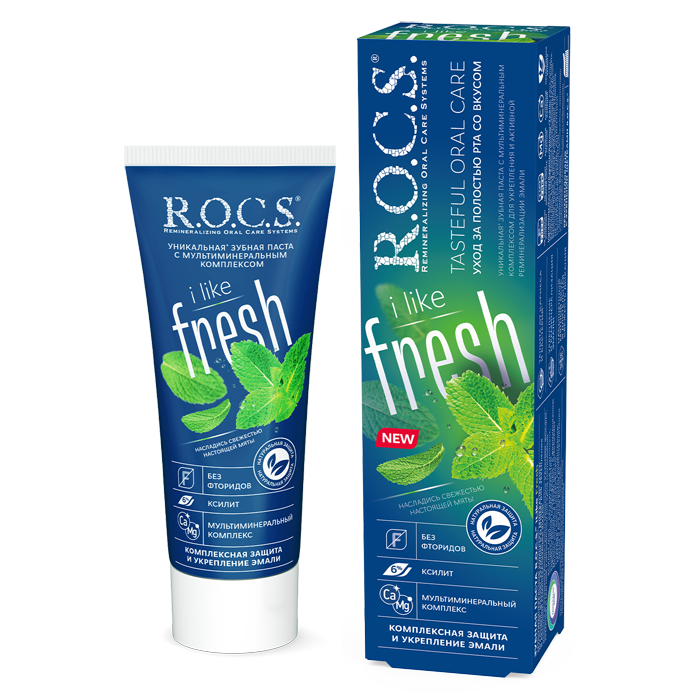
Description
Active ingredients
Properties
RIA
Clinical trials
Ingredients
Application
Description
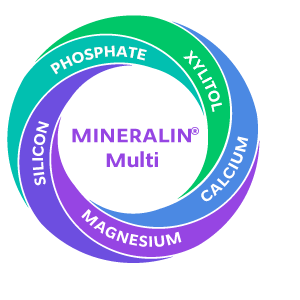
Features
R.O.C.S. iLike Fresh toothpaste contains the patented multi-mineral complex MINERALIN Multi, which, combined with xylitol, rapidly restores the natural mineral composition of teeth and protects against caries, including secondary caries.
A higher concentration of magnesium ions for enhanced remineralization and enamel whiteness.
Indications
- Regular oral care.
- Post-filling dental care.
Organoleptic properties
A cream-colored toothpaste with a rich, refreshing mint flavor.
Active ingredients
Properties
- Effectively cleans teeth.
- Increases the mineralizing potential of saliva.
- Improves enamel structure and microhardness. Teeth look healthier and brighter.
- Increases the acid resistance and caries resistance of enamel.
- Protects teeth in the filling contact area.
- Helps prevent secondary caries.
- Improves periodontal condition.
RIA

* Russian Abrasivity Index reflects the cleaning capacity level of oral care products and polishing pastes. Products with a higher RIA value have enhanced cleaning properties, but are also a risk factor for the development of non-carious dental lesions, therefore the choice of toothpaste should be guided by the condition of the hard dental tissues.
Russian Abrasivity Index (RIA): a new stage in oral hygiene standardization
The DRC group of companies, in collaboration with the Institute of Digital Dentistry of the RUDN Medical Institute, has developed and is implementing a new toothpaste abrasivity measurement standard in Russia that meets the highest requirements: safety, accuracy, reproducibility. Принято. This methodology is an alternative to the RDA measurement method and offers a number of advantages. Its effectiveness has been confirmed by a large-scale experimental and clinical study involving 534 patients.
The methodology is based on a rotary machine and digital technologies developed by a research group of dentists, physicists, and digital modeling specialists. QLF diagnostics, intraoral scanning, and digital analysis were used in the work, which made it possible to obtain objective data on tooth wear and the influence of abrasivity over time.
Download RIA research protocol (in Russian):
Clinical trials
R.O.C.S. toothpaste with active minerals effectively cleans teeth, saturates enamel with minerals, increases caries resistance and the rate of tooth remineralization, and is effective in the post-filling period:
The study compared the level of oral hygiene and enamel resistance in children using toothpastes based on calcium glycerophosphate (R.O.C.S. Active Calcium) and calcium lactate (New Pearl Calcium).
After two months, the level of hygiene improved in both groups, with significantly greater improvement in the group of children using R.O.C.S. Active Calcium toothpaste.
In the calcium lactate group, after a slight increase at two weeks, enamel resistance had almost returned to baseline by the end of the study. In the glycerophosphate group, on the other hand, enamel acid resistance increased throughout the entire observation period and, according to the TER test, improved by an average of 1.66 points after two months.
Download this article for free in Russian:
Enamel tunnels are microstructures that curve in an S-shape along the bundles of enamel prisms and extend to the dentin, penetrating it in the form of enamel bridges, where metabolic exchange between the enamel and dentin takes place. On the enamel surface, these tunnels open as enamel pores. X-ray spectral microanalysis and planar spectrograms show that the walls of enamel tunnels and the areas near them contain mainly mineral components (Ca, Ba, Cd, Sr, P, Si, As, C, K, Br, I, Cl), while the lumen contains organic components. It has been established that the mineral component of R.O.C.S. toothpastes actively penetrates through the enamel tunnels into the area of the enamel-dentin junction and the superficial layers of the dentin, exerting a positive effect on the structural and functional caries resistance of teeth.
Download this article for free in Russian:
Based on the results of an earlier study showing that fluoride practically does not improve metabolic processes in mature enamel, the authors conducted a comparative study of the effect of a toothpaste with a mineral complex containing magnesium, calcium, phosphorus, and silicon, and a toothpaste with fluoride in the form of highly active aminofluoride on the restoration of tooth enamel after caries treatment.
The study involved 100 people aged 25 to 30 years of both sexes diagnosed with dentin caries. The patients were randomly divided into two groups. After caries treatment, patients in group 1 used R.O.C.S. toothpaste containing calcium glycerophosphate, magnesium chloride, sodium silicate, and xylitol, while patients in group 2 used Colgate toothpaste with aminofluoride (1400 ppm F¯).
The results were evaluated by examining the teeth using clinical (KOSRE test, TER test, oral fluid pH) and laboratory (scanning electron microscopy and X-ray spectral microchemical analysis) methods.
As a result of using R.O.C.S. toothpaste with the multi-mineral complex after dentin caries treatment, the characteristic depletion of calcium and phosphorus in the surface enamel layer does not occur, despite the post-restoration recovery period (28 days), which, according to the authors, is characterized by intensive trace element loss. In the control group that used a fluoride-containing toothpaste for toothbrushing, the concentration of the structural components of the enamel decreased after treatment (Table 1).
Table 1. Content of chemical elements in the surface enamel layer after tooth preparation and subsequent use of the test toothpastes according to X-ray spectral microanalysis, wt.%.
| Chemical element | Group 1 | Group 2 | ||
|---|---|---|---|---|
| immediately after caries treatment | after one month of using R.O.C.S. toothpaste | immediately after caries treatment | after one month of using toothpaste with 1400 ppm F¯ | |
| calcium | 14.98+0.12 | 16.81+0.50 | 15.95+0.49 | 12.81+0.12 |
| phosphorus | 6.87+0.31 | 7.75+0.69 | 7.63+0.42 | 6.75+0.69 |
| magnesium | 0.49±0.01 | 0.53+0.01 | 0.51+0.01 | 0.50+0.06 |
After one month of supervised toothbrushing, patients using R.O.C.S. toothpaste demonstrated low enamel susceptibility to acid (below 40%) and high remineralizing capacity of saliva (from 24 hours to 3 days); caries resistance of the teeth increased by 8.2 times. No changes were detected in the group using Colgate toothpaste.
Thus, the use of R.O.C.S. toothpaste with the multi-mineral complex leads to significant positive shifts in enamel metabolism even after caries treatment, considering that tooth preparation — trauma to the enamel — is associated with significant metabolic disturbances.
Download this article for free in Russian:
A long-term study confirming the anti-caries effect of R.O.C.S. toothpaste with xylitol and active minerals (calcium glycerophosphate + magnesium chloride):
A two-year program of supervised toothbrushing carried out in schools on children aged 6-7 using R.O.C.S. (Re-mineralizing Oral Care System) toothpastes has shown very effective results in reducing the OHI-S index scores by 53-57%, the GI index scores by 57-73% and the 2-year DMFT scores by 29-32%. Remineralizing toothpastes with-out fluorine, containing 500 ppm AmF or 1000 ppm NaF, were as effective in terms of improving the oral health of the schoolchildren.
Download the article for free:
Ingredients
Aqua, Silica, Glycerin, Xylitol, Magnesium Chloride, Sodium Lauryl Sulfate, Xanthan Gum, Aroma, Sodium Glycerophosphate, Calcium Glycerophosphate, Methylparaben, Sodium Saccharine, Stevioside, Sodium Silicate, Propylparaben, Limonene.
Application
Use twice a day (morning and evening). Recommended toothbrushing time is 2-3 minutes.
Suitable for all ages, with no time restrictions on use.
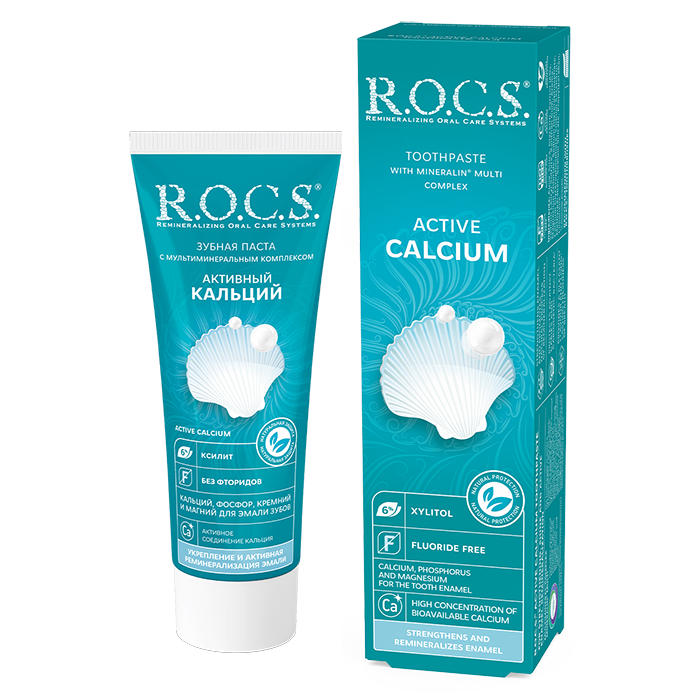
Description
Active ingredients
Properties
RIA
Clinical trials
Ingredients
Application
Description
Features
R.O.C.S. Active Calcium toothpaste contains a patented multi-mineral complex, including the key elements necessary for ion-exchange processes in the hard tissues of the tooth: calcium, phosphorus, silicon and magnesium in an optimal ratio and bioavailable form.
The multimineral complex promotes remineralization of the teeth and increases their resistance to caries.
Magnesium and silicon activate the process of tooth mineralization, which is especially important for elderly people, in whom these processes tend to decline with age.
Indications
- Daily hygienic care.
- Post-filling dental care.
Organoleptic properties
Cream-colored paste with a light mint aroma.
Active ingredients
Properties
- Effectively cleans teeth.
- Increases the remineralizing potential of saliva.
- Restores the natural mineral composition of teeth.
- Increases acid resistance and caries resistance of enamel.
- Provides remineralization of the enamel at the filling-enamel margin.
- Contributes to the prevention of secondary caries.
RIA
* Russian Abrasivity Index reflects the cleaning capacity level of oral care products and polishing pastes. Products with a higher RIA value have enhanced cleaning properties, but are also a risk factor for the development of non-carious dental lesions, therefore the choice of toothpaste should be guided by the condition of the hard dental tissues.
Russian Abrasivity Index (RIA): a new stage in oral hygiene standardization
The DRC group of companies, in collaboration with the Institute of Digital Dentistry of the RUDN Medical Institute, has developed and is implementing a new toothpaste abrasivity measurement standard in Russia that meets the highest requirements: safety, accuracy, reproducibility. Принято. This methodology is an alternative to the RDA measurement method and offers a number of advantages. Its effectiveness has been confirmed by a large-scale experimental and clinical study involving 534 patients.
The methodology is based on a rotary machine and digital technologies developed by a research group of dentists, physicists, and digital modeling specialists. QLF diagnostics, intraoral scanning, and digital analysis were used in the work, which made it possible to obtain objective data on tooth wear and the influence of abrasivity over time.
Download RIA research protocol (in Russian):
Clinical trials
R.O.C.S. toothpaste with active minerals qualitatively cleans teeth, saturates enamel with minerals, increases caries resistance and the speed of tooth remineralization, and is effective during the post-restoration period:
The study compared the level of oral hygiene and enamel resistance in children using toothpastes based on calcium glycerophosphate (R.O.C.S. Active Calcium) and calcium lactate (New Pearl Calcium).
After two months, the level of hygiene improved in both groups, with significantly greater improvement in the group of children using R.O.C.S. Active Calcium toothpaste.
In the calcium lactate group, after a slight increase at two weeks, enamel resistance had almost returned to baseline by the end of the study. In the glycerophosphate group, on the other hand, enamel acid resistance increased throughout the entire observation period and, according to the TER test, improved by an average of 1.66 points after two months.
Download this article for free in Russian:
Enamel tunnels are microstructures that curve in an S-shape along the bundles of enamel prisms and extend to the dentin, penetrating it in the form of enamel bridges, where metabolic exchange between the enamel and dentin takes place. On the enamel surface, these tunnels open as enamel pores. X-ray spectral microanalysis and planar spectrograms show that the walls of enamel tunnels and the areas near them contain mainly mineral components (Ca, Ba, Cd, Sr, P, Si, As, C, K, Br, I, Cl), while the lumen contains organic components. It has been established that the mineral component of R.O.C.S. toothpastes actively penetrates through the enamel tunnels into the area of the enamel-dentin junction and the superficial layers of the dentin, exerting a positive effect on the structural and functional caries resistance of teeth.
Download this article for free in Russian:
Based on the results of an earlier study showing that fluoride practically does not improve metabolic processes in mature enamel, the authors conducted a comparative study of the effect of a toothpaste with a mineral complex containing magnesium, calcium, phosphorus, and silicon, and a toothpaste with fluoride in the form of highly active aminofluoride on the restoration of tooth enamel after caries treatment.
The study involved 100 people aged 25 to 30 years of both sexes diagnosed with dentin caries. The patients were randomly divided into two groups. After caries treatment, patients in group 1 used R.O.C.S. toothpaste containing calcium glycerophosphate, magnesium chloride, sodium silicate, and xylitol, while patients in group 2 used Colgate toothpaste with aminofluoride (1400 ppm F¯).
The results were evaluated by examining the teeth using clinical (KOSRE test, TER test, oral fluid pH) and laboratory (scanning electron microscopy and X-ray spectral microchemical analysis) methods.
As a result of using R.O.C.S. toothpaste with the multi-mineral complex after dentin caries treatment, the characteristic depletion of calcium and phosphorus in the surface enamel layer does not occur, despite the post-restoration recovery period (28 days), which, according to the authors, is characterized by intensive trace element loss. In the control group that used a fluoride-containing toothpaste for toothbrushing, the concentration of the structural components of the enamel decreased after treatment (Table 1).
Table 1. Content of chemical elements in the surface enamel layer after tooth preparation and subsequent use of the test toothpastes according to X-ray spectral microanalysis, wt.%.
| Chemical element | Group 1 | Group 2 | ||
|---|---|---|---|---|
| immediately after caries treatment | after one month of using R.O.C.S. toothpaste | immediately after caries treatment | after one month of using toothpaste with 1400 ppm F¯ | |
| calcium | 14.98+0.12 | 16.81+0.50 | 15.95+0.49 | 12.81+0.12 |
| phosphorus | 6.87+0.31 | 7.75+0.69 | 7.63+0.42 | 6.75+0.69 |
| magnesium | 0.49±0.01 | 0.53+0.01 | 0.51+0.01 | 0.50+0.06 |
After one month of supervised toothbrushing, patients using R.O.C.S. toothpaste demonstrated low enamel susceptibility to acid (below 40%) and high remineralizing capacity of saliva (from 24 hours to 3 days); caries resistance of the teeth increased by 8.2 times. No changes were detected in the group using Colgate toothpaste.
Thus, the use of R.O.C.S. toothpaste with the multi-mineral complex leads to significant positive shifts in enamel metabolism even after caries treatment, considering that tooth preparation — trauma to the enamel — is associated with significant metabolic disturbances.
Download this article for free in Russian:
A long-term study confirming the anti-caries effect of R.O.C.S. toothpaste with xylitol and active minerals (calcium glycerophosphate + magnesium chloride):
A two-year program of supervised toothbrushing carried out in schools on children aged 6-7 using R.O.C.S. (Re-mineralizing Oral Care System) toothpastes has shown very effective results in reducing the OHI-S index scores by 53-57%, the GI index scores by 57-73% and the 2-year DMFT scores by 29-32%. Remineralizing toothpastes with-out fluorine, containing 500 ppm AmF or 1000 ppm NaF, were as effective in terms of improving the oral health of the schoolchildren.
Download the article for free:
The abrasivity of the paste (RDA) and its cleaning properties (PCR) have been tested at Indiana University (USA):
Sample No. 7 "R.O.C.S. Active calcium"
Determination of the relative dentin abrasion level of dentifrices
The reports present experimentally measured RDA (relative dentin abrasion) and PCR (pellicle cleaning ratio) indices of some R.O.C.S. toothpastes.
Download the protocol (RDA):
Download the protocol (PCR):
Ingredients
Aqua, Silica, Glycerin, Xylitol, Sodium Lauryl Sulfate, Xanthan Gum, Aroma, Magnesium Chloride, Sodium Glycerophosphate, Calcium Glycerophosphate, Sodium Saccharin, Methylparaben, Sodium Silicate, Propylparaben, Limonene.
Application
Use twice a day (morning and evening). Recommended toothbrushing time is 2-3 minutes.
Has no restrictions on the duration of use.
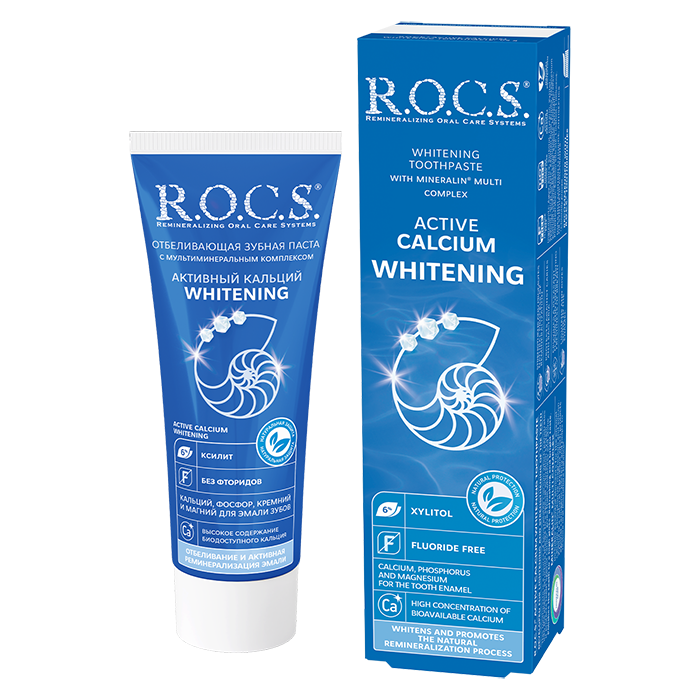
Description
Active ingredients
Properties
RIA
Clinical trials
Ingredients
Application
Description
Features
R.O.C.S. Active Calcium "Whitening" toothpaste, based on a multi-mineral complex, contains a polishing abrasive: silica microparticles gently remove stained plaque and polish the enamel, giving it a shine. The enamel looks optically brighter after just the first use.
The active components of the toothpaste fill the enamel with minerals, strengthening it. Gradually, the teeth acquire a brighter natural shade and their caries resistance increases.
Indications
- Tooth whitening and enamel polishing.
Organoleptic properties
Cream-colored toothpaste with a classic mint flavor.
Active ingredients
Properties
- Effectively cleans teeth.
- Whitens enamel and gives it a natural healthy shine.
- Increases the mineralizing potential of saliva.
- Restores the natural mineral composition of teeth.
- Increases the acid resistance and caries resistance of enamel.
- Protects teeth in the contact area with a filling.
- Helps prevent secondary caries.
RIA

* Russian Abrasivity Index reflects the cleaning capacity level of oral care products and polishing pastes. Products with a higher RIA value have enhanced cleaning properties, but are also a risk factor for the development of non-carious dental lesions, therefore the choice of toothpaste should be guided by the condition of the hard dental tissues.
Russian Abrasivity Index (RIA): a new stage in oral hygiene standardization
The DRC group of companies, in collaboration with the Institute of Digital Dentistry of the RUDN Medical Institute, has developed and is implementing a new toothpaste abrasivity measurement standard in Russia that meets the highest requirements: safety, accuracy, reproducibility. Принято. This methodology is an alternative to the RDA measurement method and offers a number of advantages. Its effectiveness has been confirmed by a large-scale experimental and clinical study involving 534 patients.
The methodology is based on a rotary machine and digital technologies developed by a research group of dentists, physicists, and digital modeling specialists. QLF diagnostics, intraoral scanning, and digital analysis were used in the work, which made it possible to obtain objective data on tooth wear and the influence of abrasivity over time.
Download RIA research protocol (in Russian):
Clinical trials
R.O.C.S. toothpaste with active minerals effectively cleans teeth, saturates enamel with minerals, increases caries resistance and the rate of tooth remineralization, and is effective in the post-filling period:
The study compared the level of oral hygiene and enamel resistance in children using toothpastes based on calcium glycerophosphate (R.O.C.S. Active Calcium) and calcium lactate (New Pearl Calcium).
After two months, the level of hygiene improved in both groups, with significantly greater improvement in the group of children using R.O.C.S. Active Calcium toothpaste.
In the calcium lactate group, after a slight increase at two weeks, enamel resistance had almost returned to baseline by the end of the study. In the glycerophosphate group, on the other hand, enamel acid resistance increased throughout the entire observation period and, according to the TER test, improved by an average of 1.66 points after two months.
Download this article for free in Russian:
Enamel tunnels are microstructures that curve in an S-shape along the bundles of enamel prisms and extend to the dentin, penetrating it in the form of enamel bridges, where metabolic exchange between the enamel and dentin takes place. On the enamel surface, these tunnels open as enamel pores. X-ray spectral microanalysis and planar spectrograms show that the walls of enamel tunnels and the areas near them contain mainly mineral components (Ca, Ba, Cd, Sr, P, Si, As, C, K, Br, I, Cl), while the lumen contains organic components. It has been established that the mineral component of R.O.C.S. toothpastes actively penetrates through the enamel tunnels into the area of the enamel-dentin junction and the superficial layers of the dentin, exerting a positive effect on the structural and functional caries resistance of teeth.
Download this article for free in Russian:
Based on the results of an earlier study showing that fluoride practically does not improve metabolic processes in mature enamel, the authors conducted a comparative study of the effect of a toothpaste with a mineral complex containing magnesium, calcium, phosphorus, and silicon, and a toothpaste with fluoride in the form of highly active aminofluoride on the restoration of tooth enamel after caries treatment.
The study involved 100 people aged 25 to 30 years of both sexes diagnosed with dentin caries. The patients were randomly divided into two groups. After caries treatment, patients in group 1 used R.O.C.S. toothpaste containing calcium glycerophosphate, magnesium chloride, sodium silicate, and xylitol, while patients in group 2 used Colgate toothpaste with aminofluoride (1400 ppm F¯).
The results were evaluated by examining the teeth using clinical (KOSRE test, TER test, oral fluid pH) and laboratory (scanning electron microscopy and X-ray spectral microchemical analysis) methods.
As a result of using R.O.C.S. toothpaste with the multi-mineral complex after dentin caries treatment, the characteristic depletion of calcium and phosphorus in the surface enamel layer does not occur, despite the post-restoration recovery period (28 days), which, according to the authors, is characterized by intensive trace element loss. In the control group that used a fluoride-containing toothpaste for toothbrushing, the concentration of the structural components of the enamel decreased after treatment (Table 1).
Table 1. Content of chemical elements in the surface enamel layer after tooth preparation and subsequent use of the test toothpastes according to X-ray spectral microanalysis, wt.%.
| Chemical element | Group 1 | Group 2 | ||
|---|---|---|---|---|
| immediately after caries treatment | after one month of using R.O.C.S. toothpaste | immediately after caries treatment | after one month of using toothpaste with 1400 ppm F¯ | |
| calcium | 14.98+0.12 | 16.81+0.50 | 15.95+0.49 | 12.81+0.12 |
| phosphorus | 6.87+0.31 | 7.75+0.69 | 7.63+0.42 | 6.75+0.69 |
| magnesium | 0.49±0.01 | 0.53+0.01 | 0.51+0.01 | 0.50+0.06 |
After one month of supervised toothbrushing, patients using R.O.C.S. toothpaste demonstrated low enamel susceptibility to acid (below 40%) and high remineralizing capacity of saliva (from 24 hours to 3 days); caries resistance of the teeth increased by 8.2 times. No changes were detected in the group using Colgate toothpaste.
Thus, the use of R.O.C.S. toothpaste with the multi-mineral complex leads to significant positive shifts in enamel metabolism even after caries treatment, considering that tooth preparation — trauma to the enamel — is associated with significant metabolic disturbances.
Download this article for free in Russian:
A long-term study confirming the anti-caries effect of R.O.C.S. toothpaste with xylitol and active minerals (calcium glycerophosphate + magnesium chloride):
A two-year program of supervised toothbrushing carried out in schools on children aged 6-7 using R.O.C.S. (Re-mineralizing Oral Care System) toothpastes has shown very effective results in reducing the OHI-S index scores by 53-57%, the GI index scores by 57-73% and the 2-year DMFT scores by 29-32%. Remineralizing toothpastes with-out fluorine, containing 500 ppm AmF or 1000 ppm NaF, were as effective in terms of improving the oral health of the schoolchildren.
Download the article for free:
Ingredients
Aqua, Silica, Sorbitol, Glycerin, Xylitol, Sodium Lauryl Sulfate, Xanthan Gum, Aroma, Magnesium Chloride, Sodium Glycerophosphate, Methylparaben, Calcium Glycerophosphate, Sodium Saccharin, Propylparaben, Sodium Silicate, Linalool, Limonene.
Application
Use twice a day (morning and evening). Recommended toothbrushing time is 2-3 minutes.
To enhance the whitening effect, combined use with the R.O.C.S. WHITENING toothbrush is recommended.
The toothpaste has an age restriction of 18+ years.
It is advisable to use in courses, alternating with a regular toothpaste that does not contain polishing additives.
Not recommended for use in cases of hypersensitivity, increased tooth wear, or enamel erosion.
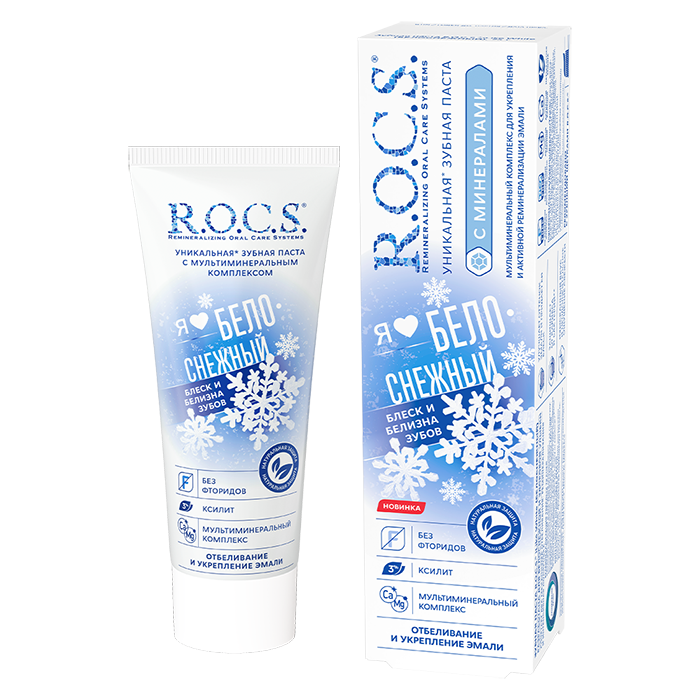
Description
Active ingredients
Properties
Clinical trials
Ingredients
Application
Description
Features
R.O.C.S. iLike White toothpaste combines two whitening mechanisms: remineralization and intensive polishing.
The patented multi-mineral complex MINERALIN Multi gradually restores the natural mineral composition of teeth, bringing back the enamel's natural healthy whiteness.
Silica microparticles intensively polish the enamel, leaving it smooth and shiny and optically enhancing the whitening effect.
Indications
- Tooth whitening and enamel polishing.
Organoleptic properties
A cream-colored toothpaste. An extra-fresh flavor with citrus notes.
Active ingredients
Properties
- Effectively cleans teeth.
- Whitens enamel and leaves it looking naturally healthy and shiny.
- Increases the mineralizing potential of saliva.
- Restores the natural mineral composition of teeth.
- Increases the acid resistance and caries resistance of enamel.
- Protects teeth in the filling contact area.
- Helps prevent secondary caries.
Clinical trials
R.O.C.S. toothpaste with active minerals effectively cleans teeth, saturates enamel with minerals, increases caries resistance and the rate of tooth remineralization, and is effective in the post-filling period:
The study compared the level of oral hygiene and enamel resistance in children using toothpastes based on calcium glycerophosphate (R.O.C.S. Active Calcium) and calcium lactate (New Pearl Calcium).
After two months, the level of hygiene improved in both groups, with significantly greater improvement in the group of children using R.O.C.S. Active Calcium toothpaste.
In the calcium lactate group, after a slight increase at two weeks, enamel resistance had almost returned to baseline by the end of the study. In the glycerophosphate group, on the other hand, enamel acid resistance increased throughout the entire observation period and, according to the TER test, improved by an average of 1.66 points after two months.
Download this article for free in Russian:
Enamel tunnels are microstructures that curve in an S-shape along the bundles of enamel prisms and extend to the dentin, penetrating it in the form of enamel bridges, where metabolic exchange between the enamel and dentin takes place. On the enamel surface, these tunnels open as enamel pores. X-ray spectral microanalysis and planar spectrograms show that the walls of enamel tunnels and the areas near them contain mainly mineral components (Ca, Ba, Cd, Sr, P, Si, As, C, K, Br, I, Cl), while the lumen contains organic components. It has been established that the mineral component of R.O.C.S. toothpastes actively penetrates through the enamel tunnels into the area of the enamel-dentin junction and the superficial layers of the dentin, exerting a positive effect on the structural and functional caries resistance of teeth.
Download this article for free in Russian:
Based on the results of an earlier study showing that fluoride practically does not improve metabolic processes in mature enamel, the authors conducted a comparative study of the effect of a toothpaste with a mineral complex containing magnesium, calcium, phosphorus, and silicon, and a toothpaste with fluoride in the form of highly active aminofluoride on the restoration of tooth enamel after caries treatment.
The study involved 100 people aged 25 to 30 years of both sexes diagnosed with dentin caries. The patients were randomly divided into two groups. After caries treatment, patients in group 1 used R.O.C.S. toothpaste containing calcium glycerophosphate, magnesium chloride, sodium silicate, and xylitol, while patients in group 2 used Colgate toothpaste with aminofluoride (1400 ppm F¯).
The results were evaluated by examining the teeth using clinical (KOSRE test, TER test, oral fluid pH) and laboratory (scanning electron microscopy and X-ray spectral microchemical analysis) methods.
As a result of using R.O.C.S. toothpaste with the multi-mineral complex after dentin caries treatment, the characteristic depletion of calcium and phosphorus in the surface enamel layer does not occur, despite the post-restoration recovery period (28 days), which, according to the authors, is characterized by intensive trace element loss. In the control group that used a fluoride-containing toothpaste for toothbrushing, the concentration of the structural components of the enamel decreased after treatment (Table 1).
Table 1. Content of chemical elements in the surface enamel layer after tooth preparation and subsequent use of the test toothpastes according to X-ray spectral microanalysis, wt.%.
| Chemical element | Group 1 | Group 2 | ||
|---|---|---|---|---|
| immediately after caries treatment | after one month of using R.O.C.S. toothpaste | immediately after caries treatment | after one month of using toothpaste with 1400 ppm F¯ | |
| calcium | 14.98+0.12 | 16.81+0.50 | 15.95+0.49 | 12.81+0.12 |
| phosphorus | 6.87+0.31 | 7.75+0.69 | 7.63+0.42 | 6.75+0.69 |
| magnesium | 0.49±0.01 | 0.53+0.01 | 0.51+0.01 | 0.50+0.06 |
After one month of supervised toothbrushing, patients using R.O.C.S. toothpaste demonstrated low enamel susceptibility to acid (below 40%) and high remineralizing capacity of saliva (from 24 hours to 3 days); caries resistance of the teeth increased by 8.2 times. No changes were detected in the group using Colgate toothpaste.
Thus, the use of R.O.C.S. toothpaste with the multi-mineral complex leads to significant positive shifts in enamel metabolism even after caries treatment, considering that tooth preparation — trauma to the enamel — is associated with significant metabolic disturbances.
Download this article for free in Russian:
A long-term study confirming the anti-caries effect of R.O.C.S. toothpaste with xylitol and active minerals (calcium glycerophosphate + magnesium chloride):
A two-year program of supervised toothbrushing carried out in schools on children aged 6-7 using R.O.C.S. (Re-mineralizing Oral Care System) toothpastes has shown very effective results in reducing the OHI-S index scores by 53-57%, the GI index scores by 57-73% and the 2-year DMFT scores by 29-32%. Remineralizing toothpastes with-out fluorine, containing 500 ppm AmF or 1000 ppm NaF, were as effective in terms of improving the oral health of the schoolchildren.
Download the article for free:
Ingredients
Aqua, Silica, Sorbitol, Glycerin, Xylitol, Sodium Lauryl Sulfate, Xanthan Gum, Aroma, Magnesium Chloride, Sodium Glycerophosphate, Calcium Glycerophosphate, Methylparaben, Sodium Saccharin, Propylparaben, Sodium Silicate, Linalool, Limonene.
Application
Use twice a day (morning and evening). Recommended toothbrushing time is 2-3 minutes.
To enhance the whitening effect, use together with R.O.C.S. WHITENING toothbrushes.
The toothpaste has an age restriction of 18+ years.
It is advisable to use in courses, alternating with a regular toothpaste that does not contain polishing additives.
Not recommended for use in cases of hypersensitivity, increased tooth wear, or enamel erosion.
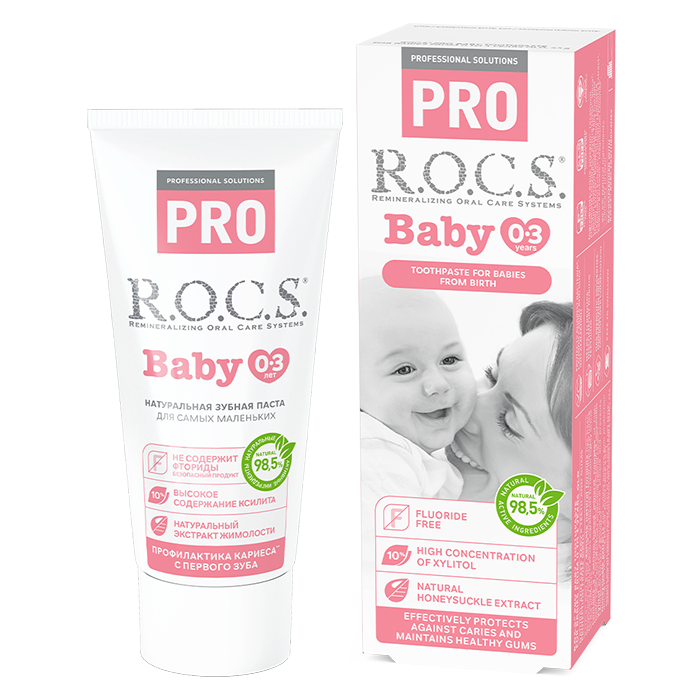
Active minerals for enhanced caries protection.
Description
Active ingredients
Properties
RIA
Clinical trials
Ingredients
Application
Description
Features
R.O.C.S. PRO Baby toothpaste is designed for oral care in babies under 3, especially when a child needs remineralization and extra protection for their teeth.
It contains 98.5% naturally derived ingredients. Thanks to the antimicrobial properties of its extracts, this product doesn't require strong preservatives or special storage conditions.
Indications
- Daily oral care for children ages 0 to 3.
- Enhanced caries protection.
Organoleptic properties
The toothpaste has a low-foaming formula to help prevent gagging during brushing. The texture is gel-like, and the color is cream.
It has a pleasant sweet taste — no flavoring needed.
Active ingredients

Properties
- Increases the microhardness of tooth enamel.
- Remineralizes enamel.
- Protects against caries.
- Normalizes the oral microflora.
- Safe if swallowed.
RIA
* Russian Abrasivity Index reflects the cleaning capacity level of oral care products and polishing pastes. Products with a higher RIA value have enhanced cleaning properties, but are also a risk factor for the development of non-carious dental lesions, therefore the choice of toothpaste should be guided by the condition of the hard dental tissues.
Russian Abrasivity Index (RIA): a new stage in oral hygiene standardization
The DRC group of companies, in collaboration with the Institute of Digital Dentistry of the RUDN Medical Institute, has developed and is implementing a new toothpaste abrasivity measurement standard in Russia that meets the highest requirements: safety, accuracy, reproducibility. Принято. This methodology is an alternative to the RDA measurement method and offers a number of advantages. Its effectiveness has been confirmed by a large-scale experimental and clinical study involving 534 patients.
The methodology is based on a rotary machine and digital technologies developed by a research group of dentists, physicists, and digital modeling specialists. QLF diagnostics, intraoral scanning, and digital analysis were used in the work, which made it possible to obtain objective data on tooth wear and the influence of abrasivity over time.
Download RIA research protocol (in Russian):
Clinical trials
Evidence of the prebiotic and anti-adhesive properties of xylitol (normalization of microflora, protection against cariogenic bacteria and Candida fungi):
The high prevalence of caries in young children necessitates the use of therapeutic and preventive products that target the primary etiopathogenetic factor of this disease — pathogenic microflora. This study presents comparative data on the antimicrobial effectiveness of products containing xylitol and chlorhexidine, as well as their effect on the microbiocenosis composition of the dental biofilm.
A total of 30 patients aged 12 to 36 months with early childhood caries (18 boys and 12 girls) were followed for one month. The patients were divided into two equal groups using a blinded method:
- Patients in group 1 used R.O.C.S. Medical Minerals gel for local antimicrobial and remineralizing therapy over the course of one month.
- Patients in group 2 were prescribed daily one- to two-minute applications of a 0.1% chlorhexidine solution once a day for 7–10 days as local antimicrobial therapy. "Belagel Ca/P" gel was used daily for one month as remineralizing therapy.
It was recommended that the remineralizing gels be applied 4–5 times a day after toothbrushing. All procedures were performed by the patients' parents at home after receiving prior instruction.
At baseline and at the end of the prescribed treatment course, all patients underwent molecular biology testing using multiplex PCR at the NIMSI laboratory.
In group 1, a significant reduction in colonization by cariogenic species was detected, along with a positive effect of the R.O.C.S. Medical Minerals remineralizing gel components on the ratio of cariogenic to resident species, as well as a decrease in the quantity and frequency of detection of certain periodontopathogenic anaerobic bacteria (Table 1). An important positive feature of the change in the dental biofilm microbiocenosis composition in the first group was also the disappearance of Candida fungi.
Examination of the microbial flora of dental plaque in group 2 patients one month after treatment showed only some positive shifts in the ratio of cariogenic to normal flora, and a decrease in the frequency of detection of certain virulent strains. At the same time, the quantity and frequency of detection of representatives of the resident bacterial group — enterococci — decreased. In addition, the detection rate of the yeast-like fungus Candida albicans increased, with a statistically significant rise in the fungal colonization of dental plaque. These data indicate the development of dysbiosis with the use of chlorhexidine.
Table 1. Comparative assessment of changes in the frequency of detection of microbial flora in dental plaque between the two groups after a course of therapy
| Genus, species of bacteria | 0.1% chlorhexidine | R.O.C.S. Medical Minerals with xylitol |
|---|---|---|
| Streptococcus mutans (cariogenic strain) | no change | 45.4% reduction |
| Actinomyces spp. (cariogenic strain) | 33.3% reduction | 44.5% reduction |
| Veillonella parvula (resident) | 24.7% increase | 40.2% increase |
| Porphyromonas gingivalis (periodontopathogen) | 66.5% reduction | no change |
| Prevotella melaninogenica (virulent strain) | 20% increase | 44.5% reduction |
| Fusobacterium nucleatum (periodontopathogen) | 4.8-fold increase | 33.5% reduction |
| Candida albicans (fungus, pathogen) | 49.8% increase | complete disappearance |
A clinical examination after one month showed no new carious cavities or demineralization foci in group 1 patients; existing chalky spots regained their luster; the progression of carious defects was halted; and signs of catarrhal gingivitis disappeared.
During the clinical examination of group 2 patients, no new carious cavities were recorded either; the disappearance of catarrhal gingivitis signs was observed in 80% of patients (of those who had it at baseline).
The inclusion of both xylitol and chlorhexidine as antimicrobial therapy in the comprehensive treatment plan for early childhood caries leads to a reduction in the detection frequency and colonization level of cariogenic and periodontopathogenic flora in dental plaque.
The data presented indicate a more physiological action of xylitol; it has a positive effect on the microbiocenosis composition of the dental biofilm, normalizing the qualitative (species) composition and the quantitative bacterial load of both cariogenic and stabilizing resident species.
Download this article for free:
Very few substances are known today that can significantly affect the caries-causing environment in the mouth and reduce the risk of tooth decay. One of the most widely studied substances with an anti-caries effect is xylitol. However, the antibacterial mechanism of xylitol is not fully understood. This study provides data confirming xylitol's ability to significantly inhibit the adhesion of oral streptococci, the primary formers of dental plaque. These bacteria delay the development of caries- and periodontal disease-causing bacteria on tooth surfaces through a mechanism called co-adhesion. We also revealed the ability of xylitol to inhibit the adhesion of Streptococcus sobrinus, a microorganism associated with caries, and Staphylococcus aureus, which increases the virulence level of dental plaque. This mechanism of action is realised in toothpaste within the time period traditionally recommended for brushing teeth.
Download the article for free in Russian:
Dicalcium phosphate dihydrate toothpaste with xylitol improves treatment outcomes for caries at the white spot stage:
The method proposed by the authors for treating focal dental demineralization using "Diplen F" dental films offers a number of advantages over existing techniques for treating initial forms of caries. A trend toward shorter treatment times for caries at the chalky spot stage was noted with the combined use of "Diplen F" film and R.O.C.S. Baby toothpaste. Thus, when developing a treatment plan for focal demineralization, it is necessary to take into account the composition and properties of the hygiene products used, both from a safety standpoint and to enhance the effectiveness of the treatment.
Download this article for free in Russian:
Ingredients
Aqua, Glycerin, Dicalcium Phosphate Dihydrate, Xylitol (10%), Silica, Calcium Glycerophosphate, Tillia Cordata Flower Extract, Xanthan Gum, Lonicera Caprifolium Extract, Lonicera Japonica Extract, Sodium Benzoate, Magnesium Chloride.
Application
Brush twice a day (morning and evening) with a small-headed children's toothbrush. Recommended toothbrushing time is 2-3 minutes.
Use within 3 months of opening.
Caries prevention from the very first tooth.
Description
Active ingredients
Properties
RIA
Clinical trials
Ingredients
Application
Description
Features
R.O.C.S. Baby Linden Blossom toothpaste has a hypoallergenic formula designed for oral care in babies from the earliest age. A high concentration of xylitol helps rebalance the oral microbiome and protect against caries.
Linden flower extract, known for its analgesic and soothing properties, helps ease the symptoms of painful teething.
Indications
- Daily oral care for children ages 0 to 3.
- Caries prevention from the very first tooth.
Organoleptic properties
The toothpaste has a low-foaming formula to help prevent gagging during brushing. The texture is gel-like, and the color is cream.
It has a pleasant sweet taste — no flavoring needed.
Active ingredients
Properties
- Normalizes the oral microflora.
- Protects against caries.
- Safe if swallowed.
RIA

* Russian Abrasivity Index reflects the cleaning capacity level of oral care products and polishing pastes. Products with a higher RIA value have enhanced cleaning properties, but are also a risk factor for the development of non-carious dental lesions, therefore the choice of toothpaste should be guided by the condition of the hard dental tissues.
Russian Abrasivity Index (RIA): a new stage in oral hygiene standardization
The DRC group of companies, in collaboration with the Institute of Digital Dentistry of the RUDN Medical Institute, has developed and is implementing a new toothpaste abrasivity measurement standard in Russia that meets the highest requirements: safety, accuracy, reproducibility. Принято. This methodology is an alternative to the RDA measurement method and offers a number of advantages. Its effectiveness has been confirmed by a large-scale experimental and clinical study involving 534 patients.
The methodology is based on a rotary machine and digital technologies developed by a research group of dentists, physicists, and digital modeling specialists. QLF diagnostics, intraoral scanning, and digital analysis were used in the work, which made it possible to obtain objective data on tooth wear and the influence of abrasivity over time.
Download RIA research protocol (in Russian):
Clinical trials
Evidence of the prebiotic and anti-adhesive properties of xylitol (normalization of microflora, protection against cariogenic bacteria and Candida fungi):
The high prevalence of caries in young children necessitates the use of therapeutic and preventive products that target the primary etiopathogenetic factor of this disease — pathogenic microflora. This study presents comparative data on the antimicrobial effectiveness of products containing xylitol and chlorhexidine, as well as their effect on the microbiocenosis composition of the dental biofilm.
A total of 30 patients aged 12 to 36 months with early childhood caries (18 boys and 12 girls) were followed for one month. The patients were divided into two equal groups using a blinded method:
- Patients in group 1 used R.O.C.S. Medical Minerals gel for local antimicrobial and remineralizing therapy over the course of one month.
- Patients in group 2 were prescribed daily one- to two-minute applications of a 0.1% chlorhexidine solution once a day for 7–10 days as local antimicrobial therapy. "Belagel Ca/P" gel was used daily for one month as remineralizing therapy.
It was recommended that the remineralizing gels be applied 4–5 times a day after toothbrushing. All procedures were performed by the patients' parents at home after receiving prior instruction.
At baseline and at the end of the prescribed treatment course, all patients underwent molecular biology testing using multiplex PCR at the NIMSI laboratory.
In group 1, a significant reduction in colonization by cariogenic species was detected, along with a positive effect of the R.O.C.S. Medical Minerals remineralizing gel components on the ratio of cariogenic to resident species, as well as a decrease in the quantity and frequency of detection of certain periodontopathogenic anaerobic bacteria (Table 1). An important positive feature of the change in the dental biofilm microbiocenosis composition in the first group was also the disappearance of Candida fungi.
Examination of the microbial flora of dental plaque in group 2 patients one month after treatment showed only some positive shifts in the ratio of cariogenic to normal flora, and a decrease in the frequency of detection of certain virulent strains. At the same time, the quantity and frequency of detection of representatives of the resident bacterial group — enterococci — decreased. In addition, the detection rate of the yeast-like fungus Candida albicans increased, with a statistically significant rise in the fungal colonization of dental plaque. These data indicate the development of dysbiosis with the use of chlorhexidine.
Table 1. Comparative assessment of changes in the frequency of detection of microbial flora in dental plaque between the two groups after a course of therapy
| Genus, species of bacteria | 0.1% chlorhexidine | R.O.C.S. Medical Minerals with xylitol |
|---|---|---|
| Streptococcus mutans (cariogenic strain) | no change | 45.4% reduction |
| Actinomyces spp. (cariogenic strain) | 33.3% reduction | 44.5% reduction |
| Veillonella parvula (resident) | 24.7% increase | 40.2% increase |
| Porphyromonas gingivalis (periodontopathogen) | 66.5% reduction | no change |
| Prevotella melaninogenica (virulent strain) | 20% increase | 44.5% reduction |
| Fusobacterium nucleatum (periodontopathogen) | 4.8-fold increase | 33.5% reduction |
| Candida albicans (fungus, pathogen) | 49.8% increase | complete disappearance |
A clinical examination after one month showed no new carious cavities or demineralization foci in group 1 patients; existing chalky spots regained their luster; the progression of carious defects was halted; and signs of catarrhal gingivitis disappeared.
During the clinical examination of group 2 patients, no new carious cavities were recorded either; the disappearance of catarrhal gingivitis signs was observed in 80% of patients (of those who had it at baseline).
The inclusion of both xylitol and chlorhexidine as antimicrobial therapy in the comprehensive treatment plan for early childhood caries leads to a reduction in the detection frequency and colonization level of cariogenic and periodontopathogenic flora in dental plaque.
The data presented indicate a more physiological action of xylitol; it has a positive effect on the microbiocenosis composition of the dental biofilm, normalizing the qualitative (species) composition and the quantitative bacterial load of both cariogenic and stabilizing resident species.
Download this article for free:
Very few substances are known today that can significantly affect the caries-causing environment in the mouth and reduce the risk of tooth decay. One of the most widely studied substances with an anti-caries effect is xylitol. However, the antibacterial mechanism of xylitol is not fully understood. This study provides data confirming xylitol's ability to significantly inhibit the adhesion of oral streptococci, the primary formers of dental plaque. These bacteria delay the development of caries- and periodontal disease-causing bacteria on tooth surfaces through a mechanism called co-adhesion. We also revealed the ability of xylitol to inhibit the adhesion of Streptococcus sobrinus, a microorganism associated with caries, and Staphylococcus aureus, which increases the virulence level of dental plaque. This mechanism of action is realised in toothpaste within the time period traditionally recommended for brushing teeth.
Download the article for free in Russian:
Dicalcium phosphate dihydrate toothpaste with xylitol improves treatment outcomes for caries at the white spot stage:
The method proposed by the authors for treating focal dental demineralization using "Diplen F" dental films offers a number of advantages over existing techniques for treating initial forms of caries. A trend toward shorter treatment times for caries at the chalky spot stage was noted with the combined use of "Diplen F" film and R.O.C.S. Baby toothpaste. Thus, when developing a treatment plan for focal demineralization, it is necessary to take into account the composition and properties of the hygiene products used, both from a safety standpoint and to enhance the effectiveness of the treatment.
Download this article for free in Russian:
Ingredients
Aqua, Glycerin, Dicalcium Phosphate Dihydrate, Xylitol (10%), Silica, Xanthan Gum, Tillia Cordata Flower Extract, PVP, Lonicera Japonica Extract, Lonicera Caprifolium Extract, Sodium Benzoate.
Application
Brush twice a day (morning and evening) with a small-headed children's toothbrush. Recommended toothbrushing time is 2-3 minutes.
Use within one month of opening.
Enhanced gum protection and relief from teething discomfort.
Description
Active ingredients
Properties
RIA
Clinical trials
Ingredients
Application
Description
Features
The unique toothpastes in the R.O.C.S. Baby line are designed for oral care in babies from the earliest age. The combination of xylitol and kelp-derived potassium alginate helps rebalance the oral microbiome and restore the mucosa after teething.
The formula is enhanced with extracts of German chamomile, Japanese honeysuckle, and Caprifol honeysuckle.
Indications
- The perfect first toothpaste for babies.
- Regular oral care for children from 0 to 3 years.
- Reducing inflammation and pain during teething.
- Caries prevention starting with the first tooth.
Organoleptic properties
The toothpaste has a low-foaming formula to help prevent gagging during brushing. The texture is gel-like, and the color is cream.
It has a pleasant sweet taste, with no added flavoring.
Active ingredients

Properties
- Reduces teething discomfort.
- Promotes mucosal healing.
- Protects against bacteria that cause caries and gum inflammation.
- Normalizes the oral microflora.
- Safe if swallowed.
RIA

* Russian Abrasivity Index reflects the cleaning capacity level of oral care products and polishing pastes. Products with a higher RIA value have enhanced cleaning properties, but are also a risk factor for the development of non-carious dental lesions, therefore the choice of toothpaste should be guided by the condition of the hard dental tissues.
Russian Abrasivity Index (RIA): a new stage in oral hygiene standardization
The DRC group of companies, in collaboration with the Institute of Digital Dentistry of the RUDN Medical Institute, has developed and is implementing a new toothpaste abrasivity measurement standard in Russia that meets the highest requirements: safety, accuracy, reproducibility. Принято. This methodology is an alternative to the RDA measurement method and offers a number of advantages. Its effectiveness has been confirmed by a large-scale experimental and clinical study involving 534 patients.
The methodology is based on a rotary machine and digital technologies developed by a research group of dentists, physicists, and digital modeling specialists. QLF diagnostics, intraoral scanning, and digital analysis were used in the work, which made it possible to obtain objective data on tooth wear and the influence of abrasivity over time.
Download RIA research protocol (in Russian):
Clinical trials
Evidence of the prebiotic and anti-adhesive properties (normalization of microflora, protection against cariogenic bacteria and Candida fungi):
The high prevalence of caries in young children necessitates the use of therapeutic and preventive products that target the primary etiopathogenetic factor of this disease — pathogenic microflora. This study presents comparative data on the antimicrobial effectiveness of products containing xylitol and chlorhexidine, as well as their effect on the microbiocenosis composition of the dental biofilm.
A total of 30 patients aged 12 to 36 months with early childhood caries (18 boys and 12 girls) were followed for one month. The patients were divided into two equal groups using a blinded method:
- Patients in group 1 used R.O.C.S. Medical Minerals gel for local antimicrobial and remineralizing therapy over the course of one month.
- Patients in group 2 were prescribed daily one- to two-minute applications of a 0.1% chlorhexidine solution once a day for 7–10 days as local antimicrobial therapy. "Belagel Ca/P" gel was used daily for one month as remineralizing therapy.
It was recommended that the remineralizing gels be applied 4–5 times a day after toothbrushing. All procedures were performed by the patients' parents at home after receiving prior instruction.
At baseline and at the end of the prescribed treatment course, all patients underwent molecular biology testing using multiplex PCR at the NIMSI laboratory.
In group 1, a significant reduction in colonization by cariogenic species was detected, along with a positive effect of the R.O.C.S. Medical Minerals remineralizing gel components on the ratio of cariogenic to resident species, as well as a decrease in the quantity and frequency of detection of certain periodontopathogenic anaerobic bacteria (Table 1). An important positive feature of the change in the dental biofilm microbiocenosis composition in the first group was also the disappearance of Candida fungi.
Examination of the microbial flora of dental plaque in group 2 patients one month after treatment showed only some positive shifts in the ratio of cariogenic to normal flora, and a decrease in the frequency of detection of certain virulent strains. At the same time, the quantity and frequency of detection of representatives of the resident bacterial group — enterococci — decreased. In addition, the detection rate of the yeast-like fungus Candida albicans increased, with a statistically significant rise in the fungal colonization of dental plaque. These data indicate the development of dysbiosis with the use of chlorhexidine.
Table 1. Comparative assessment of changes in the frequency of detection of microbial flora in dental plaque between the two groups after a course of therapy
| Genus, species of bacteria | 0.1% chlorhexidine | R.O.C.S. Medical Minerals with xylitol |
|---|---|---|
| Streptococcus mutans (cariogenic strain) | no change | 45.4% reduction |
| Actinomyces spp. (cariogenic strain) | 33.3% reduction | 44.5% reduction |
| Veillonella parvula (resident) | 24.7% increase | 40.2% increase |
| Porphyromonas gingivalis (periodontopathogen) | 66.5% reduction | no change |
| Prevotella melaninogenica (virulent strain) | 20% increase | 44.5% reduction |
| Fusobacterium nucleatum (periodontopathogen) | 4.8-fold increase | 33.5% reduction |
| Candida albicans (fungus, pathogen) | 49.8% increase | complete disappearance |
A clinical examination after one month showed no new carious cavities or demineralization foci in group 1 patients; existing chalky spots regained their luster; the progression of carious defects was halted; and signs of catarrhal gingivitis disappeared.
During the clinical examination of group 2 patients, no new carious cavities were recorded either; the disappearance of catarrhal gingivitis signs was observed in 80% of patients (of those who had it at baseline).
The inclusion of both xylitol and chlorhexidine as antimicrobial therapy in the comprehensive treatment plan for early childhood caries leads to a reduction in the detection frequency and colonization level of cariogenic and periodontopathogenic flora in dental plaque.
The data presented indicate a more physiological action of xylitol; it has a positive effect on the microbiocenosis composition of the dental biofilm, normalizing the qualitative (species) composition and the quantitative bacterial load of both cariogenic and stabilizing resident species.
Download this article for free:
Very few substances are known today that can significantly affect the caries-causing environment in the mouth and reduce the risk of tooth decay. One of the most widely studied substances with an anti-caries effect is xylitol. However, the antibacterial mechanism of xylitol is not fully understood. This study provides data confirming xylitol's ability to significantly inhibit the adhesion of oral streptococci, the primary formers of dental plaque. These bacteria delay the development of caries- and periodontal disease-causing bacteria on tooth surfaces through a mechanism called co-adhesion. We also revealed the ability of xylitol to inhibit the adhesion of Streptococcus sobrinus, a microorganism associated with caries, and Staphylococcus aureus, which increases the virulence level of dental plaque. This mechanism of action is realised in toothpaste within the time period traditionally recommended for brushing teeth.
Download the article for free in Russian:
Effectiveness of the alginate-xylitol complex for treating mucositis, normalizing microflora, and protecting against Candida fungi:
The use of R.O.C.S. toothpastes with the MINERALIN Enzyme complex followed by applications of "R.O.C.S. Mild care with camomile" toothpaste during high-intensity polychemotherapy prevents the development of severe forms of oral mucositis, reduces mucosal healing time to 5–7 days, alleviates pain, and normalizes the microbiocenosis by reducing the growth of pathogenic microflora (including Candida and coliform bacteria) and the frequency of cariogenic streptococci.
A total of 46 patients aged 12–17 years diagnosed with osteosarcoma and Ewing's sarcoma, receiving inpatient treatment at the Blokhin Research Institute of Pediatric Oncology and Hematology, were examined. The patients received high-intensity chemotherapy regimens (methotrexate, doxorubicin, ifosfamide, etoposide, vincristine, cisplatin).
Patient groups:
- Group 1 (25 people): R.O.C.S. toothpastes with the MINERALIN Enzyme complex (containing bromelain, xylitol, calcium glycerophosphate, magnesium chloride) were used for twice-daily oral hygiene. Additionally, after each brushing, 30-minute applications of "R.O.C.S. Mild care with camomile" toothpaste (containing alginates, 10% xylitol, chamomile extract) were performed.
- Group 2 (21 people): twice-daily toothbrushing with preventive toothpastes without anti-inflammatory components was recommended. Additionally, drug therapy using "Miramistin" as a rinse after each meal was carried out.
To study the microbiocenosis, oral fluid samples were collected three times: before the start of treatment, and 7 and 14 days after the start of chemotherapy. A total of 138 oral fluid samples were studied.
Baseline study (before the start of polychemotherapy): 330 microbial strains were isolated. Streptococci accounted for 32.4% of cases, staphylococci for 15.8% (S. epidermidis — 54%, S. aureus — 44%). Lactobacilli were isolated in only 13% of patients. A high level (8.8%) of coliform bacteria was detected. Candida fungi were found in 8.2% of cases. The species composition of streptococci: Str. salivarius (17.2%), Str. mutans (13.8%), Str. viridans (11%), Str. oralis (11%), Str. mitis (6.9%). Enterococci were isolated in 26.2% of cases.
Group 1 (after 14 days): a decrease in cariogenic streptococci was noted (Str. mutans — from 5.8% to 4.2%; Str. mitis — from 4.3% to 3.1%; Str. oralis — from 5% to 2.1%). The frequency of Candida detection decreased (from 6.5% to 4.2%), as did coliform bacteria (from 10.9% to 5.3%). A dysbiotic shift was observed in 80% of cases, grade I–II dysbiosis in 20% of cases, and no patients with grade III were present. A reduction in pain and a decrease in mucositis duration to 5–7 days, predominantly grade II severity, were noted.
Group 2 (after 14 days): an increase in the frequency of Str. mitis (from 2.1% to 6.6%), Str. β-haemolyticus (from 2.1% to 5%), and S. aureus (from 4.3% to 6.1%) was observed. The frequency of Candida detection increased (from 7.4% to 10%), as did coliform bacteria (from 7.4% to 8.8%). Patients with grade III mucositis predominated, and healing time increased to 12–14 days. Grade I–II dysbiosis was observed in 76% of patients, and grade III dysbiosis in 24%.
- Children with oncological diseases undergoing polychemotherapy develop pronounced dysbiotic changes in the oral cavity: a decrease in the level of normal microflora (lactobacilli) and an increase in the frequency of detection of pathogenic and opportunistic microorganisms (S. aureus, enterococci, coliform bacteria, Candida fungi).
- The use of local preventive measures with R.O.C.S. toothpaste containing the MINERALIN Enzyme complex and applications of "R.O.C.S. Mild care with camomile" toothpaste can significantly reduce the percentage of severe forms of mucositis, alleviate pain, and normalize the oral microbiocenosis.
- The use of antiseptic rinses (Miramistin) without a specific effect on the oral microflora does not prevent the progression of dysbiotic changes and severe forms of mucositis.
- It is recommended to include local products that normalize the oral microbiocenosis in the comprehensive therapy of children with oncological diseases to improve the tolerability of polychemotherapy.
Download this article for free in Russian:
Ingredients
Aqua, Glycerin, Xylitol, Silica, Chamomilla Recutita (Matricaria) Flower Extract, Potassium (Sodium) Alginate, Sodium Benzoate, Xanthan Gum, Lonicera Caprifolium Extract, Lonicera Japonica Extract.
Application
Use R.O.C.S. toothpaste twice a day (morning and evening) with a small-headed toothbrush. Recommended toothbrushing time is 2-3 minutes.
Use within one month of opening.
Enhanced gum protection and relief from teething discomfort.
Enhanced gum protection and relief from teething discomfort.
Description
Active ingredients
Properties
RIA
Clinical trials
Ingredients
Application
Description
Features
The unique toothpastes in the R.O.C.S. Baby line are designed for oral care in babies from the earliest age. The combination of xylitol and kelp-derived potassium alginate helps rebalance the oral microbiome and restore the mucosa after teething.
The formula is enhanced with plant extracts of quince fruit, Japanese honeysuckle, and Caprifol honeysuckle flowers.
Indications
- Regular oral care for children from 0 to 3 years.
- Reducing inflammation and pain during teething.
- Caries prevention starting with the first tooth.
Organoleptic properties
The toothpaste has a low-foaming formula to help prevent gagging during brushing. The texture is gel-like, and the color is cream.
Available in three bright flavors: banana, apple, and apple-strawberry.
Active ingredients

Properties
- Reduces teething discomfort.
- Promotes mucosal healing.
- Protects against bacteria that cause caries and gum inflammation.
- Normalizes the oral microflora.
- Safe if swallowed.
RIA
* Russian Abrasivity Index reflects the cleaning capacity level of oral care products and polishing pastes. Products with a higher RIA value have enhanced cleaning properties, but are also a risk factor for the development of non-carious dental lesions, therefore the choice of toothpaste should be guided by the condition of the hard dental tissues.
Russian Abrasivity Index (RIA): a new stage in oral hygiene standardization
The DRC group of companies, in collaboration with the Institute of Digital Dentistry of the RUDN Medical Institute, has developed and is implementing a new toothpaste abrasivity measurement standard in Russia that meets the highest requirements: safety, accuracy, reproducibility. Принято. This methodology is an alternative to the RDA measurement method and offers a number of advantages. Its effectiveness has been confirmed by a large-scale experimental and clinical study involving 534 patients.
The methodology is based on a rotary machine and digital technologies developed by a research group of dentists, physicists, and digital modeling specialists. QLF diagnostics, intraoral scanning, and digital analysis were used in the work, which made it possible to obtain objective data on tooth wear and the influence of abrasivity over time.
Download RIA research protocol (in Russian):
Clinical trials
Confirmation of prebiotic and anti-adhesive properties (normalization of microflora, protection against cariogenic bacteria and Candida fungi):
The high prevalence of caries in young children necessitates the use of therapeutic and preventive products that target the primary etiopathogenetic factor of this disease — pathogenic microflora. This study presents comparative data on the antimicrobial effectiveness of products containing xylitol and chlorhexidine, as well as their effect on the microbiocenosis composition of the dental biofilm.
A total of 30 patients aged 12 to 36 months with early childhood caries (18 boys and 12 girls) were followed for one month. The patients were divided into two equal groups using a blinded method:
- Patients in group 1 used R.O.C.S. Medical Minerals gel for local antimicrobial and remineralizing therapy over the course of one month.
- Patients in group 2 were prescribed daily one- to two-minute applications of a 0.1% chlorhexidine solution once a day for 7–10 days as local antimicrobial therapy. "Belagel Ca/P" gel was used daily for one month as remineralizing therapy.
It was recommended that the remineralizing gels be applied 4–5 times a day after toothbrushing. All procedures were performed by the patients' parents at home after receiving prior instruction.
At baseline and at the end of the prescribed treatment course, all patients underwent molecular biology testing using multiplex PCR at the NIMSI laboratory.
In group 1, a significant reduction in colonization by cariogenic species was detected, along with a positive effect of the R.O.C.S. Medical Minerals remineralizing gel components on the ratio of cariogenic to resident species, as well as a decrease in the quantity and frequency of detection of certain periodontopathogenic anaerobic bacteria (Table 1). An important positive feature of the change in the dental biofilm microbiocenosis composition in the first group was also the disappearance of Candida fungi.
Examination of the microbial flora of dental plaque in group 2 patients one month after treatment showed only some positive shifts in the ratio of cariogenic to normal flora, and a decrease in the frequency of detection of certain virulent strains. At the same time, the quantity and frequency of detection of representatives of the resident bacterial group — enterococci — decreased. In addition, the detection rate of the yeast-like fungus Candida albicans increased, with a statistically significant rise in the fungal colonization of dental plaque. These data indicate the development of dysbiosis with the use of chlorhexidine.
Table 1. Comparative assessment of changes in the frequency of detection of microbial flora in dental plaque between the two groups after a course of therapy
| Genus, species of bacteria | 0.1% chlorhexidine | R.O.C.S. Medical Minerals with xylitol |
|---|---|---|
| Streptococcus mutans (cariogenic strain) | no change | 45.4% reduction |
| Actinomyces spp. (cariogenic strain) | 33.3% reduction | 44.5% reduction |
| Veillonella parvula (resident) | 24.7% increase | 40.2% increase |
| Porphyromonas gingivalis (periodontopathogen) | 66.5% reduction | no change |
| Prevotella melaninogenica (virulent strain) | 20% increase | 44.5% reduction |
| Fusobacterium nucleatum (periodontopathogen) | 4.8-fold increase | 33.5% reduction |
| Candida albicans (fungus, pathogen) | 49.8% increase | complete disappearance |
A clinical examination after one month showed no new carious cavities or demineralization foci in group 1 patients; existing chalky spots regained their luster; the progression of carious defects was halted; and signs of catarrhal gingivitis disappeared.
During the clinical examination of group 2 patients, no new carious cavities were recorded either; the disappearance of catarrhal gingivitis signs was observed in 80% of patients (of those who had it at baseline).
The inclusion of both xylitol and chlorhexidine as antimicrobial therapy in the comprehensive treatment plan for early childhood caries leads to a reduction in the detection frequency and colonization level of cariogenic and periodontopathogenic flora in dental plaque.
The data presented indicate a more physiological action of xylitol; it has a positive effect on the microbiocenosis composition of the dental biofilm, normalizing the qualitative (species) composition and the quantitative bacterial load of both cariogenic and stabilizing resident species.
Download this article for free:
Very few substances are known today that can significantly affect the caries-causing environment in the mouth and reduce the risk of tooth decay. One of the most widely studied substances with an anti-caries effect is xylitol. However, the antibacterial mechanism of xylitol is not fully understood. This study provides data confirming xylitol's ability to significantly inhibit the adhesion of oral streptococci, the primary formers of dental plaque. These bacteria delay the development of caries- and periodontal disease-causing bacteria on tooth surfaces through a mechanism called co-adhesion. We also revealed the ability of xylitol to inhibit the adhesion of Streptococcus sobrinus, a microorganism associated with caries, and Staphylococcus aureus, which increases the virulence level of dental plaque. This mechanism of action is realised in toothpaste within the time period traditionally recommended for brushing teeth.
Download the article for free in Russian:
Effectiveness of the alginate-xylitol complex for treating mucositis, normalizing microflora, and protecting against Candida fungi:
The use of R.O.C.S. toothpastes with the MINERALIN Enzyme complex followed by applications of "R.O.C.S. Mild care with camomile" toothpaste during high-intensity polychemotherapy prevents the development of severe forms of oral mucositis, reduces mucosal healing time to 5–7 days, alleviates pain, and normalizes the microbiocenosis by reducing the growth of pathogenic microflora (including Candida and coliform bacteria) and the frequency of cariogenic streptococci.
A total of 46 patients aged 12–17 years diagnosed with osteosarcoma and Ewing's sarcoma, receiving inpatient treatment at the Blokhin Research Institute of Pediatric Oncology and Hematology, were examined. The patients received high-intensity chemotherapy regimens (methotrexate, doxorubicin, ifosfamide, etoposide, vincristine, cisplatin).
Patient groups:
- Group 1 (25 people): R.O.C.S. toothpastes with the MINERALIN Enzyme complex (containing bromelain, xylitol, calcium glycerophosphate, magnesium chloride) were used for twice-daily oral hygiene. Additionally, after each brushing, 30-minute applications of "R.O.C.S. Mild care with camomile" toothpaste (containing alginates, 10% xylitol, chamomile extract) were performed.
- Group 2 (21 people): twice-daily toothbrushing with preventive toothpastes without anti-inflammatory components was recommended. Additionally, drug therapy using "Miramistin" as a rinse after each meal was carried out.
To study the microbiocenosis, oral fluid samples were collected three times: before the start of treatment, and 7 and 14 days after the start of chemotherapy. A total of 138 oral fluid samples were studied.
Baseline study (before the start of polychemotherapy): 330 microbial strains were isolated. Streptococci accounted for 32.4% of cases, staphylococci for 15.8% (S. epidermidis — 54%, S. aureus — 44%). Lactobacilli were isolated in only 13% of patients. A high level (8.8%) of coliform bacteria was detected. Candida fungi were found in 8.2% of cases. The species composition of streptococci: Str. salivarius (17.2%), Str. mutans (13.8%), Str. viridans (11%), Str. oralis (11%), Str. mitis (6.9%). Enterococci were isolated in 26.2% of cases.
Group 1 (after 14 days): a decrease in cariogenic streptococci was noted (Str. mutans — from 5.8% to 4.2%; Str. mitis — from 4.3% to 3.1%; Str. oralis — from 5% to 2.1%). The frequency of Candida detection decreased (from 6.5% to 4.2%), as did coliform bacteria (from 10.9% to 5.3%). A dysbiotic shift was observed in 80% of cases, grade I–II dysbiosis in 20% of cases, and no patients with grade III were present. A reduction in pain and a decrease in mucositis duration to 5–7 days, predominantly grade II severity, were noted.
Group 2 (after 14 days): an increase in the frequency of Str. mitis (from 2.1% to 6.6%), Str. β-haemolyticus (from 2.1% to 5%), and S. aureus (from 4.3% to 6.1%) was observed. The frequency of Candida detection increased (from 7.4% to 10%), as did coliform bacteria (from 7.4% to 8.8%). Patients with grade III mucositis predominated, and healing time increased to 12–14 days. Grade I–II dysbiosis was observed in 76% of patients, and grade III dysbiosis in 24%.
- Children with oncological diseases undergoing polychemotherapy develop pronounced dysbiotic changes in the oral cavity: a decrease in the level of normal microflora (lactobacilli) and an increase in the frequency of detection of pathogenic and opportunistic microorganisms (S. aureus, enterococci, coliform bacteria, Candida fungi).
- The use of local preventive measures with R.O.C.S. toothpaste containing the MINERALIN Enzyme complex and applications of "R.O.C.S. Mild care with camomile" toothpaste can significantly reduce the percentage of severe forms of mucositis, alleviate pain, and normalize the oral microbiocenosis.
- The use of antiseptic rinses (Miramistin) without a specific effect on the oral microflora does not prevent the progression of dysbiotic changes and severe forms of mucositis.
- It is recommended to include local products that normalize the oral microbiocenosis in the comprehensive therapy of children with oncological diseases to improve the tolerability of polychemotherapy.
Download this article for free in Russian:
Ingredients
The toothpastes differ only in their flavor components; otherwise, their formulations are identical:
Banana mix
Aqua, Glycerin, Xylitol, Silica, Pyrus Cydonia Fruit Extract, Potassium Alginate, PEG-40 Hydrogenated Castor Oil, Lonicera Japonica Extract, Lonicera Caprifolium, Aroma, Sodium Benzoate, Xanthan Gum, Sodium Saccharin, Cinnamal, Eugenol.
Apple
Aqua, Glycerin, Xylitol, Silica, Pyrus Cydonia Fruit Extract, Potassium Alginate, PEG-40 Hydrogenated Castor Oil, Lonicera Japonica Extract, Lonicera Coprifolium Extract, Aroma, Sodium Benzoate, Potassium Sorbate, Xanthan Gum, Sodium Saccharin.
Application
Use twice a day (morning and evening) with a small-headed children's toothbrush. Recommended toothbrushing time is 2-3 minutes.
Use within one month of opening.
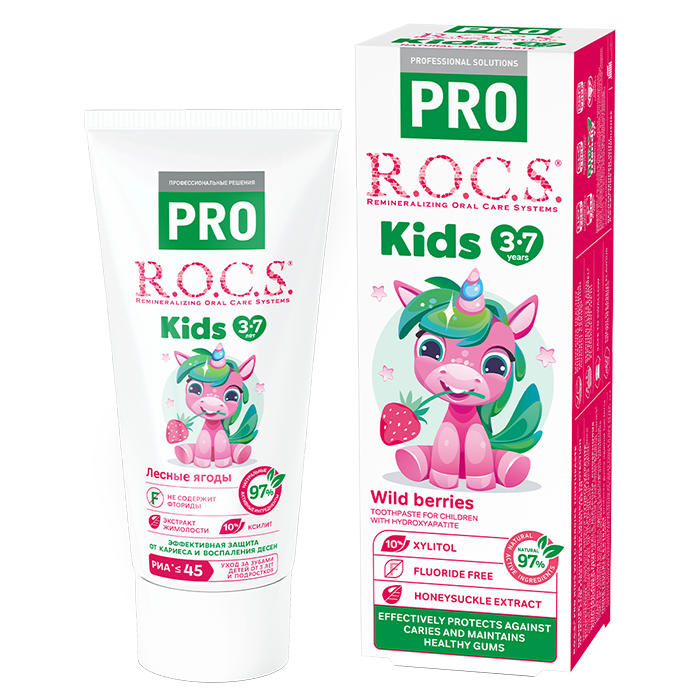
Description
Active ingredients
Properties
RIA
Clinical trials
Ingredients
Application
Description
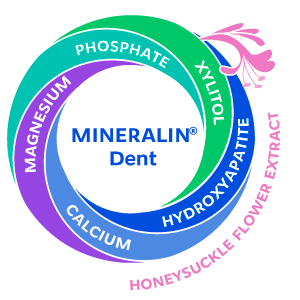
Features
R.O.C.S. PRO Kids toothpaste is designed for enhanced protection and restoration of primary and permanent tooth enamel in children from age three. The unique MINERALIN Dent mineral complex with bioavailable hydroxyapatite actively saturates enamel with trace elements, seals microdamage, and reduces tooth sensitivity — a common issue in children when enamel thins. Long-term clinical studies have confirmed the high effectiveness of R.O.C.S. PRO Kids toothpastes in preventing caries and gum inflammation. The toothpaste's gentle base provides thorough cleaning without damaging immature children's enamel.
Indications
- Daily oral care for children from 3 years of age.
- Prevention of caries and gum inflammation.
-
The toothpaste of choice:
- If a child complains of pain from cold, hot, or sweet foods.
- If a child has visible signs of fluorosis or other contraindications to fluoride use,
- If drinking water has elevated fluoride levels (more than 1.2 mg/L),
- During a course of remineralizing therapy.
Organoleptic properties
A white toothpaste with a pronounced berry flavor.
Active ingredients
Properties
- Protects against caries.
- Reduces tooth sensitivity.
- Provides thorough oral hygiene and gum protection.
- Normalizes the oral microflora.
- Hypoallergenic.
- Safe if swallowed.
RIA

* Russian Abrasivity Index reflects the cleaning capacity level of oral care products and polishing pastes. Products with a higher RIA value have enhanced cleaning properties, but are also a risk factor for the development of non-carious dental lesions, therefore the choice of toothpaste should be guided by the condition of the hard dental tissues.
Russian Abrasivity Index (RIA): a new stage in oral hygiene standardization
The DRC group of companies, in collaboration with the Institute of Digital Dentistry of the RUDN Medical Institute, has developed and is implementing a new toothpaste abrasivity measurement standard in Russia that meets the highest requirements: safety, accuracy, reproducibility. Принято. This methodology is an alternative to the RDA measurement method and offers a number of advantages. Its effectiveness has been confirmed by a large-scale experimental and clinical study involving 534 patients.
The methodology is based on a rotary machine and digital technologies developed by a research group of dentists, physicists, and digital modeling specialists. QLF diagnostics, intraoral scanning, and digital analysis were used in the work, which made it possible to obtain objective data on tooth wear and the influence of abrasivity over time.
Download RIA research protocol (in Russian):
Clinical trials
A two-year study confirming the anti-caries and anti-inflammatory properties of R.O.C.S. toothpaste with xylitol and active minerals (calcium glycerophosphate + magnesium chloride):
A two-year program of supervised toothbrushing carried out in schools on children aged 6-7 using R.O.C.S. (Re-mineralizing Oral Care System) toothpastes has shown very effective results in reducing the OHI-S index scores by 53-57%, the GI index scores by 57-73% and the 2-year DMFT scores by 29-32%. Remineralizing toothpastes with-out fluorine, containing 500 ppm AmF or 1000 ppm NaF, were as effective in terms of improving the oral health of the schoolchildren.
Download the article for free:
Using R.O.C.S. PRO Kids Wild Berries toothpaste helps improve dental status in children with hormonal disorders:
Based on dynamic monitoring of the dental status of 59 children (31 boys, 28 girls) aged 5 to 7 years, 34 of whom had diabetes mellitus, an assessment was made of the influence of this somatic pathology on the condition of the hard dental tissues, periodontium, and the level of individual oral hygiene. The children were followed for one year. After oral cavity sanitation, the children used R.O.C.S. Kids toothbrushes with extra-soft bristles and R.O.C.S. PRO Kids "Wild Berries" toothpaste for oral care.
It was found that children with type I diabetes mellitus suffer from inflammatory periodontal pathology more often than healthy children, and their dental caries progresses more intensively than in children without somatic diseases. To maintain the dental health of children with diabetes mellitus, professional therapeutic and preventive measures should be performed quarterly using age-appropriate oral care products.
Download this article for free in Russian:
The active formula of R.O.C.S. PRO Kids Wild Berries is identical to the formula of the toothpaste studied (50% hydroxyapatite emulsion, calcium glycerophosphate, magnesium chloride, and xylitol), which allows the study results to be extrapolated:
The aim of this study was to evaluate the effectiveness of a toothpaste based on calcium hydroxyapatite, silica, and calcium glycerophosphate in reducing dentin hypersensitivity caused by the loss of hard dental tissues (erosion, wedge-shaped defects, microfractures, chips, abrasion, etc.).
The study group included 30 people aged 20 to 56 years with pronounced symptoms of tooth sensitivity and enamel integrity defects.
The subjects used R.O.C.S. SENSITIVE REPAIR & WHITENING toothpaste daily for one month. The level of dentin hypersensitivity was determined by an instrumental method (YeapleProbes device) and subjectively (Schiff scale). Tooth color was determined using a VITA Easyshade Compact spectrophotometer (VITA Zahnfabrik, Germany). The parameters were recorded at baseline and after 4 weeks.
based on the instrumental recording method
Fig. 1. Upper jaw
Fig. 2. Lower jaw
Fig. 3. Upper jaw
Fig. 4. Lower jaw
During the use of the test toothpaste, a significant improvement in the studied parameters of the hard dental tissues was recorded in all subjects. The toothpaste based on mineral components (hydroxyapatite and calcium glycerophosphate) demonstrated high clinical effectiveness for patients with hypersensitivity of the hard dental tissues.
The dynamics of instrumental tooth color recording before and after the use of the test toothpaste and the subjective impressions of patients showed that, in addition to reducing sensitivity, the use of this toothpaste improves the color of the tooth enamel.
Download this article for free in Russian:
Evidence of the prebiotic and anti-adhesive properties of xylitol (normalization of microflora, protection against cariogenic bacteria and Candida fungi):
The high prevalence of caries in young children necessitates the use of therapeutic and preventive products that target the primary etiopathogenetic factor of this disease — pathogenic microflora. This study presents comparative data on the antimicrobial effectiveness of products containing xylitol and chlorhexidine, as well as their effect on the microbiocenosis composition of the dental biofilm.
A total of 30 patients aged 12 to 36 months with early childhood caries (18 boys and 12 girls) were followed for one month. The patients were divided into two equal groups using a blinded method:
- Patients in group 1 used R.O.C.S. Medical Minerals gel for local antimicrobial and remineralizing therapy over the course of one month.
- Patients in group 2 were prescribed daily one- to two-minute applications of a 0.1% chlorhexidine solution once a day for 7–10 days as local antimicrobial therapy. "Belagel Ca/P" gel was used daily for one month as remineralizing therapy.
It was recommended that the remineralizing gels be applied 4–5 times a day after toothbrushing. All procedures were performed by the patients' parents at home after receiving prior instruction.
At baseline and at the end of the prescribed treatment course, all patients underwent molecular biology testing using multiplex PCR at the NIMSI laboratory.
In group 1, a significant reduction in colonization by cariogenic species was detected, along with a positive effect of the R.O.C.S. Medical Minerals remineralizing gel components on the ratio of cariogenic to resident species, as well as a decrease in the quantity and frequency of detection of certain periodontopathogenic anaerobic bacteria (Table 1). An important positive feature of the change in the dental biofilm microbiocenosis composition in the first group was also the disappearance of Candida fungi.
Examination of the microbial flora of dental plaque in group 2 patients one month after treatment showed only some positive shifts in the ratio of cariogenic to normal flora, and a decrease in the frequency of detection of certain virulent strains. At the same time, the quantity and frequency of detection of representatives of the resident bacterial group — enterococci — decreased. In addition, the detection rate of the yeast-like fungus Candida albicans increased, with a statistically significant rise in the fungal colonization of dental plaque. These data indicate the development of dysbiosis with the use of chlorhexidine.
Table 1. Comparative assessment of changes in the frequency of detection of microbial flora in dental plaque between the two groups after a course of therapy
| Genus, species of bacteria | 0.1% chlorhexidine | R.O.C.S. Medical Minerals with xylitol |
|---|---|---|
| Streptococcus mutans (cariogenic strain) | no change | 45.4% reduction |
| Actinomyces spp. (cariogenic strain) | 33.3% reduction | 44.5% reduction |
| Veillonella parvula (resident) | 24.7% increase | 40.2% increase |
| Porphyromonas gingivalis (periodontopathogen) | 66.5% reduction | no change |
| Prevotella melaninogenica (virulent strain) | 20% increase | 44.5% reduction |
| Fusobacterium nucleatum (periodontopathogen) | 4.8-fold increase | 33.5% reduction |
| Candida albicans (fungus, pathogen) | 49.8% increase | complete disappearance |
A clinical examination after one month showed no new carious cavities or demineralization foci in group 1 patients; existing chalky spots regained their luster; the progression of carious defects was halted; and signs of catarrhal gingivitis disappeared.
During the clinical examination of group 2 patients, no new carious cavities were recorded either; the disappearance of catarrhal gingivitis signs was observed in 80% of patients (of those who had it at baseline).
The inclusion of both xylitol and chlorhexidine as antimicrobial therapy in the comprehensive treatment plan for early childhood caries leads to a reduction in the detection frequency and colonization level of cariogenic and periodontopathogenic flora in dental plaque.
The data presented indicate a more physiological action of xylitol; it has a positive effect on the microbiocenosis composition of the dental biofilm, normalizing the qualitative (species) composition and the quantitative bacterial load of both cariogenic and stabilizing resident species.
Download this article for free:
Very few substances are known today that can significantly affect the caries-causing environment in the mouth and reduce the risk of tooth decay. One of the most widely studied substances with an anti-caries effect is xylitol. However, the antibacterial mechanism of xylitol is not fully understood. This study provides data confirming xylitol's ability to significantly inhibit the adhesion of oral streptococci, the primary formers of dental plaque. These bacteria delay the development of caries- and periodontal disease-causing bacteria on tooth surfaces through a mechanism called co-adhesion. We also revealed the ability of xylitol to inhibit the adhesion of Streptococcus sobrinus, a microorganism associated with caries, and Staphylococcus aureus, which increases the virulence level of dental plaque. This mechanism of action is realised in toothpaste within the time period traditionally recommended for brushing teeth.
Download the article for free in Russian:
Confirmation of hypoallergenicity:
The article deals with the findings in the evaluation of the allergenic properties of "R.O.K.S." lime toothpastes for infants under 3 and "R.O.K.S." raspberry and strawberry toothpastes for children aged between 4 and 7 years old based on the adequate model of the animals with the contact dermatitis by means of the passive skin anaphylaxis. The authors proved that both toothpastes did not have any allergenic effect and may be recommended for application among children disposed to allergic reactions.
Download the article for free in Russian:
Ingredients
Aqua, Silica, Glycerin, Xylitol, Hydroxyapatite, Xanthan Gum, Calcium Glycerophosphate, Cocamidopropyl Betaine, Sodium Lauroyl Sarcosinate, Aroma, Lonicera Caprifolium Extract, Lonicera Japonica Extract, Hydroxyacetophenone, Sodium Benzoate, Sodium Saccharin, Magnesium Chloride, O-cymen-5-ol, Benzyl alcohol, Geraniol, Citronellol.
Application
Brush twice a day (morning and evening) with a children's toothbrush. Recommended toothbrushing time is 2-3 minutes.
Preschool children should brush their teeth under adult supervision.
If a child is fussy and refuses to brush, themed rhymes and riddles can help.
To help your child get into a regular oral hygiene routine, print out the toothbrushing calendar, where the child can color in the boxes themselves after each brushing. Use colorful pencils.
Download the toothbrushing calendar:
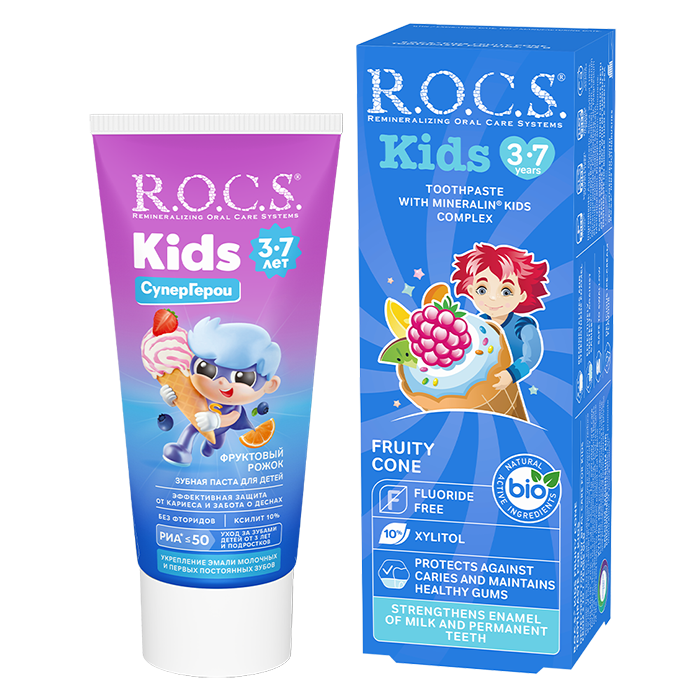
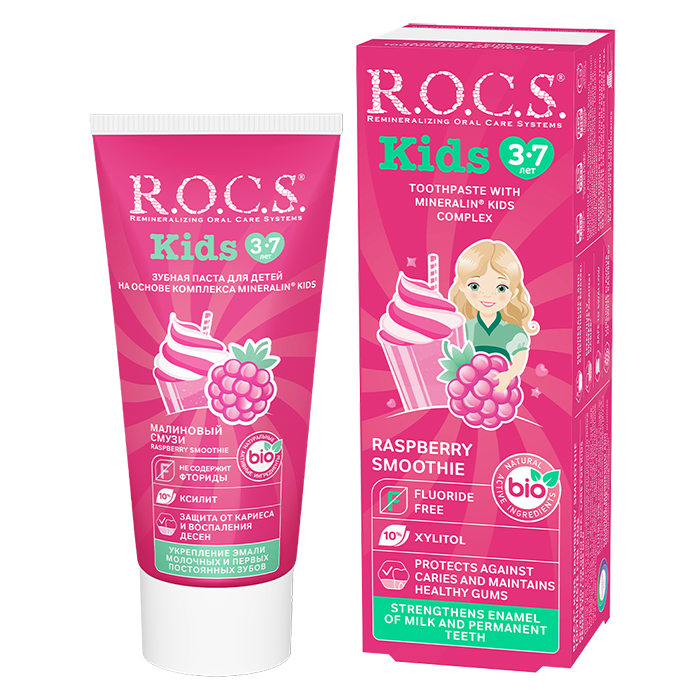
Description
Active ingredients
Properties
Clinical trials
RIA
Ingredients
Application
Description
Features
Fluoride-free toothpastes in the R.O.C.S. Kids 3–7 line are designed for oral care in children from age three. The MINERALIN Kids mineral complex, with its high xylitol content, strengthens enamel and protects teeth from cariogenic bacteria. Long-term clinical studies have confirmed the high effectiveness of R.O.C.S. Kids 3–7 toothpastes in preventing caries and gum inflammation. The toothpaste's gentle base provides thorough cleaning.
The appealing flavors were developed with children's preferences in mind to give them extra motivation.
Indications
- Daily oral care for children from 3 years of age.
-
The toothpaste of choice:
- If a child has visible signs of fluorosis or other contraindications to fluoride use,
- If drinking water has elevated fluoride levels (more than 1.2 mg/L),
- During a course of remineralizing therapy.
Organoleptic properties
A cream-colored toothpaste. Available in two flavors: fragrant raspberry and fruity ice cream.
Active ingredients
Properties
- Protects against caries.
- Provides thorough oral hygiene and gum protection.
- Normalizes the oral microflora.
- Hypoallergenic.
- Safe if swallowed.
Clinical trials
A two-year study confirming the toothpaste's anti-caries effect, hygiene effectiveness, and anti-inflammatory properties:
A two-year program of supervised toothbrushing carried out in schools on children aged 6-7 using R.O.C.S. (Re-mineralizing Oral Care System) toothpastes has shown very effective results in reducing the OHI-S index scores by 53-57%, the GI index scores by 57-73% and the 2-year DMFT scores by 29-32%. Remineralizing toothpastes with-out fluorine, containing 500 ppm AmF or 1000 ppm NaF, were as effective in terms of improving the oral health of the schoolchildren.
Download the article for free:
Evidence of the prebiotic and anti-adhesive properties of xylitol (normalization of microflora, protection against cariogenic bacteria and Candida fungi):
The high prevalence of caries in young children necessitates the use of therapeutic and preventive products that target the primary etiopathogenetic factor of this disease — pathogenic microflora. This study presents comparative data on the antimicrobial effectiveness of products containing xylitol and chlorhexidine, as well as their effect on the microbiocenosis composition of the dental biofilm.
A total of 30 patients aged 12 to 36 months with early childhood caries (18 boys and 12 girls) were followed for one month. The patients were divided into two equal groups using a blinded method:
- Patients in group 1 used R.O.C.S. Medical Minerals gel for local antimicrobial and remineralizing therapy over the course of one month.
- Patients in group 2 were prescribed daily one- to two-minute applications of a 0.1% chlorhexidine solution once a day for 7–10 days as local antimicrobial therapy. "Belagel Ca/P" gel was used daily for one month as remineralizing therapy.
It was recommended that the remineralizing gels be applied 4–5 times a day after toothbrushing. All procedures were performed by the patients' parents at home after receiving prior instruction.
At baseline and at the end of the prescribed treatment course, all patients underwent molecular biology testing using multiplex PCR at the NIMSI laboratory.
In group 1, a significant reduction in colonization by cariogenic species was detected, along with a positive effect of the R.O.C.S. Medical Minerals remineralizing gel components on the ratio of cariogenic to resident species, as well as a decrease in the quantity and frequency of detection of certain periodontopathogenic anaerobic bacteria (Table 1). An important positive feature of the change in the dental biofilm microbiocenosis composition in the first group was also the disappearance of Candida fungi.
Examination of the microbial flora of dental plaque in group 2 patients one month after treatment showed only some positive shifts in the ratio of cariogenic to normal flora, and a decrease in the frequency of detection of certain virulent strains. At the same time, the quantity and frequency of detection of representatives of the resident bacterial group — enterococci — decreased. In addition, the detection rate of the yeast-like fungus Candida albicans increased, with a statistically significant rise in the fungal colonization of dental plaque. These data indicate the development of dysbiosis with the use of chlorhexidine.
Table 1. Comparative assessment of changes in the frequency of detection of microbial flora in dental plaque between the two groups after a course of therapy
| Genus, species of bacteria | 0.1% chlorhexidine | R.O.C.S. Medical Minerals with xylitol |
|---|---|---|
| Streptococcus mutans (cariogenic strain) | no change | 45.4% reduction |
| Actinomyces spp. (cariogenic strain) | 33.3% reduction | 44.5% reduction |
| Veillonella parvula (resident) | 24.7% increase | 40.2% increase |
| Porphyromonas gingivalis (periodontopathogen) | 66.5% reduction | no change |
| Prevotella melaninogenica (virulent strain) | 20% increase | 44.5% reduction |
| Fusobacterium nucleatum (periodontopathogen) | 4.8-fold increase | 33.5% reduction |
| Candida albicans (fungus, pathogen) | 49.8% increase | complete disappearance |
A clinical examination after one month showed no new carious cavities or demineralization foci in group 1 patients; existing chalky spots regained their luster; the progression of carious defects was halted; and signs of catarrhal gingivitis disappeared.
During the clinical examination of group 2 patients, no new carious cavities were recorded either; the disappearance of catarrhal gingivitis signs was observed in 80% of patients (of those who had it at baseline).
The inclusion of both xylitol and chlorhexidine as antimicrobial therapy in the comprehensive treatment plan for early childhood caries leads to a reduction in the detection frequency and colonization level of cariogenic and periodontopathogenic flora in dental plaque.
The data presented indicate a more physiological action of xylitol; it has a positive effect on the microbiocenosis composition of the dental biofilm, normalizing the qualitative (species) composition and the quantitative bacterial load of both cariogenic and stabilizing resident species.
Download this article for free:
Very few substances are known today that can significantly affect the caries-causing environment in the mouth and reduce the risk of tooth decay. One of the most widely studied substances with an anti-caries effect is xylitol. However, the antibacterial mechanism of xylitol is not fully understood. This study provides data confirming xylitol's ability to significantly inhibit the adhesion of oral streptococci, the primary formers of dental plaque. These bacteria delay the development of caries- and periodontal disease-causing bacteria on tooth surfaces through a mechanism called co-adhesion. We also revealed the ability of xylitol to inhibit the adhesion of Streptococcus sobrinus, a microorganism associated with caries, and Staphylococcus aureus, which increases the virulence level of dental plaque. This mechanism of action is realised in toothpaste within the time period traditionally recommended for brushing teeth.
Download the article for free in Russian:
Confirmation of hypoallergenicity:
The article deals with the findings in the evaluation of the allergenic properties of "R.O.K.S." lime toothpastes for infants under 3 and "R.O.K.S." raspberry and strawberry toothpastes for children aged between 4 and 7 years old based on the adequate model of the animals with the contact dermatitis by means of the passive skin anaphylaxis. The authors proved that both toothpastes did not have any allergenic effect and may be recommended for application among children disposed to allergic reactions.
Download the article for free in Russian:
RIA

* Russian Abrasivity Index reflects the cleaning capacity level of oral care products and polishing pastes. Products with a higher RIA value have enhanced cleaning properties, but are also a risk factor for the development of non-carious dental lesions, therefore the choice of toothpaste should be guided by the condition of the hard dental tissues.
Russian Abrasivity Index (RIA): a new stage in oral hygiene standardization
The DRC group of companies, in collaboration with the Institute of Digital Dentistry of the RUDN Medical Institute, has developed and is implementing a new toothpaste abrasivity measurement standard in Russia that meets the highest requirements: safety, accuracy, reproducibility. Принято. This methodology is an alternative to the RDA measurement method and offers a number of advantages. Its effectiveness has been confirmed by a large-scale experimental and clinical study involving 534 patients.
The methodology is based on a rotary machine and digital technologies developed by a research group of dentists, physicists, and digital modeling specialists. QLF diagnostics, intraoral scanning, and digital analysis were used in the work, which made it possible to obtain objective data on tooth wear and the influence of abrasivity over time.
Download RIA research protocol (in Russian):
Ingredients
Aqua, Glycerin, Silica, Xylitol, Cocamidopropyl Betaine, Xanthan Gum, Calcium Glycerophosphate, Aroma, Polysorbate-20, Magnesium Chloride, Sodium Saccharin, Methylparaben, Propylparaben.
Application
Brush twice a day (morning and evening) with a children's toothbrush. Recommended toothbrushing time is 2-3 minutes.
Preschool children should brush their teeth under adult supervision.
If a child is fussy and refuses to brush, themed rhymes and riddles can help.
To help your child get into a regular oral hygiene routine, print out the toothbrushing calendar, where the child can color in the boxes themselves after each brushing. Use colorful pencils.
Download the toothbrushing calendar:
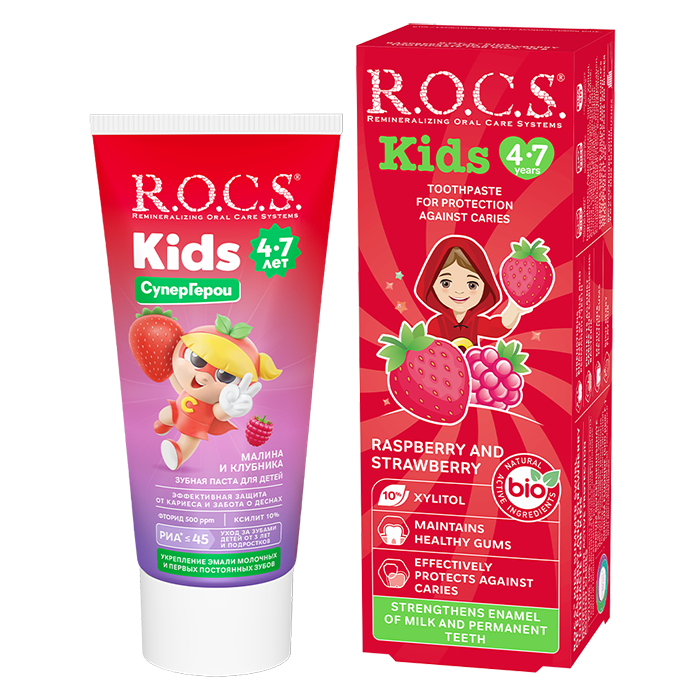
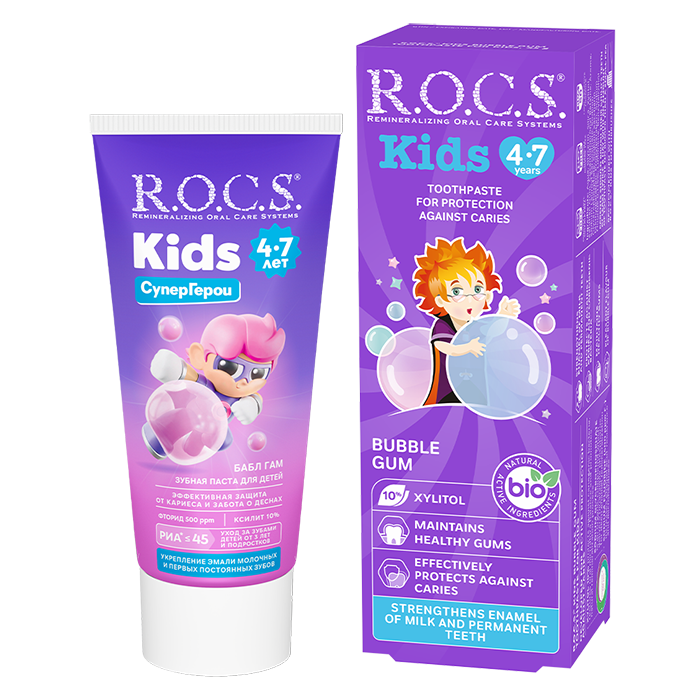
Description
Active ingredients
Properties
RIA
Clinical trials
Ingredients
Application
Description
Features
Fluoride toothpastes in the R.O.C.S. Kids 4-7 line are designed for oral care in children from age four, once a child can spit out the toothpaste after brushing. The fluoride content is 500 ppm. The toothpaste's gentle base provides thorough cleaning.
The appealing flavors were developed with children's preferences in mind to give them extra motivation.
Indications
- Daily oral care for children from 4 years of age.
Organoleptic properties
A cream-colored toothpaste. Available in two flavors: a mix of raspberry and strawberry and the taste of the popular chewing gum.
Active ingredients


Properties
- Protects against caries.
- Increases enamel acid resistance.
- Provides thorough oral hygiene and gum protection.
- Normalizes the oral microflora.
- Hypoallergenic.
RIA
* Russian Abrasivity Index reflects the cleaning capacity level of oral care products and polishing pastes. Products with a higher RIA value have enhanced cleaning properties, but are also a risk factor for the development of non-carious dental lesions, therefore the choice of toothpaste should be guided by the condition of the hard dental tissues.
Russian Abrasivity Index (RIA): a new stage in oral hygiene standardization
The DRC group of companies, in collaboration with the Institute of Digital Dentistry of the RUDN Medical Institute, has developed and is implementing a new toothpaste abrasivity measurement standard in Russia that meets the highest requirements: safety, accuracy, reproducibility. Принято. This methodology is an alternative to the RDA measurement method and offers a number of advantages. Its effectiveness has been confirmed by a large-scale experimental and clinical study involving 534 patients.
The methodology is based on a rotary machine and digital technologies developed by a research group of dentists, physicists, and digital modeling specialists. QLF diagnostics, intraoral scanning, and digital analysis were used in the work, which made it possible to obtain objective data on tooth wear and the influence of abrasivity over time.
Download RIA research protocol (in Russian):
Clinical trials
The combination of fluoride and xylitol has enhanced anti-caries properties:
The aim of this study was to investigate the effect of a toothpaste containing fluoride and xylitol on the remineralization of human enamel using quantitative light-induced fluorescence (QLF).
Artificial subsurface demineralization windows (2 mm x 3 mm) were created on longitudinally sectioned human extracted tooth specimens (three to four sections per tooth) using a special solution. The specimens were then randomly divided into 4 groups.
Each enamel specimen was treated for 3 min at 25 °C twice a day for 14 consecutive days with a silica-based toothpaste slurry:
- without F- and xylitol (base),
- with 500 ppm F- (NaF),
- with 500 ppm F- (NaF) and 5% xylitol,
- with a commercially available toothpaste containing 500 ppm F- (NaF).
Afterwards, the specimens were rinsed and placed in a remineralizing solution at 37 °C.
Changes in mean fluorescence loss (F), demineralization window size, and ΔQ values in group 3 were significantly greater compared to the other groups (P < 0.05).
treated with toothpaste containing 500 ppm F- (NaF) and 5% xylitol

baseline

day 3

day 7

day 14
The results obtained suggest that the inclusion of xylitol in a fluoride toothpaste may be beneficial for enhancing remineralization in vivo.
Am J Dent. 2002 Aug;15(4):215-9. PMID: 12572637.
A large-scale long-term study compared the anti-caries effect of two dentifrices on a dicalcium phosphate dihydrate base. The dentifrice containing sodium monofluorophosphate (1100 ppm F) and 10% xylitol demonstrated a caries increment reduction of more than 10% compared to the dentifrice containing sodium monofluorophosphate (1100 ppm F) alone.
Three thousand three hundred ninety four (3,394) school children aged 7–12 years were selected from 28 public schools in the central plateau of Costa Rica to participate in this double blind clinical caries study. Children accepted for participation were stratified into two groups balanced by age and sex:
- Children in group 1 used a test dentifrice on a dicalcium phosphate dihydrate base containing 0.836% sodium monofluorophosphate (1100 ppm F) and 10% xylitol for daily oral hygiene;
- Children in group 2 used a positive control dentifrice containing 0.836% sodium monofluorophosphate (1100 ppm F) in a dicalcium phosphate dihydrate base.
The study was conducted in harmony with the guidelines for caries clinical studies published in 1988 by the Council on Dental Therapeutics of the American Dental Association, and employed clinical diagnostic criteria provided in the 1991 guidelines published by the National Institute of Dental Research (NIH/NIDR). Dental radiographs were not employed.
Caries increment was assessed by calculating changes in the DFS (decayed and filled surfaces) and DFT (decayed and filled teeth) indices.
Table 1. Caries increment over the 30-month study period
|
Test group 1100 ppm F + 10% xylitol |
Positive control 1100 ppm F |
|
|---|---|---|
| Δ DFS | 1.30 | 1.51 |
| Δ DFT | 0.69 | 0.81 |
For both DFS and DFT, the increments associated with the test dentifrice containing 10% xylitol were statistically significantly lower than those associated with the dentifrice without xylitol (P < 0.05).
Evidence of the prebiotic and anti-adhesive properties of xylitol (normalization of microflora, protection against cariogenic bacteria and Candida fungi):
The high prevalence of caries in young children necessitates the use of therapeutic and preventive products that target the primary etiopathogenetic factor of this disease — pathogenic microflora. This study presents comparative data on the antimicrobial effectiveness of products containing xylitol and chlorhexidine, as well as their effect on the microbiocenosis composition of the dental biofilm.
A total of 30 patients aged 12 to 36 months with early childhood caries (18 boys and 12 girls) were followed for one month. The patients were divided into two equal groups using a blinded method:
- Patients in group 1 used R.O.C.S. Medical Minerals gel for local antimicrobial and remineralizing therapy over the course of one month.
- Patients in group 2 were prescribed daily one- to two-minute applications of a 0.1% chlorhexidine solution once a day for 7–10 days as local antimicrobial therapy. "Belagel Ca/P" gel was used daily for one month as remineralizing therapy.
It was recommended that the remineralizing gels be applied 4–5 times a day after toothbrushing. All procedures were performed by the patients' parents at home after receiving prior instruction.
At baseline and at the end of the prescribed treatment course, all patients underwent molecular biology testing using multiplex PCR at the NIMSI laboratory.
In group 1, a significant reduction in colonization by cariogenic species was detected, along with a positive effect of the R.O.C.S. Medical Minerals remineralizing gel components on the ratio of cariogenic to resident species, as well as a decrease in the quantity and frequency of detection of certain periodontopathogenic anaerobic bacteria (Table 1). An important positive feature of the change in the dental biofilm microbiocenosis composition in the first group was also the disappearance of Candida fungi.
Examination of the microbial flora of dental plaque in group 2 patients one month after treatment showed only some positive shifts in the ratio of cariogenic to normal flora, and a decrease in the frequency of detection of certain virulent strains. At the same time, the quantity and frequency of detection of representatives of the resident bacterial group — enterococci — decreased. In addition, the detection rate of the yeast-like fungus Candida albicans increased, with a statistically significant rise in the fungal colonization of dental plaque. These data indicate the development of dysbiosis with the use of chlorhexidine.
Table 1. Comparative assessment of changes in the frequency of detection of microbial flora in dental plaque between the two groups after a course of therapy
| Genus, species of bacteria | 0.1% chlorhexidine | R.O.C.S. Medical Minerals with xylitol |
|---|---|---|
| Streptococcus mutans (cariogenic strain) | no change | 45.4% reduction |
| Actinomyces spp. (cariogenic strain) | 33.3% reduction | 44.5% reduction |
| Veillonella parvula (resident) | 24.7% increase | 40.2% increase |
| Porphyromonas gingivalis (periodontopathogen) | 66.5% reduction | no change |
| Prevotella melaninogenica (virulent strain) | 20% increase | 44.5% reduction |
| Fusobacterium nucleatum (periodontopathogen) | 4.8-fold increase | 33.5% reduction |
| Candida albicans (fungus, pathogen) | 49.8% increase | complete disappearance |
A clinical examination after one month showed no new carious cavities or demineralization foci in group 1 patients; existing chalky spots regained their luster; the progression of carious defects was halted; and signs of catarrhal gingivitis disappeared.
During the clinical examination of group 2 patients, no new carious cavities were recorded either; the disappearance of catarrhal gingivitis signs was observed in 80% of patients (of those who had it at baseline).
The inclusion of both xylitol and chlorhexidine as antimicrobial therapy in the comprehensive treatment plan for early childhood caries leads to a reduction in the detection frequency and colonization level of cariogenic and periodontopathogenic flora in dental plaque.
The data presented indicate a more physiological action of xylitol; it has a positive effect on the microbiocenosis composition of the dental biofilm, normalizing the qualitative (species) composition and the quantitative bacterial load of both cariogenic and stabilizing resident species.
Download this article for free:
Very few substances are known today that can significantly affect the caries-causing environment in the mouth and reduce the risk of tooth decay. One of the most widely studied substances with an anti-caries effect is xylitol. However, the antibacterial mechanism of xylitol is not fully understood. This study provides data confirming xylitol's ability to significantly inhibit the adhesion of oral streptococci, the primary formers of dental plaque. These bacteria delay the development of caries- and periodontal disease-causing bacteria on tooth surfaces through a mechanism called co-adhesion. We also revealed the ability of xylitol to inhibit the adhesion of Streptococcus sobrinus, a microorganism associated with caries, and Staphylococcus aureus, which increases the virulence level of dental plaque. This mechanism of action is realised in toothpaste within the time period traditionally recommended for brushing teeth.
Download the article for free in Russian:
Confirmation of hypoallergenicity:
The article deals with the findings in the evaluation of the allergenic properties of "R.O.K.S." lime toothpastes for infants under 3 and "R.O.K.S." raspberry and strawberry toothpastes for children aged between 4 and 7 years old based on the adequate model of the animals with the contact dermatitis by means of the passive skin anaphylaxis. The authors proved that both toothpastes did not have any allergenic effect and may be recommended for application among children disposed to allergic reactions.
Download the article for free in Russian:
Ingredients
Aqua, Glycerin, Silica, Xylitol, Xanthan Gum, Cocamidopropyl Betaine, Aroma, Sodium Lauroyl Sarcosinate, Sodium Glycerophosphate, Sodium Saccharin, Methylparaben, Propylparaben, Sodium Fluoride (500 ppm), Benzylalcohol.
Application
Brush twice a day (morning and evening) with a children's toothbrush. Use a pea-sized amount of toothpaste. Recommended toothbrushing time is 2-3 minutes.
After brushing, the remaining toothpaste should be spit out. If a child hasn't yet learned to spit out toothpaste and rinse their mouth, it's better to use a fluoride-free toothpaste. This toothpaste should also be avoided:
- If a child has visible signs of fluorosis or other contraindications to fluoride use,
- If drinking water has elevated fluoride levels (more than 1.2 mg/L),
- During a course of remineralizing therapy.
Preschool children should brush their teeth under adult supervision.
If a child is fussy and refuses to brush, themed rhymes and riddles can help.
To help your child get into a regular oral hygiene routine, print out the toothbrushing calendar, where the child can color in the boxes themselves after each brushing. Use colorful pencils.
Download the toothbrushing calendar:
Description
Active ingredients
Properties
RIA
Clinical trials
Ingredients
Application
Description
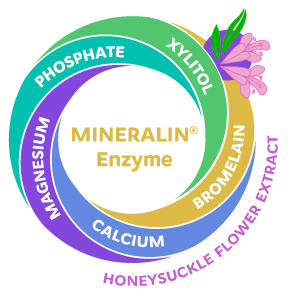
Features
Good oral hygiene is essential for healthy teeth and gums during the tooth transition period. The unique R.O.C.S. PRO Junior toothpaste with a proteolytic enzyme offers enhanced cleaning power. What's more, the enzyme bromelain has a direct anti-inflammatory effect that helps reduce discomfort.
Active minerals combined with xylitol help build strong, healthy tooth enamel and protect against caries.
Indications
- Daily oral care during the mixed dentition period.
- Protection against caries and gum inflammation.
- Plaque control.
- Plaque control.
- The toothpaste of choice during orthodontic treatment.
Organoleptic properties
A sweet creamy flavor.
Active ingredients
Properties
- Effectively cleans teeth and slows plaque formation.
- Reduces gum inflammation, easing discomfort during the mixed dentition period.
- Protects against caries.
- Saturates enamel with minerals.
- Normalizes the oral microflora.
- Safe if swallowed.
RIA
* Russian Abrasivity Index reflects the cleaning capacity level of oral care products and polishing pastes. Products with a higher RIA value have enhanced cleaning properties, but are also a risk factor for the development of non-carious dental lesions, therefore the choice of toothpaste should be guided by the condition of the hard dental tissues.
Russian Abrasivity Index (RIA): a new stage in oral hygiene standardization
The DRC group of companies, in collaboration with the Institute of Digital Dentistry of the RUDN Medical Institute, has developed and is implementing a new toothpaste abrasivity measurement standard in Russia that meets the highest requirements: safety, accuracy, reproducibility. Принято. This methodology is an alternative to the RDA measurement method and offers a number of advantages. Its effectiveness has been confirmed by a large-scale experimental and clinical study involving 534 patients.
The methodology is based on a rotary machine and digital technologies developed by a research group of dentists, physicists, and digital modeling specialists. QLF diagnostics, intraoral scanning, and digital analysis were used in the work, which made it possible to obtain objective data on tooth wear and the influence of abrasivity over time.
Download RIA research protocol (in Russian):
Clinical trials
R.O.C.S. toothpaste with bromelain significantly improves oral hygiene, slows plaque formation and reduces its cariogenicity, provides a long-lasting clean feeling, and reduces gum inflammation and bleeding:
The study aimed to compare the effects of two toothpastes: one containing the broad-spectrum antiseptic triclosan and sodium fluoride ([F⁻] = 0.145%), and the other containing xylitol, bromelain, calcium glycerophosphate, and magnesium chloride. The study examined their impact on the hygienic state of the oral cavity, plaque formation rates, cariesogenicity, and gingivitis intensity. Over a period of three months, 60 volunteers aged 18–45 years of both sexes brushed their teeth with a sample of one of the toothpastes. R.O.C.S. toothpaste was more effective in all measured areas
R.O.C.S. toothpaste with a MINERALIN Enzyme complex slows down the formation of dental plaque, provides high cleaning efficacy and preventive action against dental caries and inflammatory periodontal diseases, and can be recommended to patients for the individual prevention of the most common dental diseases.
Download the article for free in Russian:
Adult volunteers (aged 22–40) brushed their teeth twice a day (morning and evening) with samples of toothpaste from different price categories for two months. All participants were provided with the same toothbrushes and received training in a standardised oral hygiene care method. The results of the study showed that the condition of the participants' oral cavities depended on the toothpaste used. Statistically significant positive changes were only observed when using enzyme-containing toothpastes from the medium and higher price categories, such as R.O.C.S. and Rembrandt. Using R.O.C.S. and Rembrandt toothpastes resulted in significant improvements in the oral hygiene of all participants. After two weeks from the start of the study, the anti-inflammatory efficacy of these toothpastes was 44.8% and 38.5%, respectively. During the R.O.C.S. toothpaste trial, many participants also reported that their teeth felt smooth for longer – until the next brushing.
Download the article for free in Russian:
The present study aimed to evaluate the effect of R.O.C.S. enzyme-containing toothpaste with bromelain and xylitol on the adhesion of microorganisms in the human oral cavity. A positive control was created using R.O.C.S. toothpaste with xylitol, but without the enzyme.
Anti-adhesive activity was studied using a culture of human embryonic musculocutaneous fibroblasts.
The test microorganism cultures were clinical strains of microorganisms isolated from the oral cavities of volunteers: Staphylococcus aureus, Streptococcus salivarius, Streptococcus sanguis and Streptococcus sobrinus.
A sample of the toothpaste at a dilution of 1:20,000 (in the presence of 50% human serum) and a culture of the test strain at a dose of 10⁸ KOU/ml were added to the cell culture and incubated at 37 °C. After incubation, the monolayer cells were washed to remove unattached bacteria by repeatedly changing the Eagle's medium. The cells were then fixed with ethyl alcohol, stained with Romanowsky-Giemsa, and examined under a microscope.
The degree of microbial adhesion was determined by the microbial load relative to the control, which was taken as 100%.
The study was carried out using the blind method. All studies were carried out three times.
After three minutes of incubation, which corresponds to the duration of normal tooth brushing, the suppression of adhesion was as follows:
- S.aureus - 80%
- Str.salivarius - 80%
- Str.sangius - 83%
- Str.sobrinius - 79%
However, when the exposure time was increased to 2 hours, the anti-adhesive efficacy decreased significantly. This seems to be due to the adhesion becoming reversible shortly after the strains were introduced into the model system, as adhesion usually becomes irreversible after 1–2 hours.
Fig. 1. Control fibroblast cells
Fig. 2. Cells + Str. salivarius
Fig. 3. Cells + S. salivarius + bromelain paste
(exposure 2h.)
Fig. 4. Cells + Str.salivarius + paste with bromelain
(exposure 3 min.)
Download the article for free in Russian:
R.O.C.S. toothpaste with active minerals (calcium glycerophosphate + magnesium chloride) and xylitol saturates enamel with minerals and increases caries resistance and the rate of tooth remineralization:
The study found that R.O.C.S. toothpaste containing sources of calcium, phosphate, and magnesium, without fluoride, enhances caries resistance of teeth no less effectively than a toothpaste containing sodium fluoride at maximum concentrations (1500 ppm F–).
R.O.C.S. toothpaste significantly increases the rate of remineralization of teeth exposed to acid, and, due to its ability to limit plaque growth, allows achieving a good level of oral hygiene within one week of use.
Download the article for free in Russian:
Enamel tunnels are microstructures that curve in an S-shape along the bundles of enamel prisms and extend to the dentin, penetrating it in the form of enamel bridges, where metabolic exchange between the enamel and dentin takes place. On the enamel surface, these tunnels open as enamel pores. X-ray spectral microanalysis and planar spectrograms show that the walls of enamel tunnels and the areas near them contain mainly mineral components (Ca, Ba, Cd, Sr, P, Si, As, C, K, Br, I, Cl), while the lumen contains organic components. It has been established that the mineral component of R.O.C.S. toothpastes actively penetrates through the enamel tunnels into the area of the enamel-dentin junction and the superficial layers of the dentin, exerting a positive effect on the structural and functional caries resistance of teeth.
Download this article for free in Russian:
A long-term study confirming the anti-caries effect of R.O.C.S. toothpaste with xylitol and active minerals (calcium glycerophosphate + magnesium chloride):
A two-year program of supervised toothbrushing carried out in schools on children aged 6-7 using R.O.C.S. (Re-mineralizing Oral Care System) toothpastes has shown very effective results in reducing the OHI-S index scores by 53-57%, the GI index scores by 57-73% and the 2-year DMFT scores by 29-32%. Remineralizing toothpastes with-out fluorine, containing 500 ppm AmF or 1000 ppm NaF, were as effective in terms of improving the oral health of the schoolchildren.
Download the article for free:
Evidence of the prebiotic and anti-adhesive properties of xylitol (normalization of microflora, protection against cariogenic bacteria and Candida fungi):
The high prevalence of caries in young children necessitates the use of therapeutic and preventive products that target the primary etiopathogenetic factor of this disease — pathogenic microflora. This study presents comparative data on the antimicrobial effectiveness of products containing xylitol and chlorhexidine, as well as their effect on the microbiocenosis composition of the dental biofilm.
A total of 30 patients aged 12 to 36 months with early childhood caries (18 boys and 12 girls) were followed for one month. The patients were divided into two equal groups using a blinded method:
- Patients in group 1 used R.O.C.S. Medical Minerals gel for local antimicrobial and remineralizing therapy over the course of one month.
- Patients in group 2 were prescribed daily one- to two-minute applications of a 0.1% chlorhexidine solution once a day for 7–10 days as local antimicrobial therapy. "Belagel Ca/P" gel was used daily for one month as remineralizing therapy.
It was recommended that the remineralizing gels be applied 4–5 times a day after toothbrushing. All procedures were performed by the patients' parents at home after receiving prior instruction.
At baseline and at the end of the prescribed treatment course, all patients underwent molecular biology testing using multiplex PCR at the NIMSI laboratory.
In group 1, a significant reduction in colonization by cariogenic species was detected, along with a positive effect of the R.O.C.S. Medical Minerals remineralizing gel components on the ratio of cariogenic to resident species, as well as a decrease in the quantity and frequency of detection of certain periodontopathogenic anaerobic bacteria (Table 1). An important positive feature of the change in the dental biofilm microbiocenosis composition in the first group was also the disappearance of Candida fungi.
Examination of the microbial flora of dental plaque in group 2 patients one month after treatment showed only some positive shifts in the ratio of cariogenic to normal flora, and a decrease in the frequency of detection of certain virulent strains. At the same time, the quantity and frequency of detection of representatives of the resident bacterial group — enterococci — decreased. In addition, the detection rate of the yeast-like fungus Candida albicans increased, with a statistically significant rise in the fungal colonization of dental plaque. These data indicate the development of dysbiosis with the use of chlorhexidine.
Table 1. Comparative assessment of changes in the frequency of detection of microbial flora in dental plaque between the two groups after a course of therapy
| Genus, species of bacteria | 0.1% chlorhexidine | R.O.C.S. Medical Minerals with xylitol |
|---|---|---|
| Streptococcus mutans (cariogenic strain) | no change | 45.4% reduction |
| Actinomyces spp. (cariogenic strain) | 33.3% reduction | 44.5% reduction |
| Veillonella parvula (resident) | 24.7% increase | 40.2% increase |
| Porphyromonas gingivalis (periodontopathogen) | 66.5% reduction | no change |
| Prevotella melaninogenica (virulent strain) | 20% increase | 44.5% reduction |
| Fusobacterium nucleatum (periodontopathogen) | 4.8-fold increase | 33.5% reduction |
| Candida albicans (fungus, pathogen) | 49.8% increase | complete disappearance |
A clinical examination after one month showed no new carious cavities or demineralization foci in group 1 patients; existing chalky spots regained their luster; the progression of carious defects was halted; and signs of catarrhal gingivitis disappeared.
During the clinical examination of group 2 patients, no new carious cavities were recorded either; the disappearance of catarrhal gingivitis signs was observed in 80% of patients (of those who had it at baseline).
The inclusion of both xylitol and chlorhexidine as antimicrobial therapy in the comprehensive treatment plan for early childhood caries leads to a reduction in the detection frequency and colonization level of cariogenic and periodontopathogenic flora in dental plaque.
The data presented indicate a more physiological action of xylitol; it has a positive effect on the microbiocenosis composition of the dental biofilm, normalizing the qualitative (species) composition and the quantitative bacterial load of both cariogenic and stabilizing resident species.
Download this article for free:
Very few substances are known today that can significantly affect the caries-causing environment in the mouth and reduce the risk of tooth decay. One of the most widely studied substances with an anti-caries effect is xylitol. However, the antibacterial mechanism of xylitol is not fully understood. This study provides data confirming xylitol's ability to significantly inhibit the adhesion of oral streptococci, the primary formers of dental plaque. These bacteria delay the development of caries- and periodontal disease-causing bacteria on tooth surfaces through a mechanism called co-adhesion. We also revealed the ability of xylitol to inhibit the adhesion of Streptococcus sobrinus, a microorganism associated with caries, and Staphylococcus aureus, which increases the virulence level of dental plaque. This mechanism of action is realised in toothpaste within the time period traditionally recommended for brushing teeth.
Download the article for free in Russian:
Ingredients
Aqua, Glycerin, Silica, Xylitol, Xanthan Gum, Calcium Glycerophosphate, Cocamidopropyl Betaine, Sodium Lauroyl Sarcosinate, Aroma, Lonicera Caprifolium Extract, Lonicera Japonica Extract, Bromelain, Taurine, Sodium Benzoate, Sodium Saccharin, Magnesium Chloride, O-cymen-5-ol.
Application
Brush with R.O.C.S. toothpaste twice a day (morning and evening) using a children's toothbrush. Recommended toothbrushing time is 2-3 minutes.
Preschool children should brush their teeth under adult supervision.
Individual intolerance to certain components of the toothpaste is possible. If an allergic reaction occurs, discontinue use.
Description
Active ingredients
Properties
RIA
Clinical trials
Ingredients
Application
Description
Features
Fluoride-free toothpastes in the R.O.C.S. Junior line are designed for oral care in children ages 6–12 during the mixed dentition period. The toothpaste's gentle base provides thorough cleaning.
The ingredients are chosen to address the main drivers of inflammation during the tooth transition period: aspen bark double extract contains salicylates with a direct anti-inflammatory effect, while xylitol normalizes the oral microflora.
Active minerals strengthen primary teeth and speed up remineralization of newly erupted permanent teeth.
Indications
- Daily oral care during the mixed dentition period.
- Protection against caries and gum inflammation.
Organoleptic properties
Available in two flavors: berry and citrus.
Active ingredients
Properties
- Provides thorough oral hygiene.
- Reduces gum inflammation, easing discomfort during the mixed dentition period.
- Protects against caries.
- Saturates enamel with minerals.
- Normalizes the oral microflora.
- Hypoallergenic.
- Safe if swallowed.
RIA
* Russian Abrasivity Index reflects the cleaning capacity level of oral care products and polishing pastes. Products with a higher RIA value have enhanced cleaning properties, but are also a risk factor for the development of non-carious dental lesions, therefore the choice of toothpaste should be guided by the condition of the hard dental tissues.
Russian Abrasivity Index (RIA): a new stage in oral hygiene standardization
The DRC group of companies, in collaboration with the Institute of Digital Dentistry of the RUDN Medical Institute, has developed and is implementing a new toothpaste abrasivity measurement standard in Russia that meets the highest requirements: safety, accuracy, reproducibility. Принято. This methodology is an alternative to the RDA measurement method and offers a number of advantages. Its effectiveness has been confirmed by a large-scale experimental and clinical study involving 534 patients.
The methodology is based on a rotary machine and digital technologies developed by a research group of dentists, physicists, and digital modeling specialists. QLF diagnostics, intraoral scanning, and digital analysis were used in the work, which made it possible to obtain objective data on tooth wear and the influence of abrasivity over time.
Download RIA research protocol (in Russian):
Clinical trials
A study of R.O.C.S. Junior toothpaste confirming its hygiene effectiveness and protection against gum inflammation, including in children undergoing orthodontic treatment with removable myofunctional appliances:
A 3-month study involved 42 children undergoing orthodontic treatment with standard myofunctional appliances. In the three experimental groups, children independently selected one of three R.O.C.S. Junior toothpaste varieties ("Berry Mix," "Fruit Rainbow," or "Chocolate and Caramel") and used it for 3 months. The control group received only standard hygiene recommendations without being given toothpaste. The assessment was carried out using the Fedorov–Volodkina hygiene index and the PMA index at baseline, after 1 month, and after 3 months.
Children in all three groups using R.O.C.S. Junior showed statistically significant improvement in hygiene and gum condition parameters (p ≤ 0.05) compared to the control group as early as 1 month, and the positive trend was maintained at 3 months. No statistically significant differences between the three toothpaste flavor varieties were found (p > 0.005), which confirms the equal effectiveness of all varieties. Children's independent choice of toothpaste was associated with higher adherence to regular oral hygiene.
Thus, the use of R.O.C.S. Junior toothpastes in children aged 6–12 years undergoing orthodontic treatment is an effective measure for improving the hygienic state of the oral cavity, regardless of the flavor chosen. Taking the child's taste and visual preferences into account when selecting a hygiene product increases motivation, which contributes to the success of caries and inflammatory gum disease prevention.
Download this article for free in Russian:
A long-term study confirming the anti-caries effect of R.O.C.S. toothpaste with xylitol and active minerals (calcium glycerophosphate + magnesium chloride):
A two-year program of supervised toothbrushing carried out in schools on children aged 6-7 using R.O.C.S. (Re-mineralizing Oral Care System) toothpastes has shown very effective results in reducing the OHI-S index scores by 53-57%, the GI index scores by 57-73% and the 2-year DMFT scores by 29-32%. Remineralizing toothpastes with-out fluorine, containing 500 ppm AmF or 1000 ppm NaF, were as effective in terms of improving the oral health of the schoolchildren.
Download the article for free:
R.O.C.S. toothpaste with active minerals (calcium glycerophosphate + magnesium chloride) and xylitol saturates enamel with minerals and increases caries resistance and the rate of tooth remineralization:
The study found that R.O.C.S. toothpaste containing sources of calcium, phosphate, and magnesium, without fluoride, enhances caries resistance of teeth no less effectively than a toothpaste containing sodium fluoride at maximum concentrations (1500 ppm F–).
R.O.C.S. toothpaste significantly increases the rate of remineralization of teeth exposed to acid, and, due to its ability to limit plaque growth, allows achieving a good level of oral hygiene within one week of use.
Download the article for free in Russian:
Enamel tunnels are microstructures that curve in an S-shape along the bundles of enamel prisms and extend to the dentin, penetrating it in the form of enamel bridges, where metabolic exchange between the enamel and dentin takes place. On the enamel surface, these tunnels open as enamel pores. X-ray spectral microanalysis and planar spectrograms show that the walls of enamel tunnels and the areas near them contain mainly mineral components (Ca, Ba, Cd, Sr, P, Si, As, C, K, Br, I, Cl), while the lumen contains organic components. It has been established that the mineral component of R.O.C.S. toothpastes actively penetrates through the enamel tunnels into the area of the enamel-dentin junction and the superficial layers of the dentin, exerting a positive effect on the structural and functional caries resistance of teeth.
Download this article for free in Russian:
Evidence of the prebiotic and anti-adhesive properties of xylitol (normalization of microflora, protection against cariogenic bacteria and Candida fungi):
The high prevalence of caries in young children necessitates the use of therapeutic and preventive products that target the primary etiopathogenetic factor of this disease — pathogenic microflora. This study presents comparative data on the antimicrobial effectiveness of products containing xylitol and chlorhexidine, as well as their effect on the microbiocenosis composition of the dental biofilm.
A total of 30 patients aged 12 to 36 months with early childhood caries (18 boys and 12 girls) were followed for one month. The patients were divided into two equal groups using a blinded method:
- Patients in group 1 used R.O.C.S. Medical Minerals gel for local antimicrobial and remineralizing therapy over the course of one month.
- Patients in group 2 were prescribed daily one- to two-minute applications of a 0.1% chlorhexidine solution once a day for 7–10 days as local antimicrobial therapy. "Belagel Ca/P" gel was used daily for one month as remineralizing therapy.
It was recommended that the remineralizing gels be applied 4–5 times a day after toothbrushing. All procedures were performed by the patients' parents at home after receiving prior instruction.
At baseline and at the end of the prescribed treatment course, all patients underwent molecular biology testing using multiplex PCR at the NIMSI laboratory.
In group 1, a significant reduction in colonization by cariogenic species was detected, along with a positive effect of the R.O.C.S. Medical Minerals remineralizing gel components on the ratio of cariogenic to resident species, as well as a decrease in the quantity and frequency of detection of certain periodontopathogenic anaerobic bacteria (Table 1). An important positive feature of the change in the dental biofilm microbiocenosis composition in the first group was also the disappearance of Candida fungi.
Examination of the microbial flora of dental plaque in group 2 patients one month after treatment showed only some positive shifts in the ratio of cariogenic to normal flora, and a decrease in the frequency of detection of certain virulent strains. At the same time, the quantity and frequency of detection of representatives of the resident bacterial group — enterococci — decreased. In addition, the detection rate of the yeast-like fungus Candida albicans increased, with a statistically significant rise in the fungal colonization of dental plaque. These data indicate the development of dysbiosis with the use of chlorhexidine.
Table 1. Comparative assessment of changes in the frequency of detection of microbial flora in dental plaque between the two groups after a course of therapy
| Genus, species of bacteria | 0.1% chlorhexidine | R.O.C.S. Medical Minerals with xylitol |
|---|---|---|
| Streptococcus mutans (cariogenic strain) | no change | 45.4% reduction |
| Actinomyces spp. (cariogenic strain) | 33.3% reduction | 44.5% reduction |
| Veillonella parvula (resident) | 24.7% increase | 40.2% increase |
| Porphyromonas gingivalis (periodontopathogen) | 66.5% reduction | no change |
| Prevotella melaninogenica (virulent strain) | 20% increase | 44.5% reduction |
| Fusobacterium nucleatum (periodontopathogen) | 4.8-fold increase | 33.5% reduction |
| Candida albicans (fungus, pathogen) | 49.8% increase | complete disappearance |
A clinical examination after one month showed no new carious cavities or demineralization foci in group 1 patients; existing chalky spots regained their luster; the progression of carious defects was halted; and signs of catarrhal gingivitis disappeared.
During the clinical examination of group 2 patients, no new carious cavities were recorded either; the disappearance of catarrhal gingivitis signs was observed in 80% of patients (of those who had it at baseline).
The inclusion of both xylitol and chlorhexidine as antimicrobial therapy in the comprehensive treatment plan for early childhood caries leads to a reduction in the detection frequency and colonization level of cariogenic and periodontopathogenic flora in dental plaque.
The data presented indicate a more physiological action of xylitol; it has a positive effect on the microbiocenosis composition of the dental biofilm, normalizing the qualitative (species) composition and the quantitative bacterial load of both cariogenic and stabilizing resident species.
Download this article for free:
Very few substances are known today that can significantly affect the caries-causing environment in the mouth and reduce the risk of tooth decay. One of the most widely studied substances with an anti-caries effect is xylitol. However, the antibacterial mechanism of xylitol is not fully understood. This study provides data confirming xylitol's ability to significantly inhibit the adhesion of oral streptococci, the primary formers of dental plaque. These bacteria delay the development of caries- and periodontal disease-causing bacteria on tooth surfaces through a mechanism called co-adhesion. We also revealed the ability of xylitol to inhibit the adhesion of Streptococcus sobrinus, a microorganism associated with caries, and Staphylococcus aureus, which increases the virulence level of dental plaque. This mechanism of action is realised in toothpaste within the time period traditionally recommended for brushing teeth.
Download the article for free in Russian:
Ingredients
Aqua, Glycerin, Silica, Xylitol, Cocamidopropyl Betaine, Sodium Lauroyl Sarcosinate, Populus Tremuloides Bark Extract, Xanthan Gum, Calcium Glycerophosphate, Aroma, Hydroxyacetophenone, Sodium Benzoate, Potassium Sorbate, Sodium Saccharin, Magnesium Chloride, O-cymen-5-ol, Potassium Hydroxide.
Application
Brush with R.O.C.S. toothpaste twice a day (morning and evening) using a children's toothbrush. Recommended toothbrushing time is 2-3 minutes.
Preschool children should brush their teeth under adult supervision.
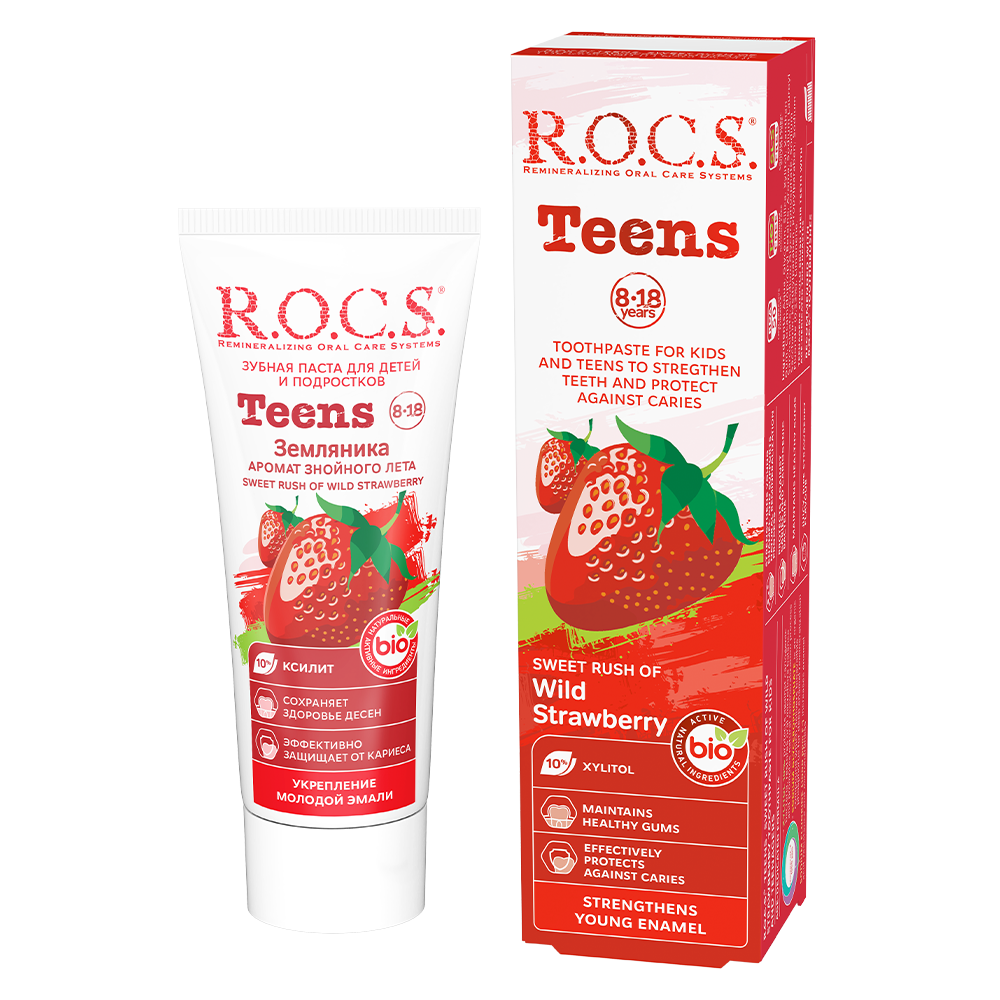
Description
Active ingredients
Properties
RIA
Clinical trials
Ingredients
Application
Description
Features
R.O.C.S. Teens toothpaste for children and adolescents, with fluoride (1000 ppm) and bioavailable phosphate, not only protects teeth from acid attacks and increase enamel microhardness, but also promotes deep enamel remineralization during brushing.
Indications
- Daily oral care for children from age 8 and adolescents.
- Protection against caries.
Organoleptic properties
Two bright flavors: juicy strawberry and a refreshing cola with lemon notes.
Active ingredients
Properties
- Increases enamel acid resistance.
- Protects against caries.
- Provides thorough oral hygiene and gum protection.
- Normalizes the oral microflora.
RIA
* Russian Abrasivity Index reflects the cleaning capacity level of oral care products and polishing pastes. Products with a higher RIA value have enhanced cleaning properties, but are also a risk factor for the development of non-carious dental lesions, therefore the choice of toothpaste should be guided by the condition of the hard dental tissues.
Russian Abrasivity Index (RIA): a new stage in oral hygiene standardization
The DRC group of companies, in collaboration with the Institute of Digital Dentistry of the RUDN Medical Institute, has developed and is implementing a new toothpaste abrasivity measurement standard in Russia that meets the highest requirements: safety, accuracy, reproducibility. Принято. This methodology is an alternative to the RDA measurement method and offers a number of advantages. Its effectiveness has been confirmed by a large-scale experimental and clinical study involving 534 patients.
The methodology is based on a rotary machine and digital technologies developed by a research group of dentists, physicists, and digital modeling specialists. QLF diagnostics, intraoral scanning, and digital analysis were used in the work, which made it possible to obtain objective data on tooth wear and the influence of abrasivity over time.
Download RIA research protocol (in Russian):
Clinical trials
The combination of fluoride and xylitol has enhanced anti-caries properties:
The aim of this study was to investigate the effect of a toothpaste containing fluoride and xylitol on the remineralization of human enamel using quantitative light-induced fluorescence (QLF).
Artificial subsurface demineralization windows (2 mm x 3 mm) were created on longitudinally sectioned human extracted tooth specimens (three to four sections per tooth) using a special solution. The specimens were then randomly divided into 4 groups.
Each enamel specimen was treated for 3 min at 25 °C twice a day for 14 consecutive days with a silica-based toothpaste slurry:
- without F- and xylitol (base),
- with 500 ppm F- (NaF),
- with 500 ppm F- (NaF) and 5% xylitol,
- with a commercially available toothpaste containing 500 ppm F- (NaF).
Afterwards, the specimens were rinsed and placed in a remineralizing solution at 37 °C.
Changes in mean fluorescence loss (F), demineralization window size, and ΔQ values in group 3 were significantly greater compared to the other groups (P < 0.05).
treated with toothpaste containing 500 ppm F- (NaF) and 5% xylitol
baseline
day 3
day 7
day 14
The results obtained suggest that the inclusion of xylitol in a fluoride toothpaste may be beneficial for enhancing remineralization in vivo.
Am J Dent. 2002 Aug;15(4):215-9. PMID: 12572637.
A large-scale long-term study compared the anti-caries effect of two dentifrices on a dicalcium phosphate dihydrate base. The dentifrice containing sodium monofluorophosphate (1100 ppm F) and 10% xylitol demonstrated a caries increment reduction of more than 10% compared to the dentifrice containing sodium monofluorophosphate (1100 ppm F) alone.
Three thousand three hundred ninety four (3,394) school children aged 7–12 years were selected from 28 public schools in the central plateau of Costa Rica to participate in this double blind clinical caries study. Children accepted for participation were stratified into two groups balanced by age and sex:
- Children in group 1 used a test dentifrice on a dicalcium phosphate dihydrate base containing 0.836% sodium monofluorophosphate (1100 ppm F) and 10% xylitol for daily oral hygiene;
- Children in group 2 used a positive control dentifrice containing 0.836% sodium monofluorophosphate (1100 ppm F) in a dicalcium phosphate dihydrate base.
The study was conducted in harmony with the guidelines for caries clinical studies published in 1988 by the Council on Dental Therapeutics of the American Dental Association, and employed clinical diagnostic criteria provided in the 1991 guidelines published by the National Institute of Dental Research (NIH/NIDR). Dental radiographs were not employed.
Caries increment was assessed by calculating changes in the DFS (decayed and filled surfaces) and DFT (decayed and filled teeth) indices.
Table 1. Caries increment over the 30-month study period
|
Test group 1100 ppm F + 10% xylitol |
Positive control 1100 ppm F |
|
|---|---|---|
| Δ DFS | 1.30 | 1.51 |
| Δ DFT | 0.69 | 0.81 |
For both DFS and DFT, the increments associated with the test dentifrice containing 10% xylitol were statistically significantly lower than those associated with the dentifrice without xylitol (P < 0.05).
Evidence of the prebiotic and anti-adhesive properties of xylitol (normalization of microflora, protection against cariogenic bacteria and Candida fungi):
The high prevalence of caries in young children necessitates the use of therapeutic and preventive products that target the primary etiopathogenetic factor of this disease — pathogenic microflora. This study presents comparative data on the antimicrobial effectiveness of products containing xylitol and chlorhexidine, as well as their effect on the microbiocenosis composition of the dental biofilm.
A total of 30 patients aged 12 to 36 months with early childhood caries (18 boys and 12 girls) were followed for one month. The patients were divided into two equal groups using a blinded method:
- Patients in group 1 used R.O.C.S. Medical Minerals gel for local antimicrobial and remineralizing therapy over the course of one month.
- Patients in group 2 were prescribed daily one- to two-minute applications of a 0.1% chlorhexidine solution once a day for 7–10 days as local antimicrobial therapy. "Belagel Ca/P" gel was used daily for one month as remineralizing therapy.
It was recommended that the remineralizing gels be applied 4–5 times a day after toothbrushing. All procedures were performed by the patients' parents at home after receiving prior instruction.
At baseline and at the end of the prescribed treatment course, all patients underwent molecular biology testing using multiplex PCR at the NIMSI laboratory.
In group 1, a significant reduction in colonization by cariogenic species was detected, along with a positive effect of the R.O.C.S. Medical Minerals remineralizing gel components on the ratio of cariogenic to resident species, as well as a decrease in the quantity and frequency of detection of certain periodontopathogenic anaerobic bacteria (Table 1). An important positive feature of the change in the dental biofilm microbiocenosis composition in the first group was also the disappearance of Candida fungi.
Examination of the microbial flora of dental plaque in group 2 patients one month after treatment showed only some positive shifts in the ratio of cariogenic to normal flora, and a decrease in the frequency of detection of certain virulent strains. At the same time, the quantity and frequency of detection of representatives of the resident bacterial group — enterococci — decreased. In addition, the detection rate of the yeast-like fungus Candida albicans increased, with a statistically significant rise in the fungal colonization of dental plaque. These data indicate the development of dysbiosis with the use of chlorhexidine.
Table 1. Comparative assessment of changes in the frequency of detection of microbial flora in dental plaque between the two groups after a course of therapy
| Genus, species of bacteria | 0.1% chlorhexidine | R.O.C.S. Medical Minerals with xylitol |
|---|---|---|
| Streptococcus mutans (cariogenic strain) | no change | 45.4% reduction |
| Actinomyces spp. (cariogenic strain) | 33.3% reduction | 44.5% reduction |
| Veillonella parvula (resident) | 24.7% increase | 40.2% increase |
| Porphyromonas gingivalis (periodontopathogen) | 66.5% reduction | no change |
| Prevotella melaninogenica (virulent strain) | 20% increase | 44.5% reduction |
| Fusobacterium nucleatum (periodontopathogen) | 4.8-fold increase | 33.5% reduction |
| Candida albicans (fungus, pathogen) | 49.8% increase | complete disappearance |
A clinical examination after one month showed no new carious cavities or demineralization foci in group 1 patients; existing chalky spots regained their luster; the progression of carious defects was halted; and signs of catarrhal gingivitis disappeared.
During the clinical examination of group 2 patients, no new carious cavities were recorded either; the disappearance of catarrhal gingivitis signs was observed in 80% of patients (of those who had it at baseline).
The inclusion of both xylitol and chlorhexidine as antimicrobial therapy in the comprehensive treatment plan for early childhood caries leads to a reduction in the detection frequency and colonization level of cariogenic and periodontopathogenic flora in dental plaque.
The data presented indicate a more physiological action of xylitol; it has a positive effect on the microbiocenosis composition of the dental biofilm, normalizing the qualitative (species) composition and the quantitative bacterial load of both cariogenic and stabilizing resident species.
Download this article for free:
Very few substances are known today that can significantly affect the caries-causing environment in the mouth and reduce the risk of tooth decay. One of the most widely studied substances with an anti-caries effect is xylitol. However, the antibacterial mechanism of xylitol is not fully understood. This study provides data confirming xylitol's ability to significantly inhibit the adhesion of oral streptococci, the primary formers of dental plaque. These bacteria delay the development of caries- and periodontal disease-causing bacteria on tooth surfaces through a mechanism called co-adhesion. We also revealed the ability of xylitol to inhibit the adhesion of Streptococcus sobrinus, a microorganism associated with caries, and Staphylococcus aureus, which increases the virulence level of dental plaque. This mechanism of action is realised in toothpaste within the time period traditionally recommended for brushing teeth.
Download the article for free in Russian:
Ingredients
Aqua, Glycerin, Silica, Xylitol (10%), Xanthan Gum, Cocamidopropyl Betaine, Aroma, Sodium Lauroyl Sarcosinate, Sodium Glycerophosphate, Sodium Saccharin, Methylparaben, Propylparaben, Sodium Fluoride (1000 ppm), Limonene.
Application
Brush twice a day (morning and evening). Use a pea-sized amount of toothpaste. Recommended toothbrushing time is 2-3 minutes. After brushing, spit out the remaining toothpaste.
We recommend avoiding this toothpaste:
- If a child has visible signs of fluorosis or other contraindications to fluoride use,
- If drinking water has elevated fluoride levels (more than 1.2 mg/L),
- During a course of remineralizing therapy.
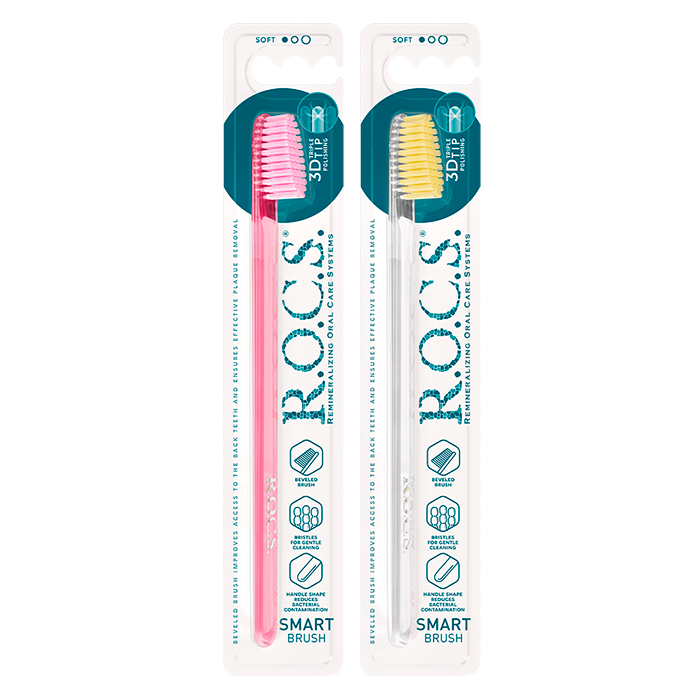
Description
Properties
Clinical trials
Ingredients

Recommendations for care and use
Description
Features

The original angled bristle trim effectively cleans hard-to-reach areas, including the retromolar regions.
The high-quality textured bristles are ideal for sweeping brush strokes, delivering a thorough clean. The rounded, polished bristle tips won't damage enamel or dental restorations, and won't injure the gums. The bristles come in three hardness levels.
The slim, flat handle reduces excess pressure on the gums and promotes proper brushing technique. The handle is made of safe, non-toxic plastic. Smooth surfaces and the absence of extra parts keep bacteria from building up and multiplying.
Two bristle trim types

Classic (single-level) for better polishing, recommended for use with whitening toothpastes.

Model (multi-level) cleans thoroughly and is recommended for people with dental arch defects.
Use
For daily oral care.
Properties
- Effective cleaning of all tooth surfaces, including the hardest-to-reach areas and retromolar regions.
- Doesn't scratch enamel or dental restorations.
- Doesn't injure the gums.
Clinical trials
Evidence of the high cleaning performance of R.O.C.S. SMART BRUSH toothbrushes:
The report presents a comparative evaluation of the effectiveness of the R.O.C.S. Classic and R.O.C.S. Model manual toothbrushes.
The R.O.C.S. Classic and R.O.C.S. Model toothbrushes (medium hardness) demonstrate high cleaning efficacy both for the entire dentition and for the most difficult-to-reach areas (distal surfaces of teeth 17, 27, 37, 47) and do not cause allergic reactions.
The highest cleaning efficacy (79%) was recorded for the R.O.C.S. SMART BRUSH Model toothbrush.
Download the trial protocol in Russian:
The toothbrush handle is made of safe medical-grade plastic and contains no bisphenol-A:
The chemical composition study showed that the plastic granulate used to manufacture R.O.C.S. toothbrushes does not release toxic substances and complies with the BPA-free standard (does not contain bisphenol-A).
Download expert opinion No. 03-10/25-Kh dated 03.10.2025 in Russian:
Ingredients
Bristles — polyamide filament; handle — PET.
The toothbrush handle is made of safe medical-grade plastic and contains no bisphenol-A.
Why does this matter?Recommendations for care and use
Rinse the toothbrush thoroughly under warm running water before first use and after every use.
Store the toothbrush with the head up.
Don't rinse with boiling water — the brush may lose its shape and become unusable.
Replace the toothbrush every 2–3 months, since the bristles lose their functional properties over time.
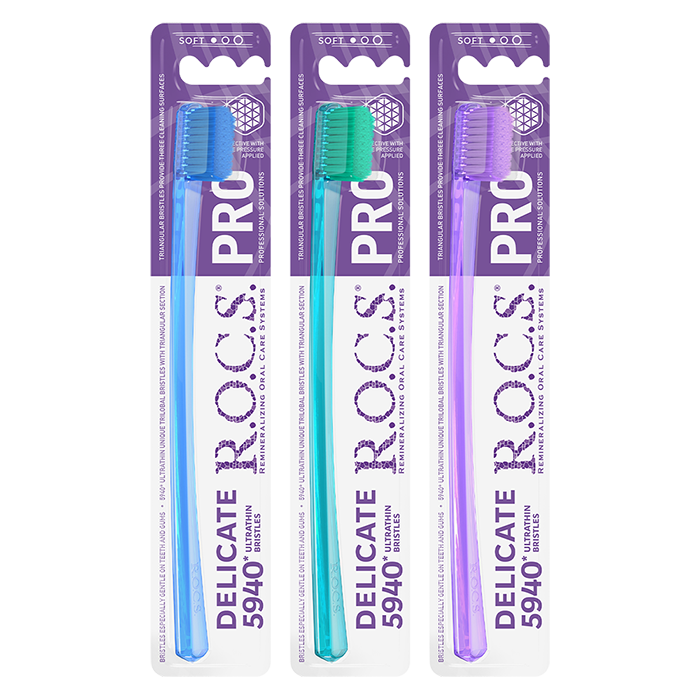
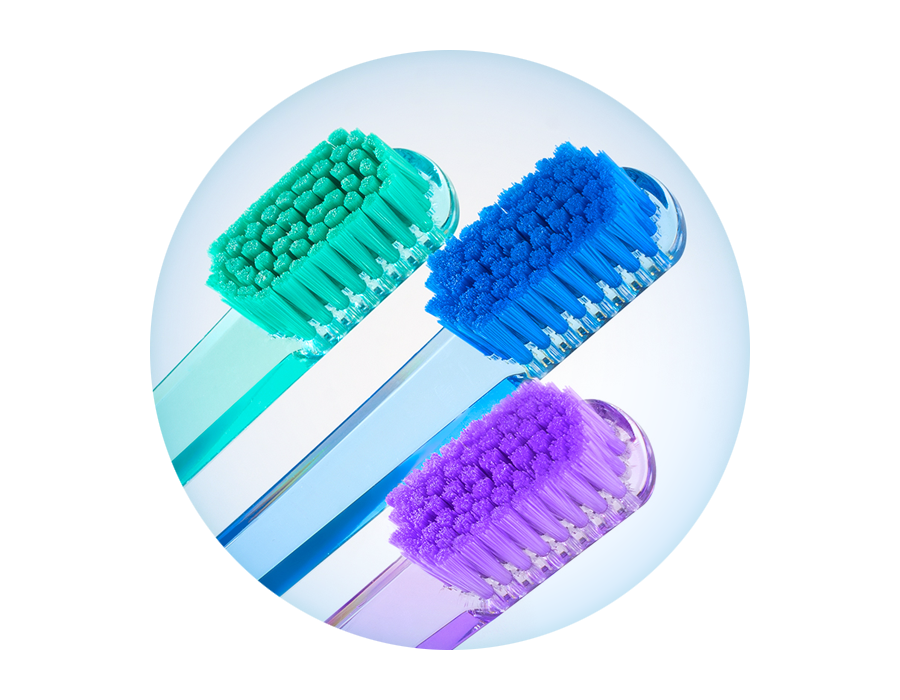
Description
Properties
Clinical trials
Ingredients
Recommendations for care and use
Description
Features

The 5,940 soft Trilobal bristles with a triangular cross-section are packed into dense tufts to increase the brush's cleaning surface and boost cleaning efficiency.
Our unique triple tip polishing technology makes brushing safe and eliminates any risk of damaging hard dental tissues or gums.
The curved hexagonal handle prevents excess pressure on the gums.
Use
For daily oral care.
Properties
- Effective cleaning and gentle gum massage.
- Doesn't scratch enamel or dental restorations.
- Doesn't injure the gums.
Clinical trials
The toothbrush handle is made of safe medical-grade plastic and contains no bisphenol-A:
The chemical composition study showed that the plastic granulate used to manufacture R.O.C.S. toothbrushes does not release toxic substances and complies with the BPA-free standard (does not contain bisphenol-A).
Download expert opinion No. 03-10/25-Kh dated 03.10.2025 in Russian:
Ingredients
Bristles — polyamide filament; handle — PET.
The toothbrush handle is made of safe medical-grade plastic and contains no bisphenol-A.
Why does this matter?Recommendations for care and use
Rinse the toothbrush thoroughly under warm running water before first use and after every use.
Store the toothbrush with the head up.
Don't rinse with boiling water — the brush may lose its shape and become unusable.
Replace the toothbrush every 2–3 months, since the bristles lose their functional properties over time.
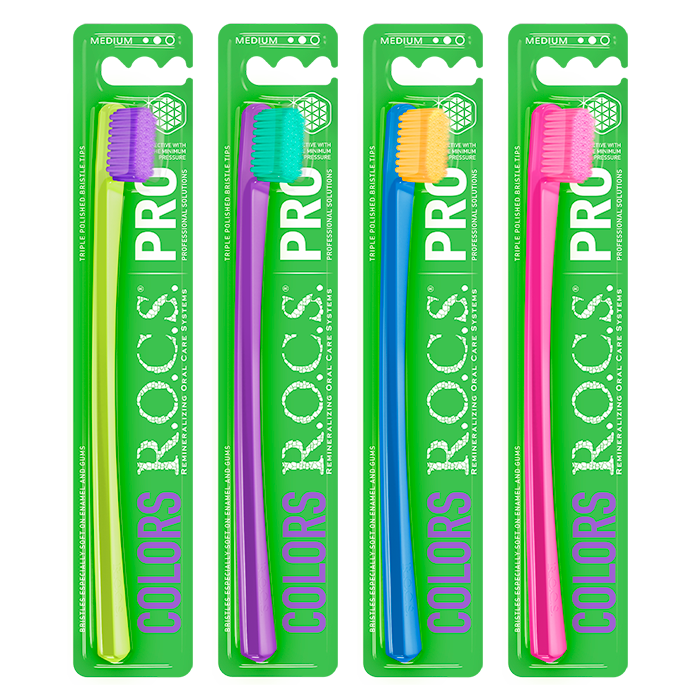
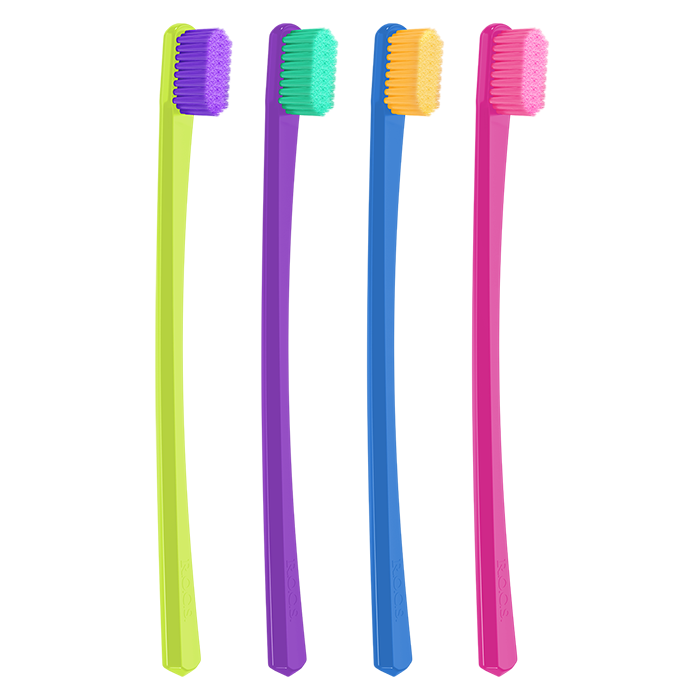
Description
Properties
Clinical trials
Ingredients
Recommendations for care and use
Description
Features

The high-quality textured bristles are ideal for sweeping brush strokes, delivering a thorough clean.
The rounded, polished bristle tips won't damage tooth tissues or dental restorations.
The curved hexagonal handle prevents excess pressure on the gums.
Use
For daily oral care.
Properties
- Effective removal of soft dental plaque.
- Doesn't scratch enamel or dental restorations.
- Doesn't injure the gums.
Clinical trials
The toothbrush handle is made of safe medical-grade plastic and contains no bisphenol-A:
The chemical composition study showed that the plastic granulate used to manufacture R.O.C.S. toothbrushes does not release toxic substances and complies with the BPA-free standard (does not contain bisphenol-A).
Download expert opinion No. 03-10/25-Kh dated 03.10.2025 in Russian:
Ingredients
Bristles — polyamide filament; handle — PET.
The toothbrush handle is made of safe medical-grade plastic and contains no bisphenol-A.
Why does this matter?Recommendations for care and use
Rinse the toothbrush thoroughly under warm running water before first use and after every use.
Store the toothbrush with the head up.
Don't rinse with boiling water — the brush may lose its shape and become unusable.
Replace the toothbrush every 2–3 months, since the bristles lose their functional properties over time.
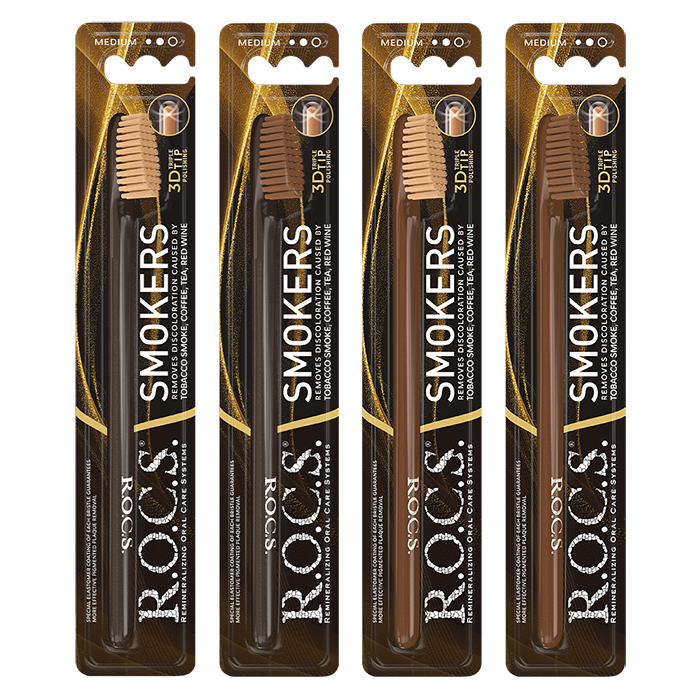
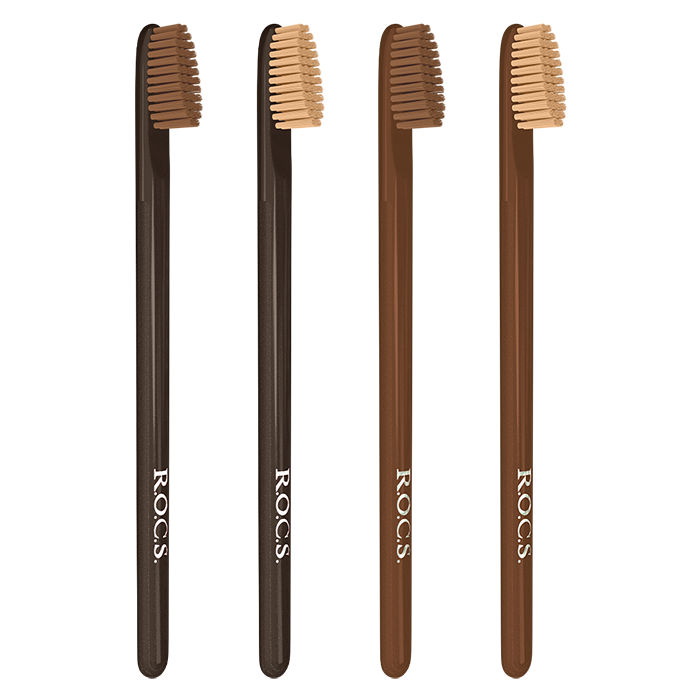
Description
Properties
Clinical trials
Ingredients
Recommendations for care and use
Description
Особенности
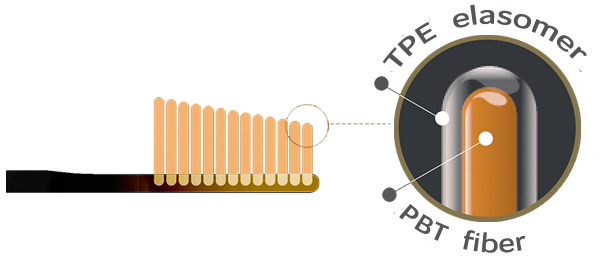
Зубная щетка R.O.C.S. Smokers изготовлена с использованием двухкомпонентной щетины:
- Тонкая сердцевина из волокна PBT придает щетинкам достаточную упругость, позволяющую качественно очищать труднодоступные участки зубного ряда.
- Эластичное покрытие TPE повышает эффективность удаления пигментированного зубного налета.
Уникальная технология тройной полировки кончиков для безопасной чистки исключает возможность повреждения твердых тканей или десен.
Тонкая плоская ручка снижает излишнее давление на десны, способствует правильной технике чистки.
Применение
- Удаление пигментированного зубного налета курильщика.
- Усиление осветляющего эффекта зубных паст.
- Щетка средней жесткости для ежедневной гигиены полости рта.
Properties
- Removes stained dental plaque.
- Doesn't scratch enamel or dental restorations.
- Doesn't injure the gums.
Clinical trials
The toothbrush handle is made of safe medical-grade plastic and contains no bisphenol-A:
The chemical composition study showed that the plastic granulate used to manufacture R.O.C.S. toothbrushes does not release toxic substances and complies with the BPA-free standard (does not contain bisphenol-A).
Download expert opinion No. 03-10/25-Kh dated 03.10.2025 in Russian:
Ingredients
Recommendations for care and use
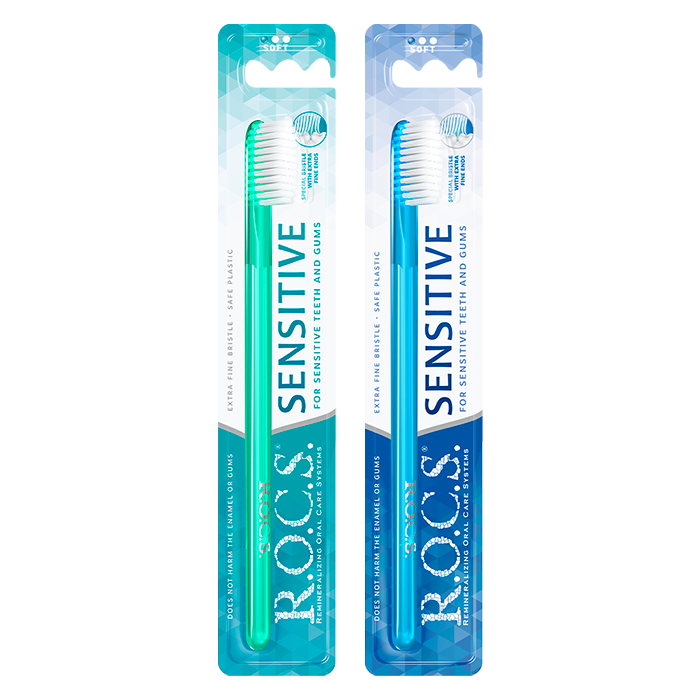
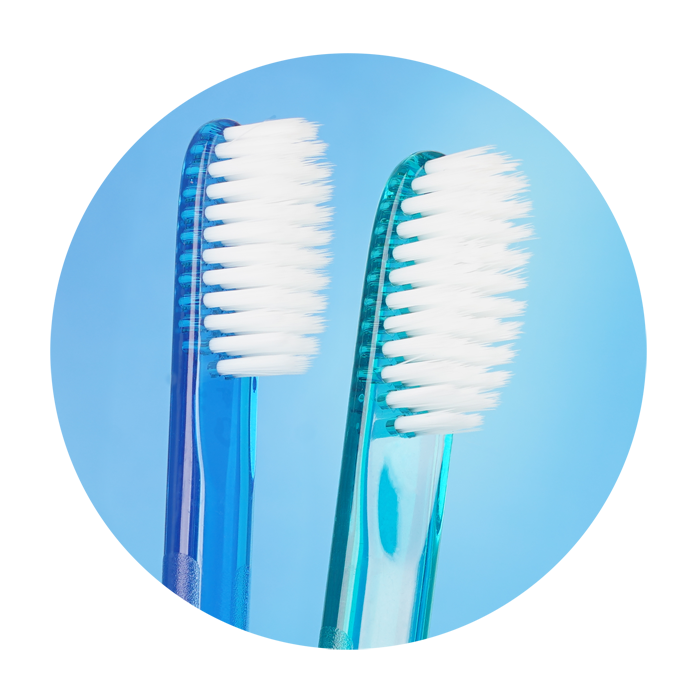
Description
Properties
Clinical trials
Ingredients
Recommendations for care and use
Description
Features

The R.O.C.S. SENSITIVE toothbrush uses extra-soft bristles with tapered tips.
Ultra-thin, tapered bristles reach the proximal tooth surfaces and gently remove plaque without irritating sensitive teeth or inflamed gums.
Indications
Gentle care for teeth and gums when a regular toothbrush may feel uncomfortable:
- with increased tooth sensitivity to tactile stimuli;
- with non-carious defects such as erosion, wedge-shaped defects, and increased tooth wear;
- with acute inflammatory processes in the oral cavity.
Properties
- Thoroughly removes soft dental plaque.
- Reaches deep between the teeth.
- Doesn't scratch enamel or dental restorations.
- Doesn't injure soft tissues.
- Reduces gum inflammation and bleeding.
- Provides good gum disease prevention.
Clinical trials
The toothbrush handle is made of safe medical-grade plastic and contains no bisphenol-A:
The chemical composition study showed that the plastic granulate used to manufacture R.O.C.S. toothbrushes does not release toxic substances and complies with the BPA-free standard (does not contain bisphenol-A).
Download expert opinion No. 03-10/25-Kh dated 03.10.2025 in Russian:
Ingredients
Bristles — PBT; handle — PET.
The toothbrush handle is made of safe medical-grade plastic and contains no bisphenol-A.
Why does this matter?Recommendations for care and use
Rinse the toothbrush thoroughly under warm running water before first use and after every use.
Store the toothbrush with the head up.
Don't rinse with boiling water — the brush may lose its shape and become unusable.
Replace the toothbrush every 2–3 months, since the bristles lose their functional properties over time.
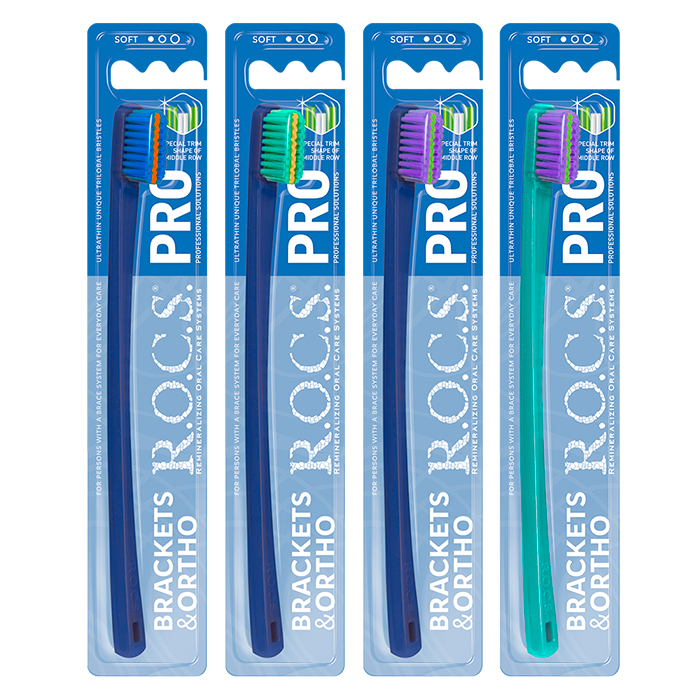
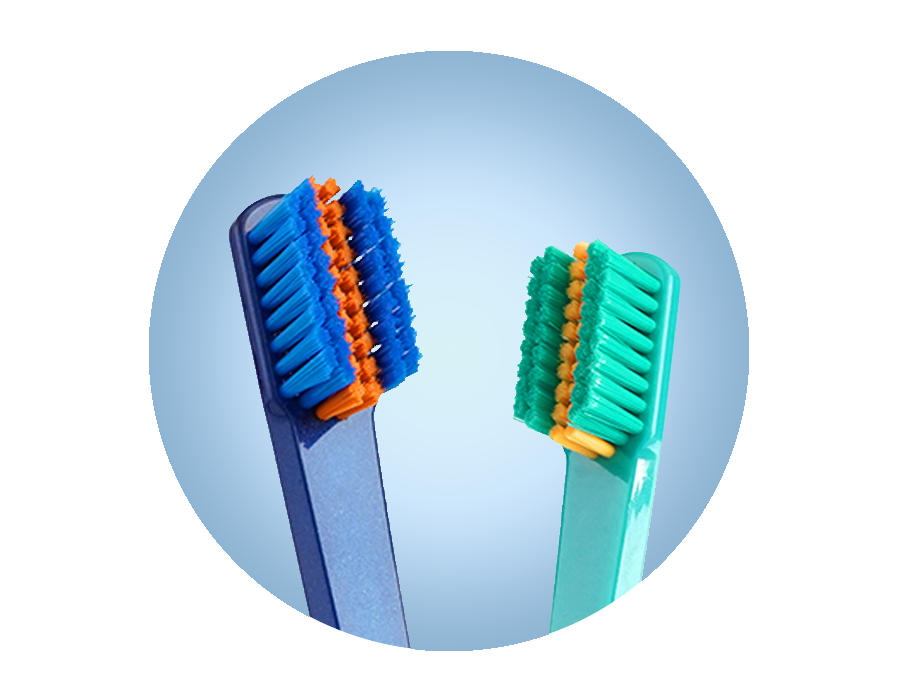
Description
Properties
Clinical trials
Ingredients
Recommendations for care and use
Description
Features

A special two-level bristle trim with a groove in the middle row provides comfortable, thorough cleaning around orthodontic hardware.
The 5940 soft Trilobal bristles with a triangular cross-section are packed into dense tufts to increase the brush's cleaning surface and boost cleaning efficiency.
Our unique triple tip polishing technology makes brushing safe and eliminates any risk of damaging hard dental tissues or gums.
The curved hexagonal handle prevents excess pressure on the gums.
Use
The R.O.C.S. PRO Brackets & Ortho toothbrush is designed for daily cleaning with braces and other orthodontic appliances.
Properties
- Effective cleaning and gentle gum massage.
- Doesn't scratch enamel or dental restorations.
- Doesn't injure the gums.
Clinical trials
The toothbrush handle is made of safe medical-grade plastic and contains no bisphenol-A:
The chemical composition study showed that the plastic granulate used to manufacture R.O.C.S. toothbrushes does not release toxic substances and complies with the BPA-free standard (does not contain bisphenol-A).
Download expert opinion No. 03-10/25-Kh dated 03.10.2025 in Russian:
Ingredients
Bristles — polyamide filament; handle — PET.
The toothbrush handle is made of safe medical-grade plastic and contains no bisphenol-A.
Why does this matter?Recommendations for care and use
Rinse the toothbrush thoroughly under warm running water before first use and after every use.
Store the toothbrush with the head up.
Don't rinse with boiling water — the brush may lose its shape and become unusable.
Replace the toothbrush every 2–3 months, since the bristles lose their functional properties over time.
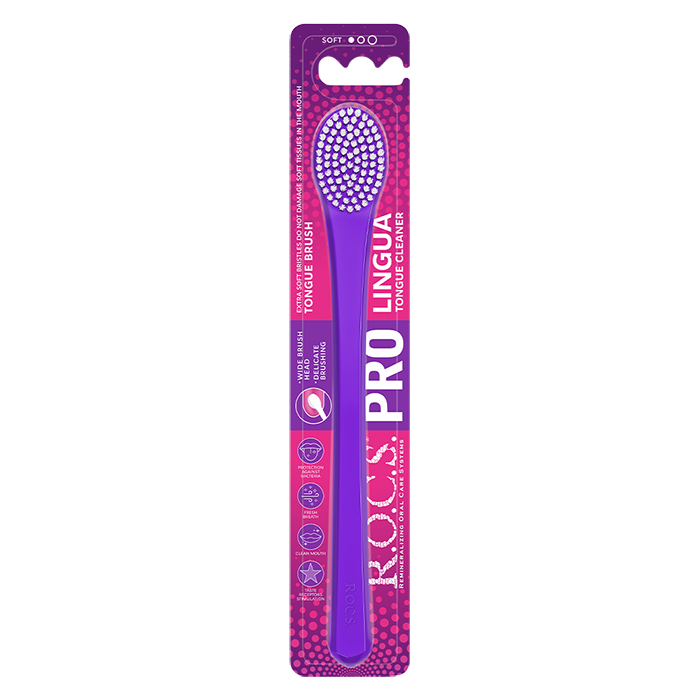
Description
Properties
Ingredients
Recommendations for care and use
Description
Most oral microorganisms collect on the back of the tongue. That can raise the risk of oral and nasopharyngeal infections, cause bad breath, and create a breeding ground for harmful bacteria, including caries-causing ones. Regular use of a tongue brush reduces the amount of microbial plaque on its surface.
Features

A convenient, easy-to-use brush with a large head removes plaque from the surface of the tongue, including the back of the tongue, quickly and thoroughly.
Ultra-soft, safe bristles with triple tip polishing guarantee gentle care for the soft tissues of the oral cavity.
The elegant curved R.O.C.S. PRO handle, made of high-quality, safe plastic, prevents excess pressure on soft tissues during cleaning.
Use
For daily care of the soft tissues of the oral cavity.
Properties
- Effectively cleans the soft tissues of the oral cavity, including the back of the tongue.
- Helps keep breath fresh and protects against pathogenic microorganisms.
- Stimulates taste receptors.
- Doesn't injure the delicate taste buds on the tongue.
Ingredients
Bristles — polyamide filament; handle — PET.
Recommendations for care and use
It's recommended to clean your tongue every day — morning and evening. Avoid pressing too hard and don't let it become painful.
Rinse the brush thoroughly under warm running water before first use and after every use.
Store the brush with the head up.
Don't rinse with boiling water — the brush may lose its shape and become unusable.
Replace the brush every 2–3 months, since the bristles lose their functional properties over time.
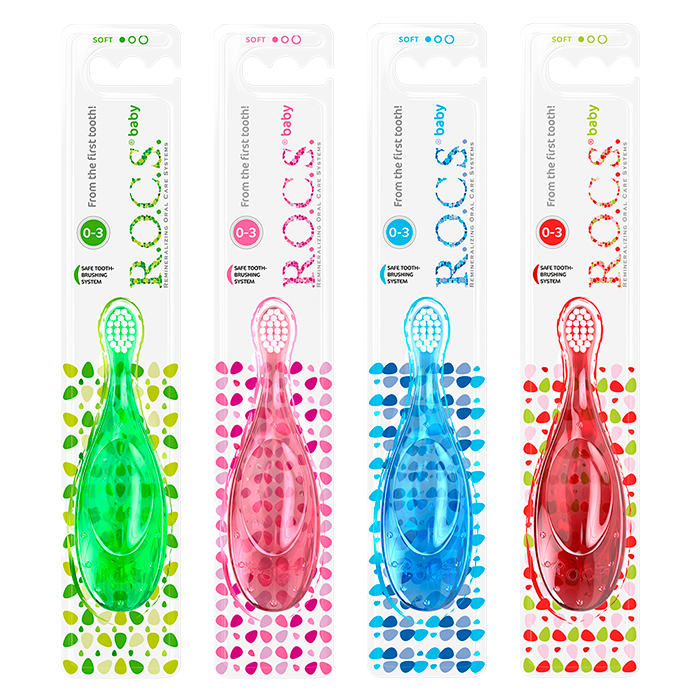
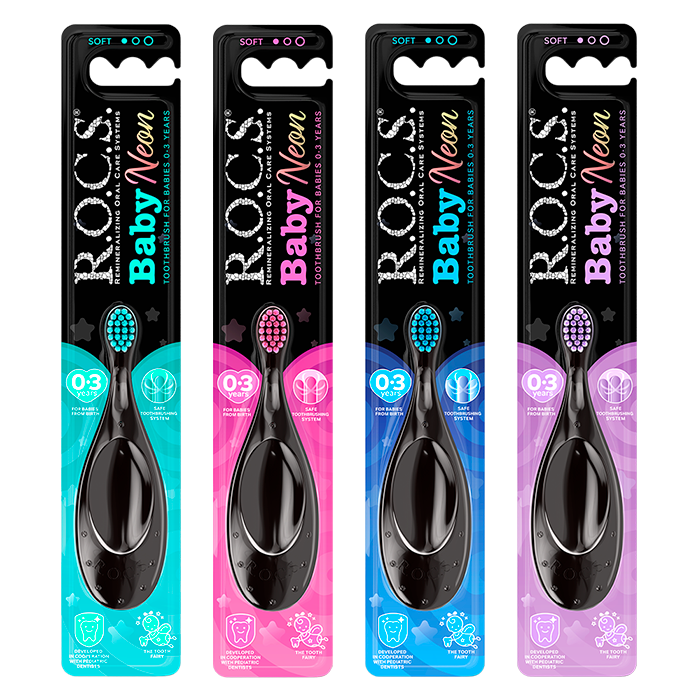
Description
Properties
Clinical trials
Ingredients
Recommendations for care and use
Description
Features
A wide bite handle made of durable, smooth plastic keeps the brush from going too deep into the mouth and injuring soft tissues, and it's easy to wash.
Extra-soft bristles with our unique triple tip polishing technology eliminate any risk of damaging hard dental tissues or gums.
Use
For daily oral care in babies from 0 to 3 years.
Properties
- Safe to use.
- Effectively cleans teeth of soft plaque.
- Doesn't injure a baby's delicate gums or teeth.
- The handle also works as a teether.
Clinical trials
The toothbrush handle is made of safe medical-grade plastic and contains no bisphenol-A:
The chemical composition study showed that the plastic granulate used to manufacture R.O.C.S. toothbrushes does not release toxic substances and complies with the BPA-free standard (does not contain bisphenol-A).
Download expert opinion No. 03-10/25-Kh dated 03.10.2025 in Russian:
Ingredients
Bristles — polyamide filament; handle — PET.
The toothbrush handle is made of safe medical-grade plastic and contains no bisphenol-A.
Why does this matter?Recommendations for care and use
Rinse the toothbrush thoroughly under warm running water before first use and after every use.
Store the toothbrush with the head up, away from other family members' toothbrushes.
Don't rinse with boiling water — the brush may lose its shape and become unusable.
Replace the toothbrush every 2–3 months, since the bristles lose their functional properties over time. Bacteria can also build up in microfractures. If your child has had an infectious illness, replace the toothbrush once they've recovered.
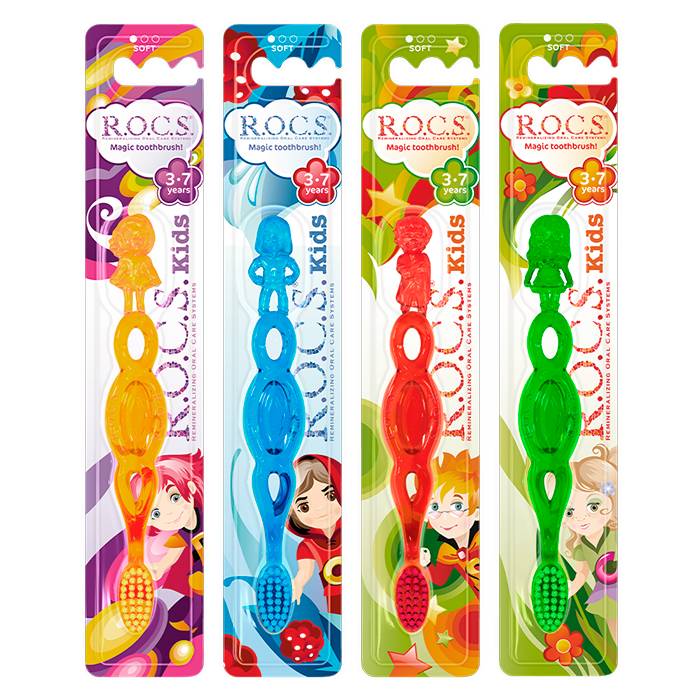
Description
Properties
Clinical trials
Ingredients
Recommendations for care and use
Description
Features
Soft bristles with our unique triple tip polishing technology provide gentle care for teeth without damaging a child's delicate gums or immature enamel.
The handle's unique shape makes it easier to motivate a child. A toothbrush with a character figure, designed like a magic wand, "turns" ordinary brushing into an exciting game.
The handle is made of smooth, safe plastic that helps reduce bacterial contamination on the surface.
Use
For daily oral care in children ages 3 to 7.
Properties
- Safe to use.
- Effectively cleans teeth of soft plaque.
- Doesn't injure a child's gums or teeth.
Clinical trials
The toothbrush handle is made of safe medical-grade plastic and contains no bisphenol-A:
The chemical composition study showed that the plastic granulate used to manufacture R.O.C.S. toothbrushes does not release toxic substances and complies with the BPA-free standard (does not contain bisphenol-A).
Download expert opinion No. 03-10/25-Kh dated 03.10.2025 in Russian:
Ingredients
Bristles — polyamide filament; handle — PET.
The toothbrush handle is made of safe medical-grade plastic and contains no bisphenol-A.
Why does this matter?Recommendations for care and use
Rinse the toothbrush thoroughly under warm running water before first use and after every use.
Store the toothbrush with the head up, away from other family members' toothbrushes.
Don't rinse with boiling water — the brush may lose its shape and become unusable.
Replace the toothbrush every 2–3 months, since the bristles lose their functional properties over time. Bacteria can also build up in microfractures. If your child has had an infectious illness, replace the toothbrush once they've recovered.
Preschool children should brush their teeth under adult supervision.
If a child is fussy and refuses to brush, themed rhymes and riddles can help.
To help your child get into a regular oral hygiene routine, print out the toothbrushing calendar, where the child can color in the boxes themselves after each brushing. Use colorful pencils.
Download the toothbrushing calendar:
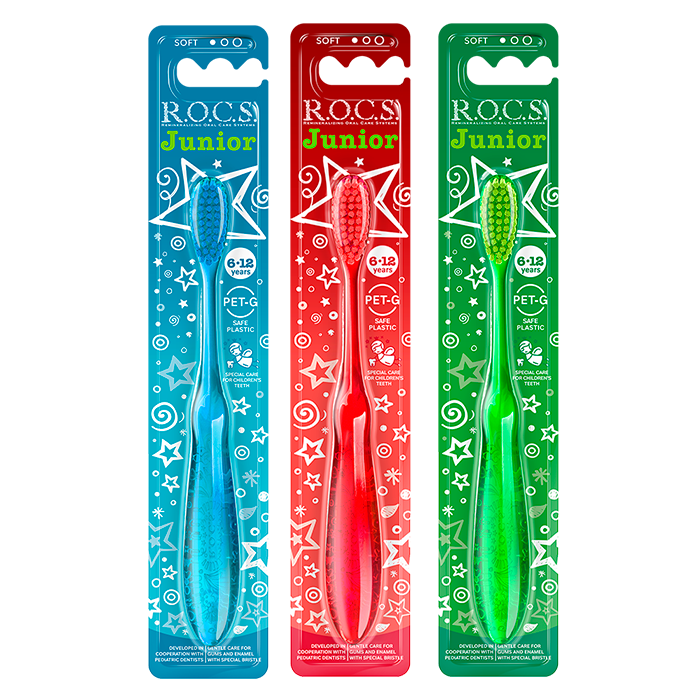
Description
Properties
Clinical trials
Ingredients
Recommendations for care and use
Description
Features
R.O.C.S. Junior toothbrushes are the natural next step after the Kids series: an original handle design with textured doodles and bold color combinations are meant to motivate a growing child to keep up daily oral care.
Soft bristles with our unique triple tip polishing technology provide gentle care for teeth.
The handle is made of smooth, safe plastic that helps reduce bacterial contamination on the surface.
Use
For daily oral care in children ages 6 to 12.
Properties
- Safe to use.
- Effectively cleans teeth of soft plaque.
- Doesn't injure a child's gums or teeth.
Clinical trials
The toothbrush handle is made of safe medical-grade plastic and contains no bisphenol-A:
The chemical composition study showed that the plastic granulate used to manufacture R.O.C.S. toothbrushes does not release toxic substances and complies with the BPA-free standard (does not contain bisphenol-A).
Download expert opinion No. 03-10/25-Kh dated 03.10.2025 in Russian:
Ingredients
Bristles — polyamide filament; handle — PET.
The toothbrush handle is made of safe medical-grade plastic and contains no bisphenol-A.
Why does this matter?Recommendations for care and use
Rinse the toothbrush thoroughly under warm running water before first use and after every use.
Store the toothbrush with the head up, away from other family members' toothbrushes.
Don't rinse with boiling water — the brush may lose its shape and become unusable.
Replace the toothbrush every 2–3 months, since the bristles lose their functional properties over time. Bacteria can also build up in microfractures. If your child has had an infectious illness, replace the toothbrush once they've recovered.
Preschool children should brush their teeth under adult supervision.
If a child is fussy and refuses to brush, themed rhymes and riddles can help.
To help your child get into a regular oral hygiene routine, print out the toothbrushing calendar, where the child can color in the boxes themselves after each brushing. Use colorful pencils.
Download the toothbrushing calendar:
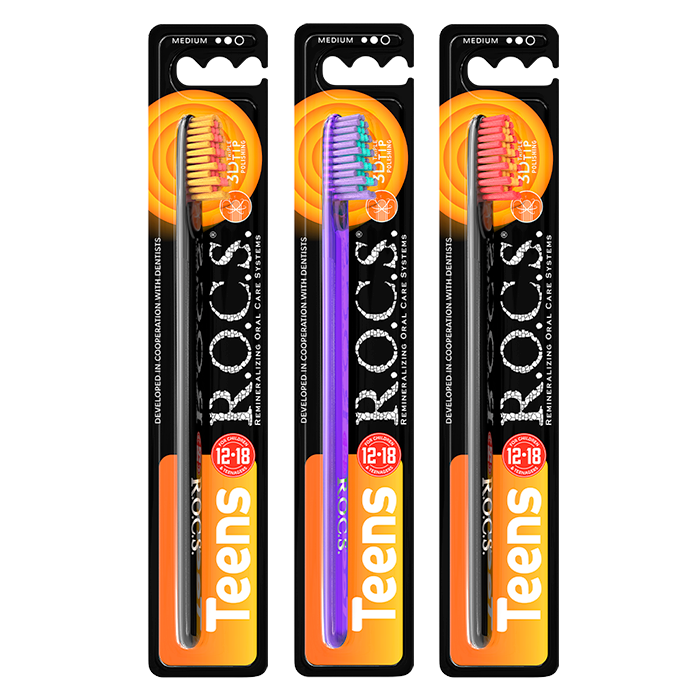
Description
Properties
Clinical trials
Ingredients
Recommendations for care and use
Description
Features

The original angled bristle trim effectively cleans hard-to-reach areas, including the retromolar regions. What's more, the teen toothbrush line features multi-level bristle trimming for better cleaning during the development of the permanent dentition and in the presence of dental arch defects.
The rounded, polished bristle tips won't damage enamel or dental restorations, and won't injure the gums. Medium-hardness bristles.
The slim, flat handle reduces excess pressure on the gums and promotes proper brushing technique. The handle is made of safe, non-toxic plastic. Smooth surfaces and the absence of extra parts keep bacteria from building up and multiplying.
Use
For daily oral care in children ages 12 to 18.
Properties
- Effective cleaning of all tooth surfaces, including the hardest-to-reach areas and retromolar regions.
- Doesn't scratch enamel or dental restorations.
- Doesn't injure the gums.
Clinical trials
R.O.C.S. toothbrushes with the model trim showed better cleaning performance than the classic trim:
The report presents a comparative evaluation of the effectiveness of the R.O.C.S. Classic and R.O.C.S. Model manual toothbrushes.
The R.O.C.S. Classic and R.O.C.S. Model toothbrushes (medium hardness) demonstrate high cleaning efficacy both for the entire dentition and for the most difficult-to-reach areas (distal surfaces of teeth 17, 27, 37, 47) and do not cause allergic reactions.
The highest cleaning efficacy (79%) was recorded for the R.O.C.S. SMART BRUSH Model toothbrush.
Download the trial protocol in Russian:
The toothbrush handle is made of safe medical-grade plastic and contains no bisphenol-A:
The chemical composition study showed that the plastic granulate used to manufacture R.O.C.S. toothbrushes does not release toxic substances and complies with the BPA-free standard (does not contain bisphenol-A).
Download expert opinion No. 03-10/25-Kh dated 03.10.2025 in Russian:
Ingredients
Bristles — polyamide filament; handle — PET.
The toothbrush handle is made of safe medical-grade plastic and contains no bisphenol-A.
Why does this matter?Recommendations for care and use
Rinse the toothbrush thoroughly under warm running water before first use and after every use.
Store the toothbrush with the head up.
Don't rinse with boiling water — the brush may lose its shape and become unusable.
Replace the toothbrush every 2–3 months, since the bristles lose their functional properties over time.
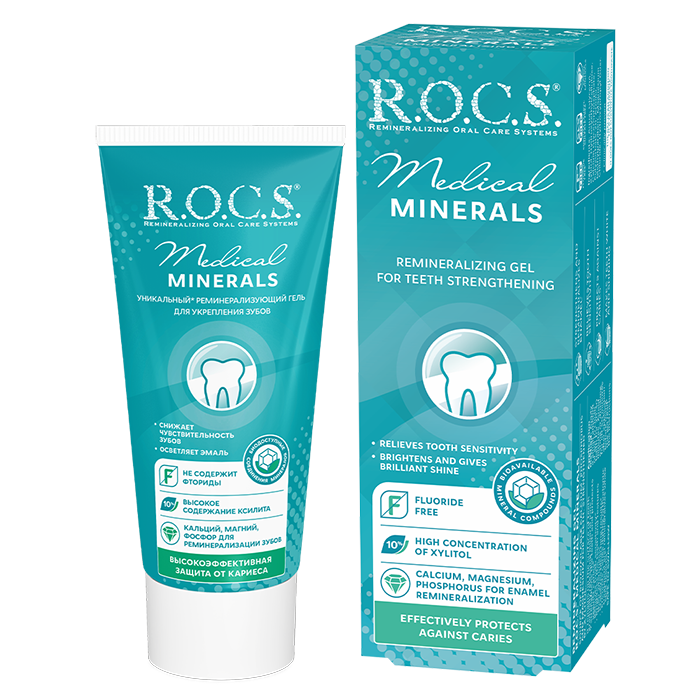
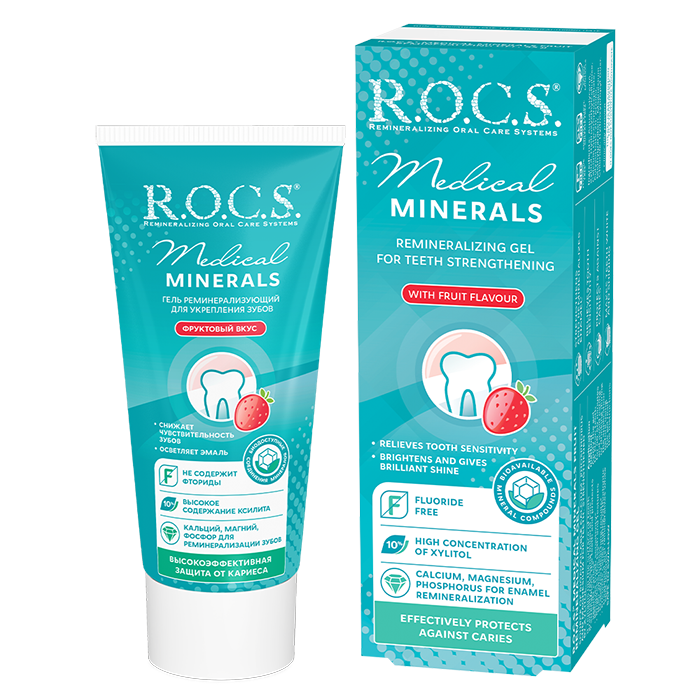
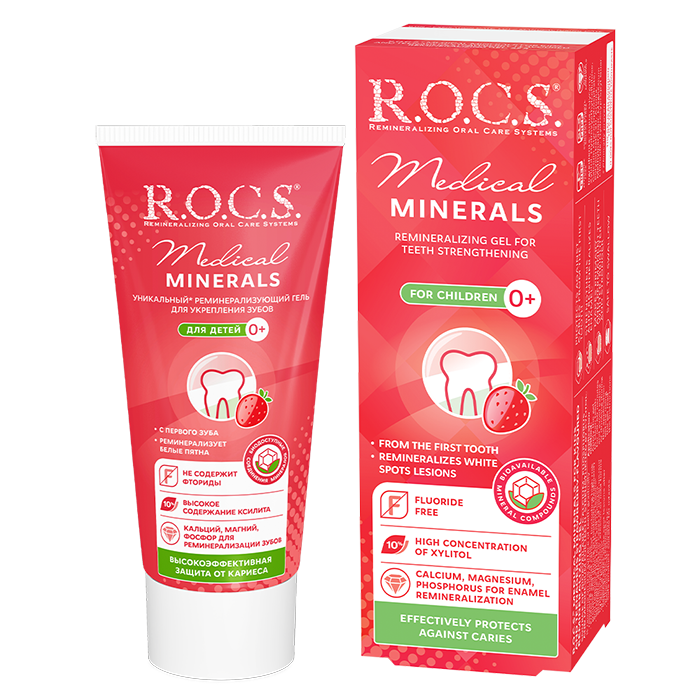
Description
Active ingredients
Properties
Clinical trials
Ingredients
Application
Description
Features
R.O.C.S. Medical Minerals remineralizing gel is a unique development by the WDS Research Laboratory. When it meets saliva, the gel's active components join the natural remineralization process in the hard dental tissues and significantly speed it up.
The gel contains no fluoride, which makes it indispensable for fighting caries in areas of endemic fluorosis and in certain conditions — thyroid disease, osteoporosis, kidney failure and kidney stones, mineral metabolism disorders — where fluoride products are contraindicated.
Safe if swallowed, with no age restrictions.
Indications
-
PREVENTION
- Caries prevention and tooth strengthening in adults and children;
- Caries prevention during and after braces treatment;
- Caries prevention in high-risk groups: decompensated caries, hemophilia, cancer chemotherapy;
- Prevention of tooth erosion, the risk of which rises during pregnancy and menopause.
-
TREATMENT
- Treatment of initial caries (white spot stage), including early childhood caries;
- Treatment of tooth hypersensitivity;
- Treatment of mild fluorosis.
-
ESTHETICS
- Enamel lightening without peroxide or other aggressive whitening methods;
- Locking in whitening results.
Organoleptic properties
A clear gel. The line comes in 3 flavors: two light flavors for adults (mint and fruit) and a bright strawberry flavor for children and adolescents.
Active ingredients
Properties
- Remineralizes teeth, strengthening them and increasing resistance to caries.
- Increases the mineralizing potential of saliva.
- Effective for caries at the white spot stage and non-carious enamel lesions.
- Relieves tooth hypersensitivity.
- Whitens teeth by an average of 4.7 shades after 1 month of use, giving them shine and a healthy look.
- Boosts the effectiveness of at-home whitening and locks in the results of in-office whitening.
- Improves the appearance of teeth in mild fluorosis.
- Normalizes the composition of the oral microflora.
- Safe if swallowed.
Clinical trials
Evidence of the gel's effectiveness for caries at the white spot stage, non-carious enamel lesions, and tooth hypersensitivity:
The present work studied the remineralizing effect of R.O.C.S. Medical Minerals in the treatment of initial caries at the chalky spot stage and non-carious lesions such as enamel hypoplasia and hypersensitivity.
Observations were conducted with the participation of 57 patients without significant comorbidities, aged 10–30 years, who were divided into 4 groups according to diagnosis:
- 15 patients with caries at the chalky spot stage;
- 19 patients with the spotted form of systemic hypoplasia;
- 10 young patients with pronounced tooth hypersensitivity in the absence of visible lesions;
- 13 patients with tooth hypersensitivity caused by wedge-shaped defects, pathological wear, and enamel erosion.
Prior to the start of the study, all patients received professional oral hygiene and oral hygiene instruction. At subsequent visits, supervised toothbrushing was performed before applying R.O.C.S. Medical Minerals.
To avoid erroneous data (due to patients' non-compliance with the recommended regimen) and to standardize the experimental conditions, gel applications were performed in a dental clinic setting under the supervision of medical personnel using custom trays. The duration of each procedure was 15 minutes; upon completion of the application, patients expectorated the remaining gel without rinsing the oral cavity. Patients were advised to refrain from eating and drinking for one hour.
A pronounced clinical result was obtained in all observed groups. The remineralization effect was observed both in caries and in the presence of non-carious lesions (Fig. 1, 2).
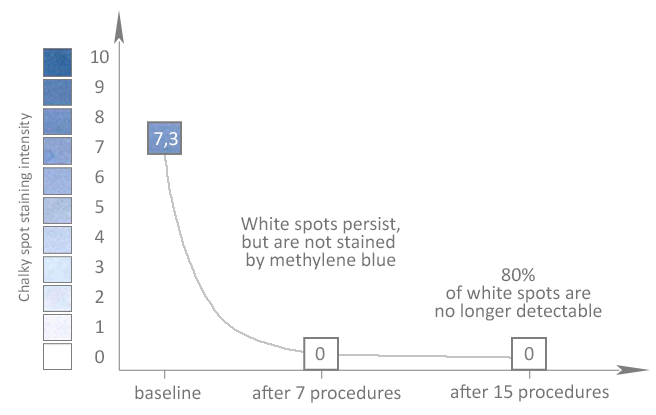
Fig. 1. In initial caries (staining with 2% methylene blue solution)
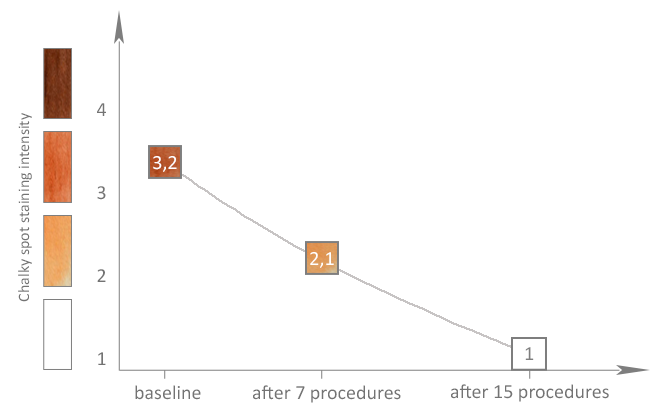
Fig. 2. In the spotted (chalky) form of enamel hypoplasia (staining with 5% alcoholic iodine solution)
Already after the second procedure, 82% of patients with hypersensitivity (group 3) reported a reduction in the pain response to stimuli. Among patients in group 4, 93% noted a rapid decrease in the intensity of pain symptoms.
After 8–10 applications of R.O.C.S. Medical Minerals gel, all patients noted tooth lightening and the appearance of luster.
- R.O.C.S. Medical Minerals remineralizing gel is effective both in initial forms of caries and in non-carious dental lesions: 15 gel application procedures allow achieving mineralization of hypoplasia chalky spots and complete disappearance of chalky spots in 80% of initial caries cases.
- The intensity of pain sensations in tooth hypersensitivity decreases after two 15-minute gel applications in the majority of patients.
- All study participants noted a visible improvement in the appearance of their teeth: lightening and the appearance of luster.
Download this article for free in Russian:
The aim of the study was to evaluate the effectiveness of gels based on mineral components — R.O.C.S. Medical Minerals and R.O.C.S. Medical Sensitive — as well as the fluoride-based Topex gel, in reducing hypersensitivity of teeth with enamel integrity defects (erosion, wedge-shaped defects, cracks, chips, increased wear).
The study involved 90 people aged 23 to 47 years with a history of tooth hypersensitivity and enamel integrity defects.
Depending on the product used, all subjects were divided into three equal groups:
- Group 1 — R.O.C.S. Medical Minerals remineralizing gel. The gel was applied once a day for 30 minutes over a 30-day course using standard polyurethane trays.
- Group 2 — R.O.C.S. Medical Sensitive gel application for 3 days, followed by R.O.C.S.® Medical Minerals gel application for 14 days.
- Group 3 — application of Topex fluoride gel (Sultan Healthcare, USA) based on fluoride (2% neutral sodium fluoride) was performed in a clinical setting according to the manufacturer's recommendations.
The level of dentin hypersensitivity was determined by an instrumental method (YeapleProbes device) and subjectively (Schiff scale). Tooth color was determined using a VITA Easyshade Compact spectrophotometer (VITA Zahnfabrik, Germany). The parameters were recorded at baseline, after 1 week, and after 4 weeks. Tooth color measurement using the VITA Easyshade Compact spectrophotometer (VITA Zahnfabrik, Germany) was performed only before and after the study.
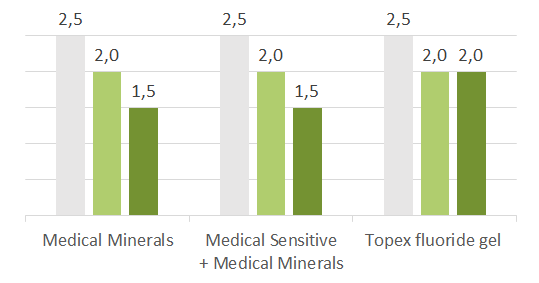
Fig. 1. Subjective assessment on the Schiff scale
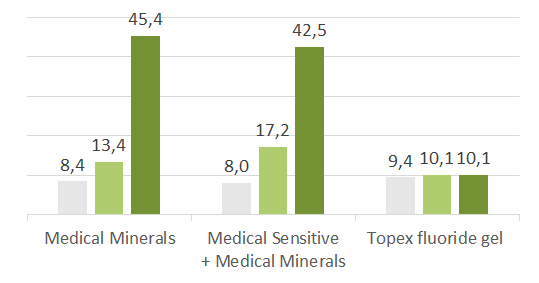
Fig. 2. Pain threshold based on the instrumental recording method
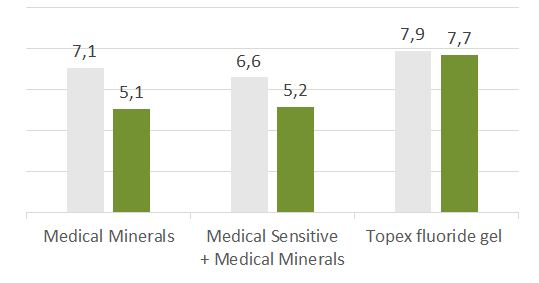
Fig. 3. Mean tooth color parameters based on spectrophotometer readings
The use of R.O.C.S. Medical Minerals gel not only reduces tooth sensitivity in the shortest possible time, but also improves tooth color.
Download this article for free in Russian:
Caries prevention, including in patients with systemic conditions:
Moscow 2008.
The aim of the study was to evaluate the effectiveness of remineralizing therapy using R.O.C.S. Medical Minerals application gel for the prevention of dental caries in children aged 12–13 years. The study involved 180 schoolchildren divided into study and control groups (90 people each). Depending on the degree of caries activity (compensated, subcompensated, decompensated forms), 1 to 3 courses of remineralizing therapy were administered over the course of a year. The results were evaluated after 1 year based on caries increment, OHI-S hygiene index, PMA index, and TER test.
The study involved 180 schoolchildren aged 12–13 years (90 in the study group and 90 in the control group). Depending on caries intensity, 3 observation groups of 30 people each were formed.
The remineralizing therapy regimen depended on the degree of caries activity (according to the method of T.F. Vinogradova):
- Compensated form (2.8 ± 0.2): one course (2 weeks) per year.
- Subcompensated form (5.9 ± 0.2): two courses (2 weeks each) with a 6-month interval.
- Decompensated form (9.98 ± 0.3): three courses (2 weeks each) with a 3-month interval.
R.O.C.S. Medical Minerals application gel contains calcium glycerophosphate, magnesium chloride, xylitol, and guar gum. Application technique: the gel was applied to cleaned teeth, a standard polyurethane tray was placed over them, and left for 20 minutes. After removing the tray, the remaining gel was expectorated, and the mouth was not rinsed.
The following parameters were used to evaluate effectiveness: caries intensity (DMFT, DMFT+dmft), OHI-S hygiene index (J.C. Green, J.R. Vermillion, 1964), PMA index (C. Parma, 1960), and the TER test for determining enamel resistance (Okushko V.R., Kosareva L.I., 1983). All procedures were carried out in a school medical office during the school year. The outcome was assessed 1 calendar year after the start of the preventive program.
The use of remineralizing therapy with R.O.C.S. Medical Minerals gel showed a significant reduction in caries increment in all prevention groups compared to the control (p<0.001).
- Compensated form: caries increment in the study group — 0.2 ± 0.01, in the control — 0.8 ± 0.04 (a 75% reduction). More than 80% of children did not develop new carious cavities.
- Subcompensated form: caries increment in the study group — 0.6 ± 0.04, in the control — 2.0 ± 0.02 (a 70% reduction).
- Decompensated form: caries increment in the study group — 1.0 ± 0.02, in the control — 4.1 ± 0.05 (a 75.6% reduction).
According to the TER test data, enamel acid resistance parameters significantly increased by the end of the remineralizing therapy course. Significant differences were found between the groups with compensated and decompensated caries in terms of hygiene (HI: 1.0 ± 0.01 and 1.56 ± 0.2, respectively) and acid resistance (TER test: 2.55 ± 0.02 and 3.5 ± 0.2, respectively).
- Course-based remineralizing therapy within a school preventive program is an effective method for the prevention of dental caries and can significantly improve the effectiveness of comprehensive prevention programs.
- R.O.C.S. Medical Minerals application gel is an effective means of preventing dental caries in children aged 12–13 years. The application regimen should depend on the degree of caries activity: the higher the caries intensity, the more courses of remineralizing therapy are required during the year.
Download this abstract for free in Russian:
The few studies of the oral condition in patients with hemophilia have shown a high level of dental diseases, and dental procedures can provoke hemorrhagic complications. In this regard, the prevention of oral diseases in patients with hemophilia remains a pressing issue.
Study objective: to evaluate the effectiveness of the "R.O.C.S. Medical Minerals" calcium-phosphate gel application regimen for the prevention and treatment of dental caries in patients with hemophilia over a two-year period using a standard application protocol.
A dental examination of the oral cavity in 51 boys, of whom 30 were somatically healthy children and 21 had hemophilia, showed that all patients with hemophilia had dental caries at baseline. The prevalence of dental caries in the control group was 89.4%.
Taking into account the different degrees of caries activity in mild and severe forms of hemophilia, the patients were divided into two groups:
- Group I: 10 patients with mild hemophilia and compensated caries;
- Group II: 11 patients with severe and extremely severe forms of hemophilia and decompensated caries;
- Control group: 30 somatically healthy boys, age-matched to the groups of children with hemophilia, of whom 15 had a compensated form of caries (K1) and 15 had a decompensated form (K2).
"R.O.C.S. Medical Minerals" gel applications were performed after professional oral hygiene using custom removable trays in an outpatient clinic setting according to the following protocol:
- Group I: a 15-minute daily application for 15 days, twice a year;
- Group II: a 15-minute daily application for 15 days, four times a year.
The above-described preventive treatment protocol was not used in the control group.
The reduction in caries increment following preventive measures compared to the control group was determined as a percentage using the formula:
(Mk – M) ÷ Mk × 100% ,
where Mk is the caries increment in the control group, and M is the caries increment in the preventive group.
At the baseline assessment of Ca, P, and L-amylase activity in saliva, significant differences compared to the control group were detected only in group II patients (p<0.05) for Ca and L-amylase parameters. Over the course of the calcium-phosphate gel therapy administered in courses over two years, children in groups I and II showed a significant increase in Ca and P concentrations and L-amylase activity in saliva (Fig. 1–3).
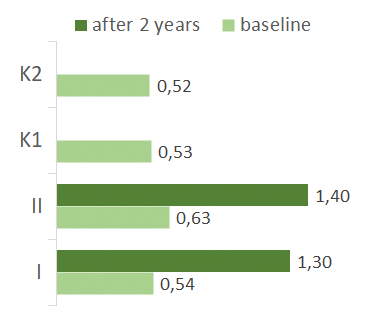
Fig. 1. Ca concentration
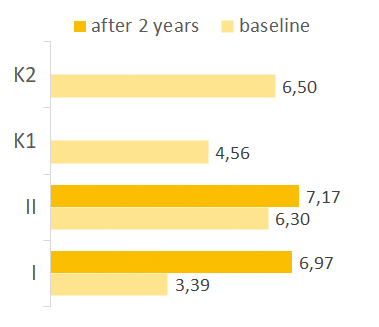
Fig. 2. P concentration
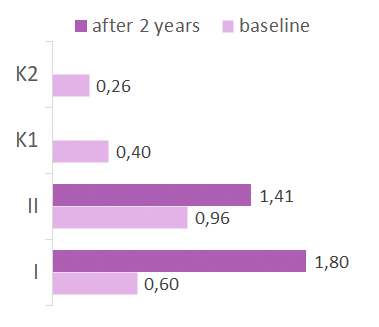
Fig. 3. L-amylase activity
Oral examination of 21 patients showed that after completing the remineralizing therapy courses, the dental caries increment was reduced by 52.7% compared to the control group (Table 1).
Table 1. Caries intensity in the study and control groups over time
| Hemophilia group | Control group | |
|---|---|---|
| Caries prevalence at the beginning of the study |
100.0% |
89.4% |
| Baseline caries intensity | 9.92 ± 0.82 | 4.02 ± 0.39 |
| Caries intensity at 2 years from the start of the study | 12.23 ± 1.09 | 8.90 ± 0.71 |
| Caries increment | 2.31 | 4.88 |
Administration of R.O.C.S. Medical Minerals gel remineralizing therapy courses over two years in children with hemophilia helps reduce the dental caries increment regardless of the severity of hemophilia and disturbances in the biochemical parameters of oral fluid.
Over the course of the therapy, a positive trend was observed in the calcium and phosphorus concentrations and L-amylase activity in oral fluid in both compensated and decompensated forms of dental caries.
Course-based remineralizing therapy with R.O.C.S. Medical Minerals gel is indicated for both the prevention and treatment of initial forms of dental caries in patients with varying degrees of caries activity.
Download this article for free in Russian:
Evidence of the gel's effectiveness in treating mild fluorosis:
The use of R.O.C.S. Medical Minerals gel as 20-minute applications daily after toothbrushing for 6 months makes it possible to restore structural changes in the enamel and increase the remineralization index by 2.3 points in patients with a mild form of fluorosis.

Fig. 1. Before treatment

Fig. 2. After treatment

Fig. 3. Enamel lesion focus in dental fluorosis

Fig. 4. Enamel surface of a fluorotic tooth after application of R.O.C.S. Medical Minerals gel
Download this abstract for free in Russian:
The gel has been proven to increase the mineralizing potential of saliva:
The biochemical parameters of oral fluid in preschool children with varying caries intensity were studied (protein content, calcium ion and inorganic phosphate concentrations, Ca/P ratio). The effect of remineralizing therapy using R.O.C.S. Medical Minerals gel was evaluated, after which the concentration of inorganic phosphates and calcium ions, as well as the Ca/P ratio, significantly increased. The amount of protein in the oral fluid increased, but the differences were statistically insignificant. R.O.C.S. Medical Minerals affects the composition of oral fluid, saturating it with calcium ions and inorganic phosphates and enhancing its caries-protective properties. The trend toward an increase in protein after remineralizing therapy helps regulate the level of mineral components in the oral fluid and their uptake into the hard dental tissues.
Download this article for free in Russian:
Using the gel to treat chalky spots after braces removal:
According to the Current Care Guideline on Caries (2014), the carious process is the most common problem in children and adolescents in Finland. Chalky spots on the tooth enamel that appear after orthodontic treatment with fixed appliances represent an initial (reversible) form of dental caries. This study showed that R.O.C.S. Medical Minerals mineral gel, developed for the treatment of chalky spots, is suitable for independent home use and is an effective product when used by patients under the supervision of a dentist and/or dental hygienist.
Download this article for free in Russian:
Evidence of the gel's remineralizing and lightening action and its effectiveness in treating tooth hypersensitivity:
The aim of this study was to evaluate the remineralizing effect of a fluoride-free gel — "R.O.C.S. Medical Minerals" — in comparison with the "Belagel Ca/P" professional remineralizing system containing a mineral complex that includes fluorides.
Two groups of volunteers, 31 people each, used the test formulations according to the following protocols:
- "R.O.C.S. Medical Minerals" gel was applied by patients themselves using a toothbrush or finger after toothbrushing. After applying the gel, patients were advised to refrain from eating and drinking for 40–60 minutes. The technique for using the gel is very simple and does not require special patient training.
- After toothbrushing, the teeth were dried, and "Belagel Ca/P" gel containing PO43-, F-, K+, Na+ ions was applied to the teeth with a brush and air-dried. The gel was then treated with a liquid containing Ca2+, Mg2+, Zn2+ ions and finally dried. The application procedure is more complex and can only be performed in a dental chair.
All volunteers were instructed and trained in proper dental care, motivated by the need for thorough tooth cleaning to achieve maximum effect when using remineralizing gels. The quality of dental care was monitored at least once every 10–12 days.
During the remineralizing therapy with the test formulations, a significant improvement in all studied parameters of the hard dental tissues was recorded.
In the group using "R.O.C.S. Medical Minerals," tooth mineralization parameters increased by 29% and enamel resistance by 27%, while in the group using "Belagel Ca/P," the increases were 21% and 31%, respectively (Fig. 1, 2). At the same time, alkaline phosphatase activity in the case of R.O.C.S. gel use increased by 51.2%, which is approximately 2.5 times higher than in the second group.

Fig. 1. Remineralization index
Fig. 2. Enamel acid resistance index (TER test)
Among the parameters recorded in this test series was an assessment of tooth color changes (Table 1).
Table 1. Tooth color changes over 4 weeks of using remineralizing formulations.
| R.O.C.S. Medical Minerals | Belagel Ca/P | |
|---|---|---|
| Percentage of patients in whom tooth lightening was observed |
90%
|
38%
|
| Percentage of patients whose color change exceeded 6 shades | 50% | 6% |
| Mean lightening value on the extended VITA scale | 4.74 ± 0.5 | 1.68 ± 0.4 |
Both formulations proved to be effective treatments for tooth hypersensitivity: the mean number of teeth with hypersensitivity (IRGZ index) decreased by 44% during the use of "R.O.C.S. Medical Minerals," and by 37% in the second group. The tooth hypersensitivity intensity index (IIGZ) decreased by 29% and 35%, respectively.
The vast majority of methods aimed at the prevention of dental caries and remineralization of focal demineralization sites are based on the use of fluorides. However, situations arise quite often when the use of fluoride prevention methods is not indicated.
It is well known that fluorides have the ability to increase the acid resistance of tooth enamel; however, the acid resistance of the hard dental tissues depends not only on the fluoride content (which amounts to tenths of a percent) but also on the overall level of mineralization. The main components of tooth enamel are calcium and phosphorus, the incorporation of which into the enamel after eruption is supported by salivary enzymes.
A significant increase in alkaline phosphatase activity was recorded only with the use of "R.O.C.S. Medical Minerals," which contains a direct substrate of this enzyme and magnesium chloride, known as a phosphatase activator. The improvement in the enamel mineralization process against the background of increased salivary phosphatase activity and a decrease in salivary phosphorus content (its more active utilization by tooth tissues was demonstrated) was reflected in the appearance of the teeth when using "R.O.C.S. Medical Minerals." In addition to an increased level of mineralization, this may indicate the predominant formation of apatite crystals, which, apparently, is related to the energetics of the enzymatic cleavage of calcium glycerophosphate and the ratio of calcium and phosphate ions. Simple phosphates precipitate predominantly in the form of other salts (whitlockite, brushite), which explains the lower effectiveness of the "Belagel Ca/P" formulation for improving tooth color.
The confirmed fact of tooth lightening is an extremely important motivating factor for patients to undergo remineralizing therapy. Furthermore, it expands the possibilities of esthetic treatment for individuals with contraindications to traditional whitening: patient age; pregnancy and breastfeeding; allergic reactions to whitening components; systemic diseases, endocrine disorders, bronchial asthma, hypertension; enamel hypersensitivity; the presence of exposed tooth necks, wedge-shaped defects, significant enamel loss due to pathological or age-related wear; acute periodontal diseases; diseases of the oral mucosa.
It is worth noting the convenience of therapeutic and preventive measures using "R.O.C.S. Medical Minerals" gel, since treatment can be carried out both in a dental clinic and at home.
Other mineralization parameters showed no significant differences between the two formulations. The use of remineralizing gels led to a reduction in tooth hypersensitivity, which is evidence of an increased level of mineralization and restoration of phosphorus and calcium content in the circumpulpal and mantle dentin. Both tested products are suitable for local prevention of dental caries and treatment of non-carious dental lesions.
Download this article for free in Russian:
Use of the remineralizing gel in pregnant women:
Pregnant women are at one of the highest risks of developing the main dental diseases — dental caries and inflammatory periodontal diseases.
A prevention program that includes professional oral hygiene, education and motivation for regular oral care, the use of fluoride-free R.O.C.S. toothpaste, a soft toothbrush, R.O.C.S. mouthwash with laminaria extract as individual hygiene products, as well as a course of remineralizing therapy with R.O.C.S. Medical Minerals gel in the second trimester of pregnancy, makes it possible to improve the condition of periodontal tissues and reduce the caries increment in pregnant women by 5.5 times.
Download this article for free in Russian:
Boosting the effectiveness of at-home whitening:
The use of R.O.C.S. Medical Minerals gel (a single 20-minute application after each whitening procedure for 1 month) increased the effectiveness of home tooth whitening by an average of 65%, maintained the achieved result for at least one year, prevented the occurrence of hypersensitivity, and reduced the risk of dental caries by an average of 93%.
Download this article for free in Russian:
Microbiological study of the biofilm after using the gel:
The high prevalence of caries in young children necessitates the use of therapeutic and preventive products that target the primary etiopathogenetic factor of this disease — pathogenic microflora. This study presents comparative data on the antimicrobial effectiveness of products containing xylitol and chlorhexidine, as well as their effect on the microbiocenosis composition of the dental biofilm.
A total of 30 patients aged 12 to 36 months with early childhood caries (18 boys and 12 girls) were followed for one month. The patients were divided into two equal groups using a blinded method:
- Patients in group 1 used R.O.C.S. Medical Minerals gel for local antimicrobial and remineralizing therapy over the course of one month.
- Patients in group 2 were prescribed daily one- to two-minute applications of a 0.1% chlorhexidine solution once a day for 7–10 days as local antimicrobial therapy. "Belagel Ca/P" gel was used daily for one month as remineralizing therapy.
It was recommended that the remineralizing gels be applied 4–5 times a day after toothbrushing. All procedures were performed by the patients' parents at home after receiving prior instruction.
At baseline and at the end of the prescribed treatment course, all patients underwent molecular biology testing using multiplex PCR at the NIMSI laboratory.
In group 1, a significant reduction in colonization by cariogenic species was detected, along with a positive effect of the R.O.C.S. Medical Minerals remineralizing gel components on the ratio of cariogenic to resident species, as well as a decrease in the quantity and frequency of detection of certain periodontopathogenic anaerobic bacteria (Table 1). An important positive feature of the change in the dental biofilm microbiocenosis composition in the first group was also the disappearance of Candida fungi.
Examination of the microbial flora of dental plaque in group 2 patients one month after treatment showed only some positive shifts in the ratio of cariogenic to normal flora, and a decrease in the frequency of detection of certain virulent strains. At the same time, the quantity and frequency of detection of representatives of the resident bacterial group — enterococci — decreased. In addition, the detection rate of the yeast-like fungus Candida albicans increased, with a statistically significant rise in the fungal colonization of dental plaque. These data indicate the development of dysbiosis with the use of chlorhexidine.
Table 1. Comparative assessment of changes in the frequency of detection of microbial flora in dental plaque between the two groups after a course of therapy
| Genus, species of bacteria | 0.1% chlorhexidine | R.O.C.S. Medical Minerals with xylitol |
|---|---|---|
| Streptococcus mutans (cariogenic strain) | no change | 45.4% reduction |
| Actinomyces spp. (cariogenic strain) | 33.3% reduction | 44.5% reduction |
| Veillonella parvula (resident) | 24.7% increase | 40.2% increase |
| Porphyromonas gingivalis (periodontopathogen) | 66.5% reduction | no change |
| Prevotella melaninogenica (virulent strain) | 20% increase | 44.5% reduction |
| Fusobacterium nucleatum (periodontopathogen) | 4.8-fold increase | 33.5% reduction |
| Candida albicans (fungus, pathogen) | 49.8% increase | complete disappearance |
A clinical examination after one month showed no new carious cavities or demineralization foci in group 1 patients; existing chalky spots regained their luster; the progression of carious defects was halted; and signs of catarrhal gingivitis disappeared.
During the clinical examination of group 2 patients, no new carious cavities were recorded either; the disappearance of catarrhal gingivitis signs was observed in 80% of patients (of those who had it at baseline).
The inclusion of both xylitol and chlorhexidine as antimicrobial therapy in the comprehensive treatment plan for early childhood caries leads to a reduction in the detection frequency and colonization level of cariogenic and periodontopathogenic flora in dental plaque.
The data presented indicate a more physiological action of xylitol; it has a positive effect on the microbiocenosis composition of the dental biofilm, normalizing the qualitative (species) composition and the quantitative bacterial load of both cariogenic and stabilizing resident species.
Download this article for free:
Anti-adhesive action of xylitol:
Very few substances are known today that can significantly affect the caries-causing environment in the mouth and reduce the risk of tooth decay. One of the most widely studied substances with an anti-caries effect is xylitol. However, the antibacterial mechanism of xylitol is not fully understood. This study provides data confirming xylitol's ability to significantly inhibit the adhesion of oral streptococci, the primary formers of dental plaque. These bacteria delay the development of caries- and periodontal disease-causing bacteria on tooth surfaces through a mechanism called co-adhesion. We also revealed the ability of xylitol to inhibit the adhesion of Streptococcus sobrinus, a microorganism associated with caries, and Staphylococcus aureus, which increases the virulence level of dental plaque. This mechanism of action is realised in toothpaste within the time period traditionally recommended for brushing teeth.
Download the article for free in Russian:
Ingredients
Aqua, Glycerin, Xylitol, Hydroxyethylcellulose, Calcium Glycerophosphate, Polysorbate-20, Aroma, Methylparaben, Magnesium Chloride, Hydroxypropyl Guar.
Application
Apply the gel to your teeth twice a day, then avoid eating and drinking for 30–40 minutes.
The gel is safe if swallowed and has no age or duration-of-use restrictions.
How to get the most out of the gel
- Apply the gel only to clean teeth (otherwise remineralization is less effective and the risk of tartar formation increases).
- During a remineralization course, choose a fluoride-free toothpaste.
- In a clinical setting: don't dry the patient's teeth with an air jet before applying the gel — the gel won't work without saliva.
- Using the gel with a custom tray boosts its effectiveness.
- Course-based use is recommended. The length of the course depends on the clinical picture.


