R.O.C.S. PRO Lingua tongue brush
Description
Properties
Ingredients
Recommendations for care and use
Most oral microorganisms collect on the back of the tongue. That can raise the risk of oral and nasopharyngeal infections, cause bad breath, and create a breeding ground for harmful bacteria, including caries-causing ones. Regular use of a tongue brush reduces the amount of microbial plaque on its surface.
Features

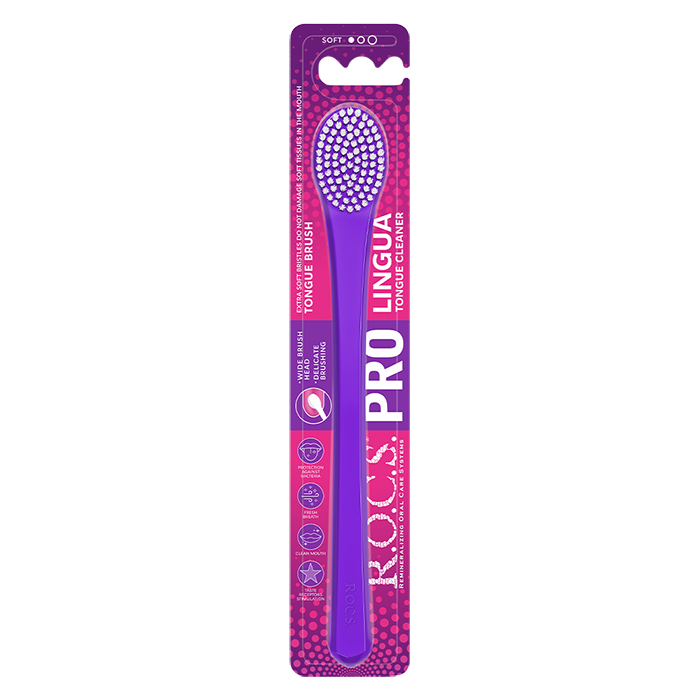
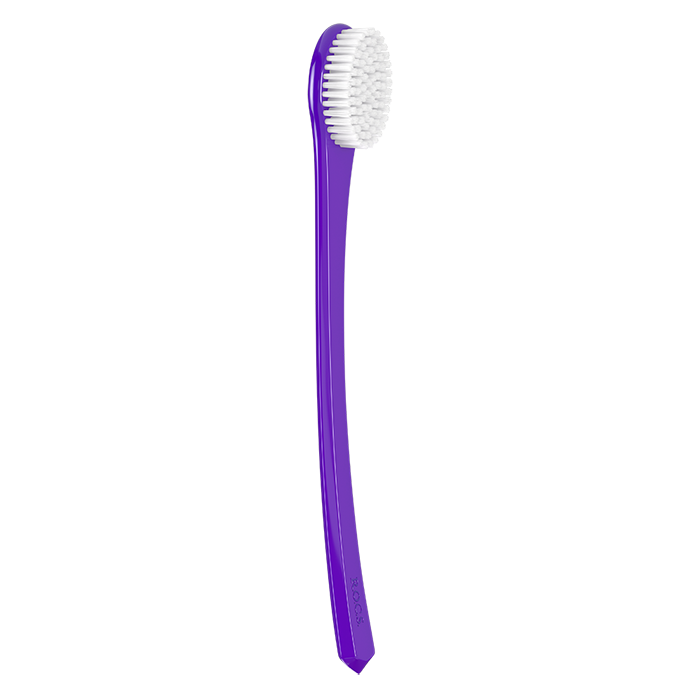
A convenient, easy-to-use brush with a large head removes plaque from the surface of the tongue, including the back of the tongue, quickly and thoroughly.
Ultra-soft, safe bristles with triple tip polishing guarantee gentle care for the soft tissues of the oral cavity.
The elegant curved R.O.C.S. PRO handle, made of high-quality, safe plastic, prevents excess pressure on soft tissues during cleaning.
Use
For daily care of the soft tissues of the oral cavity.



Most oral microorganisms collect on the back of the tongue. That can raise the risk of oral and nasopharyngeal infections, cause bad breath, and create a breeding ground for harmful bacteria, including caries-causing ones. Regular use of a tongue brush reduces the amount of microbial plaque on its surface.
Features
A convenient, easy-to-use brush with a large head removes plaque from the surface of the tongue, including the back of the tongue, quickly and thoroughly.
Ultra-soft, safe bristles with triple tip polishing guarantee gentle care for the soft tissues of the oral cavity.
The elegant curved R.O.C.S. PRO handle, made of high-quality, safe plastic, prevents excess pressure on soft tissues during cleaning.
Use
For daily care of the soft tissues of the oral cavity.


