Dentin hypersensitivity

Dentin hypersensitivity is characterised by short, sharp pain triggered by normally non-noxious stimuli, such as chemicals, heat, or touch. The intensity of the pain can range from mild discomfort to severe pain, which can make eating and toothbrushing difficult. This condition poses a serious threat to oral and general health, because pain negatively affects a patient's emotional well-being and may interfere with adequate nutrition and good oral hygiene. The prevalence of dentin hypersensitivity ranges from 1.3% to 92.1%, with an average of 33.5%.1

Causes of tooth hypersensitivity

Tooth sensitivity may be caused by the loss of hard dental tissues or by gum recession exposing the neck of the tooth. This can happen for a variety of reasons.

  • Internal factors:
    • Non-carious lesions of the teeth, such as pathological abrasion, erosion, and abfraction accompanied by enamel loss and dentin exposure;
    • Initial caries in the cervical region;
    • Periodontal disease;
    • Systemic diseases that disrupt mineral metabolism.
  • External factors:
    • Some types of dental treatment (professional cleaning, whitening, cavity preparation, and improper use of composite materials);
    • Excessive use of highly abrasive toothpastes;
    • Aggressive toothbrushing;
    • Consumption of large quantities of acidic foods and beverages;
    • Injuries that compromise the integrity of the tooth enamel.

Some patients may describe pain caused by pulpitis or periodontal disease as tooth sensitivity, which should be kept in mind to make an accurate diagnosis and to choose the proper treatment strategy.

Management

There are three main approaches to managing dentin hypersensitivity with oral care products:

  1. Reducing the excitability of the nerve endings in the dentinal tubules. Soluble potassium salts are used for this purpose. These ions diffuse into the tubules and, once a certain concentration has been reached, surround the nerve endings and block the transmission of nerve impulses.
  2. Blocking the dentinal tubules using agents such as hydroxyapatite, fluoride varnish, and strontium salts.
  3. Gentle oral hygiene: swap to a soft-bristled toothbrush and brush gently using circular motions to avoid damaging enamel and receding gums.

An effective solution from R.O.C.S.

A comprehensive oral care program for sensitive teeth

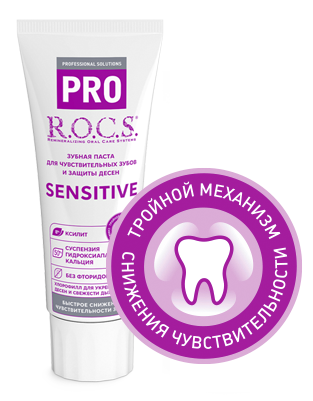
R.O.C.S. PRO SENSITIVE toothpaste
Mechanism of action and active ingredients
RDA 30

Three mechanisms reduce tooth sensitivity:

  1. Sealing of dentinal tubules,
  2. Desensitizing nerve endings,
  3. Remineralization of hard dental tissues

Contains a natural anti-inflammatory ingredient

 
Multi-sized hydroxyapatite microparticles occlude dentinal tubules, seal minor fractures and forms an insoluble protective layer on the enamel surface thus protecting teeth against irritants.
 
Potassium ions diffuse into the dentinal tubules, surround the nerve endings, and block the transmission of nerve impulses. This quickly reduces the excitability of the nerve fibers.
 
The active mineral complex provides long-lasting relief from tooth sensitivity by gradually remineralizing hard dental tissues.
 
Xylitol 8% promotes the enamel remineralization process, protects against cariogenic and some periodontopathogenic bacteria and inhibits Candida albicans adhesion.
 
Sodium-copper chlorophyllin inhibits periodontopathogenic bacteria, including those associated with halitosis, and protects gums against inflammation.
 

R.O.C.S. Medical Minerals Remineralizing Gels

Effective treatment of dentin hypersensitivity should include both relieving pain and restoring the mineral composition of hard dental tissues. Therefore, remineralization therapy is an important part of tooth sensitivity treatment

Remineralizing therapy protocol for dentine hypersensitivity.

  1. In case of pain:
    • apply 2–3 times a day until the symptoms resolve.
  2. Maintenance remineralization therapy:
    • use regularly, every other day.