Description
Active ingredients
Properties
Clinical trials
Ingredients
Application

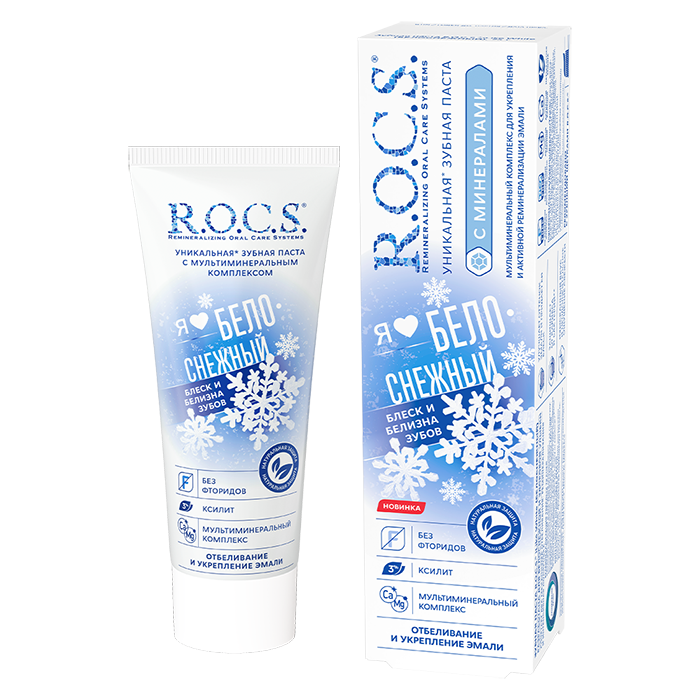
R.O.C.S. iLike White toothpaste combines two whitening mechanisms: remineralization and intensive polishing.
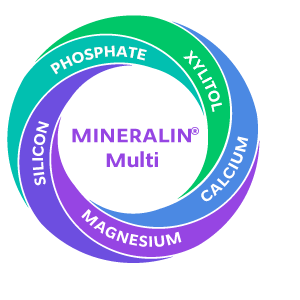
The patented multi-mineral complex MINERALIN Multi gradually restores the natural mineral composition of teeth, bringing back the enamel's natural healthy whiteness.
Silica microparticles intensively polish the enamel, leaving it smooth and shiny and optically enhancing the whitening effect.
A cream-colored toothpaste. An extra-fresh flavor with citrus notes.
R.O.C.S. toothpaste with active minerals effectively cleans teeth, saturates enamel with minerals, increases caries resistance and the rate of tooth remineralization, and is effective in the post-filling period:
The study compared the level of oral hygiene and enamel resistance in children using toothpastes based on calcium glycerophosphate (R.O.C.S. Active Calcium) and calcium lactate (New Pearl Calcium).
After two months, the level of hygiene improved in both groups, with significantly greater improvement in the group of children using R.O.C.S. Active Calcium toothpaste.
In the calcium lactate group, after a slight increase at two weeks, enamel resistance had almost returned to baseline by the end of the study. In the glycerophosphate group, on the other hand, enamel acid resistance increased throughout the entire observation period and, according to the TER test, improved by an average of 1.66 points after two months.
Enamel tunnels are microstructures that curve in an S-shape along the bundles of enamel prisms and extend to the dentin, penetrating it in the form of enamel bridges, where metabolic exchange between the enamel and dentin takes place. On the enamel surface, these tunnels open as enamel pores. X-ray spectral microanalysis and planar spectrograms show that the walls of enamel tunnels and the areas near them contain mainly mineral components (Ca, Ba, Cd, Sr, P, Si, As, C, K, Br, I, Cl), while the lumen contains organic components. It has been established that the mineral component of R.O.C.S. toothpastes actively penetrates through the enamel tunnels into the area of the enamel-dentin junction and the superficial layers of the dentin, exerting a positive effect on the structural and functional caries resistance of teeth.
Based on the results of an earlier study showing that fluoride practically does not improve metabolic processes in mature enamel, the authors conducted a comparative study of the effect of a toothpaste with a mineral complex containing magnesium, calcium, phosphorus, and silicon, and a toothpaste with fluoride in the form of highly active aminofluoride on the restoration of tooth enamel after caries treatment.
The study involved 100 people aged 25 to 30 years of both sexes diagnosed with dentin caries. The patients were randomly divided into two groups. After caries treatment, patients in group 1 used R.O.C.S. toothpaste containing calcium glycerophosphate, magnesium chloride, sodium silicate, and xylitol, while patients in group 2 used Colgate toothpaste with aminofluoride (1400 ppm F¯).
The results were evaluated by examining the teeth using clinical (KOSRE test, TER test, oral fluid pH) and laboratory (scanning electron microscopy and X-ray spectral microchemical analysis) methods.
As a result of using R.O.C.S. toothpaste with the multi-mineral complex after dentin caries treatment, the characteristic depletion of calcium and phosphorus in the surface enamel layer does not occur, despite the post-restoration recovery period (28 days), which, according to the authors, is characterized by intensive trace element loss. In the control group that used a fluoride-containing toothpaste for toothbrushing, the concentration of the structural components of the enamel decreased after treatment (Table 1).
Table 1. Content of chemical elements in the surface enamel layer after tooth preparation and subsequent use of the test toothpastes according to X-ray spectral microanalysis, wt.%.
| Chemical element | Group 1 | Group 2 | ||
|---|---|---|---|---|
| immediately after caries treatment | after one month of using R.O.C.S. toothpaste | immediately after caries treatment | after one month of using toothpaste with 1400 ppm F¯ | |
| calcium | 14.98+0.12 | 16.81+0.50 | 15.95+0.49 | 12.81+0.12 |
| phosphorus | 6.87+0.31 | 7.75+0.69 | 7.63+0.42 | 6.75+0.69 |
| magnesium | 0.49±0.01 | 0.53+0.01 | 0.51+0.01 | 0.50+0.06 |
After one month of supervised toothbrushing, patients using R.O.C.S. toothpaste demonstrated low enamel susceptibility to acid (below 40%) and high remineralizing capacity of saliva (from 24 hours to 3 days); caries resistance of the teeth increased by 8.2 times. No changes were detected in the group using Colgate toothpaste.
Thus, the use of R.O.C.S. toothpaste with the multi-mineral complex leads to significant positive shifts in enamel metabolism even after caries treatment, considering that tooth preparation — trauma to the enamel — is associated with significant metabolic disturbances.
A long-term study confirming the anti-caries effect of R.O.C.S. toothpaste with xylitol and active minerals (calcium glycerophosphate + magnesium chloride):
A two-year program of supervised toothbrushing carried out in schools on children aged 6-7 using R.O.C.S. (Re-mineralizing Oral Care System) toothpastes has shown very effective results in reducing the OHI-S index scores by 53-57%, the GI index scores by 57-73% and the 2-year DMFT scores by 29-32%. Remineralizing toothpastes with-out fluorine, containing 500 ppm AmF or 1000 ppm NaF, were as effective in terms of improving the oral health of the schoolchildren.
Aqua, Silica, Sorbitol, Glycerin, Xylitol, Sodium Lauryl Sulfate, Xanthan Gum, Aroma, Magnesium Chloride, Sodium Glycerophosphate, Calcium Glycerophosphate, Methylparaben, Sodium Saccharin, Propylparaben, Sodium Silicate, Linalool, Limonene.
Use twice a day (morning and evening). Recommended toothbrushing time is 2-3 minutes.
To enhance the whitening effect, use together with R.O.C.S. WHITENING toothbrushes.
The toothpaste has an age restriction of 18+ years.
It is advisable to use in courses, alternating with a regular toothpaste that does not contain polishing additives.
Not recommended for use in cases of hypersensitivity, increased tooth wear, or enamel erosion.

R.O.C.S. iLike White toothpaste combines two whitening mechanisms: remineralization and intensive polishing.
The patented multi-mineral complex MINERALIN Multi gradually restores the natural mineral composition of teeth, bringing back the enamel's natural healthy whiteness.
Silica microparticles intensively polish the enamel, leaving it smooth and shiny and optically enhancing the whitening effect.
A cream-colored toothpaste. An extra-fresh flavor with citrus notes.
R.O.C.S. toothpaste with active minerals effectively cleans teeth, saturates enamel with minerals, increases caries resistance and the rate of tooth remineralization, and is effective in the post-filling period:
The study compared the level of oral hygiene and enamel resistance in children using toothpastes based on calcium glycerophosphate (R.O.C.S. Active Calcium) and calcium lactate (New Pearl Calcium).
After two months, the level of hygiene improved in both groups, with significantly greater improvement in the group of children using R.O.C.S. Active Calcium toothpaste.
In the calcium lactate group, after a slight increase at two weeks, enamel resistance had almost returned to baseline by the end of the study. In the glycerophosphate group, on the other hand, enamel acid resistance increased throughout the entire observation period and, according to the TER test, improved by an average of 1.66 points after two months.
Enamel tunnels are microstructures that curve in an S-shape along the bundles of enamel prisms and extend to the dentin, penetrating it in the form of enamel bridges, where metabolic exchange between the enamel and dentin takes place. On the enamel surface, these tunnels open as enamel pores. X-ray spectral microanalysis and planar spectrograms show that the walls of enamel tunnels and the areas near them contain mainly mineral components (Ca, Ba, Cd, Sr, P, Si, As, C, K, Br, I, Cl), while the lumen contains organic components. It has been established that the mineral component of R.O.C.S. toothpastes actively penetrates through the enamel tunnels into the area of the enamel-dentin junction and the superficial layers of the dentin, exerting a positive effect on the structural and functional caries resistance of teeth.
Based on the results of an earlier study showing that fluoride practically does not improve metabolic processes in mature enamel, the authors conducted a comparative study of the effect of a toothpaste with a mineral complex containing magnesium, calcium, phosphorus, and silicon, and a toothpaste with fluoride in the form of highly active aminofluoride on the restoration of tooth enamel after caries treatment.
The study involved 100 people aged 25 to 30 years of both sexes diagnosed with dentin caries. The patients were randomly divided into two groups. After caries treatment, patients in group 1 used R.O.C.S. toothpaste containing calcium glycerophosphate, magnesium chloride, sodium silicate, and xylitol, while patients in group 2 used Colgate toothpaste with aminofluoride (1400 ppm F¯).
The results were evaluated by examining the teeth using clinical (KOSRE test, TER test, oral fluid pH) and laboratory (scanning electron microscopy and X-ray spectral microchemical analysis) methods.
As a result of using R.O.C.S. toothpaste with the multi-mineral complex after dentin caries treatment, the characteristic depletion of calcium and phosphorus in the surface enamel layer does not occur, despite the post-restoration recovery period (28 days), which, according to the authors, is characterized by intensive trace element loss. In the control group that used a fluoride-containing toothpaste for toothbrushing, the concentration of the structural components of the enamel decreased after treatment (Table 1).
Table 1. Content of chemical elements in the surface enamel layer after tooth preparation and subsequent use of the test toothpastes according to X-ray spectral microanalysis, wt.%.
| Chemical element | Group 1 | Group 2 | ||
|---|---|---|---|---|
| immediately after caries treatment | after one month of using R.O.C.S. toothpaste | immediately after caries treatment | after one month of using toothpaste with 1400 ppm F¯ | |
| calcium | 14.98+0.12 | 16.81+0.50 | 15.95+0.49 | 12.81+0.12 |
| phosphorus | 6.87+0.31 | 7.75+0.69 | 7.63+0.42 | 6.75+0.69 |
| magnesium | 0.49±0.01 | 0.53+0.01 | 0.51+0.01 | 0.50+0.06 |
After one month of supervised toothbrushing, patients using R.O.C.S. toothpaste demonstrated low enamel susceptibility to acid (below 40%) and high remineralizing capacity of saliva (from 24 hours to 3 days); caries resistance of the teeth increased by 8.2 times. No changes were detected in the group using Colgate toothpaste.
Thus, the use of R.O.C.S. toothpaste with the multi-mineral complex leads to significant positive shifts in enamel metabolism even after caries treatment, considering that tooth preparation — trauma to the enamel — is associated with significant metabolic disturbances.
A long-term study confirming the anti-caries effect of R.O.C.S. toothpaste with xylitol and active minerals (calcium glycerophosphate + magnesium chloride):

A two-year program of supervised toothbrushing carried out in schools on children aged 6-7 using R.O.C.S. (Re-mineralizing Oral Care System) toothpastes has shown very effective results in reducing the OHI-S index scores by 53-57%, the GI index scores by 57-73% and the 2-year DMFT scores by 29-32%. Remineralizing toothpastes with-out fluorine, containing 500 ppm AmF or 1000 ppm NaF, were as effective in terms of improving the oral health of the schoolchildren.
Aqua, Silica, Sorbitol, Glycerin, Xylitol, Sodium Lauryl Sulfate, Xanthan Gum, Aroma, Magnesium Chloride, Sodium Glycerophosphate, Calcium Glycerophosphate, Methylparaben, Sodium Saccharin, Propylparaben, Sodium Silicate, Linalool, Limonene.
Use twice a day (morning and evening). Recommended toothbrushing time is 2-3 minutes.
To enhance the whitening effect, use together with R.O.C.S. WHITENING toothbrushes.
The toothpaste has an age restriction of 18+ years.
It is advisable to use in courses, alternating with a regular toothpaste that does not contain polishing additives.
Not recommended for use in cases of hypersensitivity, increased tooth wear, or enamel erosion.