R.O.C.S. Teens toothbrush
Description
Properties
Clinical trials
Ingredients
Recommendations for care and use
Features

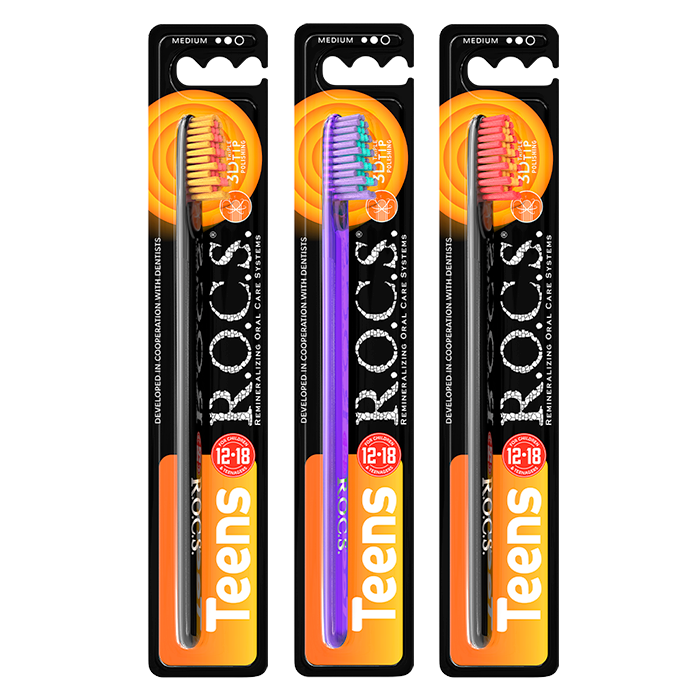
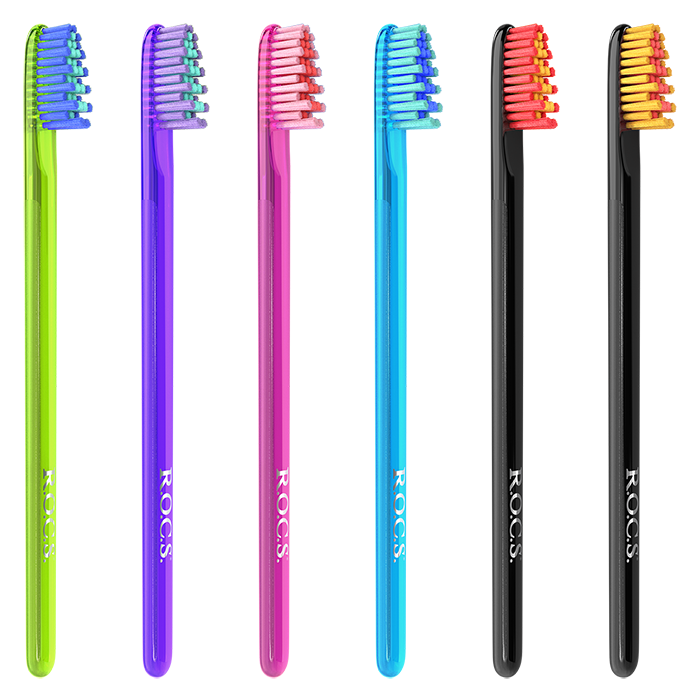
The original angled bristle trim effectively cleans hard-to-reach areas, including the retromolar regions. What's more, the teen toothbrush line features multi-level bristle trimming for better cleaning during the development of the permanent dentition and in the presence of dental arch defects.
The rounded, polished bristle tips won't damage enamel or dental restorations, and won't injure the gums. Medium-hardness bristles.
The slim, flat handle reduces excess pressure on the gums and promotes proper brushing technique. The handle is made of safe, non-toxic plastic. Smooth surfaces and the absence of extra parts keep bacteria from building up and multiplying.
Use
For daily oral care in children ages 12 to 18.
R.O.C.S. toothbrushes with the model trim showed better cleaning performance than the classic trim:

The toothbrush handle is made of safe medical-grade plastic and contains no bisphenol-A:




Features
The original angled bristle trim effectively cleans hard-to-reach areas, including the retromolar regions. What's more, the teen toothbrush line features multi-level bristle trimming for better cleaning during the development of the permanent dentition and in the presence of dental arch defects.
The rounded, polished bristle tips won't damage enamel or dental restorations, and won't injure the gums. Medium-hardness bristles.
The slim, flat handle reduces excess pressure on the gums and promotes proper brushing technique. The handle is made of safe, non-toxic plastic. Smooth surfaces and the absence of extra parts keep bacteria from building up and multiplying.
Use
For daily oral care in children ages 12 to 18.
R.O.C.S. toothbrushes with the model trim showed better cleaning performance than the classic trim:
The toothbrush handle is made of safe medical-grade plastic and contains no bisphenol-A:


