Taurine

2-aminoethanesulfonic acid, C₂H₇NO₃S

Taurine is an organic compound containing a sulfo group that is not incorporated into proteins; instead, it is present in the body in free form or as part of simple peptides. In dentistry, taurine has drawn attention for its multifactorial properties: antioxidant, anti-inflammatory, anti-apoptotic, and membrane-stabilizing. Its mechanism of action in periodontal tissues is linked, in particular, to its ability to neutralize reactive oxygen species and modulate the inflammatory response:

Taurine + HOCl (at the site of inflammation) → Taurine chloramine (TauCl) + H₂O

The resulting taurine halogenamines (chloramine and bromamine) have pronounced antibacterial and anti-inflammatory properties, which is the basis for using taurine as a potential agent in periodontal therapy.

Antibacterial properties of taurine halogenamines

In vitro studies compared the antimicrobial activity of taurine chloramine (TauCl) and taurine bromamine (TauBr) with the "gold standard" of dental antiseptics — chlorhexidine. The pathogens associated with major dental diseases included Streptococcus mutans (caries), Porphyromonas gingivalis (periodontitis), and Candida albicans (candidiasis).

The results showed that chlorhexidine has the strongest antimicrobial activity. However, taurine bromamine at non-cytotoxic concentrations effectively inhibits the growth of S. mutans and P. gingivalis. Unlike chlorhexidine, taurine bromamine does not form a precipitate with sodium hypochlorite, which makes their combined use possible.

Role in modulating inflammation

Taurine and its derivatives play a key role in modulating the host inflammatory response. The end products of the neutrophil oxidative burst — HOCl and taurine chloramine (TauCl) — inhibit the production of pro-inflammatory cytokines (such as interleukin-6) and prostaglandins. This opens up opportunities for developing new therapies aimed at modulating the inflammatory response in periodontitis.

Importantly, the use of taurine-containing compositions helps reduce reactive oxygen species in oral tissues, which correlates directly with a decrease in gum inflammation. Taurine is thought to raise the level of cellular protection against free radicals in patients with chronic periodontitis by affecting lipid peroxidation products and antioxidant enzyme activity.

Effect on wound healing and apoptosis

Taurine is essential for normal cell differentiation and immune maturation. Its antioxidant and anti-apoptotic effects improve wound healing. Studies have shown that topical application of 1% taurine promotes rapid re-epithelialization of gingival mucosal wounds, as confirmed by histological data on the expression of basement membrane proteins (laminin-5 and type IV collagen).

Using the transport protein TAUT (Taurine Transporter), taurine enters the cell and triggers protective mechanisms that prevent cell death. In this way, taurine inhibits osteoblast apoptosis, which points to its positive effect on bone tissue metabolism.

Clinical data and use in periodontology

Studies show that topical application of taurine gels as an adjunct to initial periodontal therapy can be effective. It has also been demonstrated that the oral mucosa heals faster under the action of taurine.

A study by Sree and Sethupathy (2014) assessed oxidative stress and antioxidant status in patients with chronic periodontitis. The authors concluded that taurine may improve antioxidant status by affecting the level of lipid peroxidation products (TBARS) and antioxidant enzyme activity.

Safety

Taurine has low toxicity. Because excess taurine is excreted by the kidneys, overdose is unlikely. The EFSA scientific panel established a safe level of human intake — 6 g/day (equivalent to 100 mg/kg body weight per day). When applied topically in dentistry, the risks are minimal.

Advantages of using taurine in dental compositions:

  • Proven antibacterial activity against key oral pathogens,
  • Modulation of the inflammatory response and reduced levels of pro-inflammatory cytokines,
  • Stimulation of healing and re-epithelialization of gum tissue,
  • Antioxidant action and protection against oxidative stress,
  • Positive effect on bone tissue metabolism through inhibition of osteoclastogenesis,
  • Safety when applied topically and compatibility with other components.

Description

Active ingredients

Properties

RIA

Clinical trials

Ingredients

Application
Features

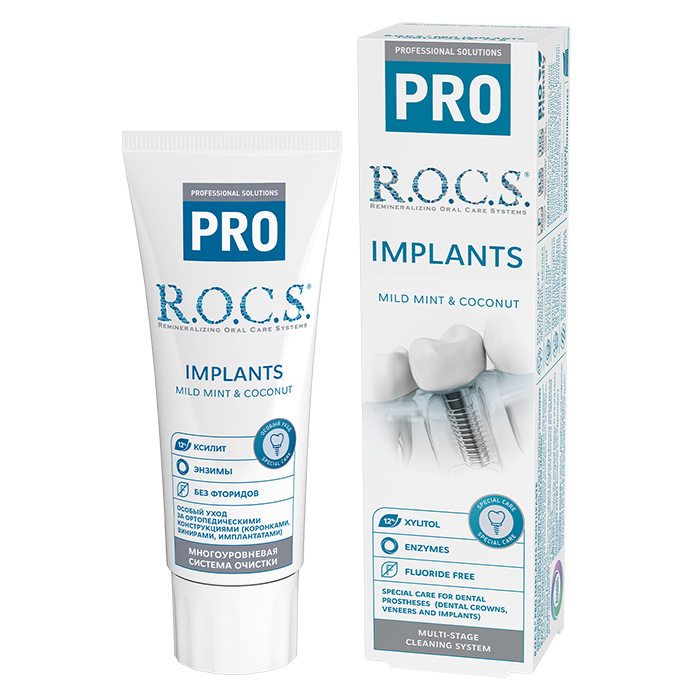
The unique R.O.C.S. PRO Implants toothpaste delivers thorough hygiene and enhanced care for soft tissues, helping prevent gum inflammation — especially important around implants and other prosthetic appliances, where it helps preserve and extend their service life.

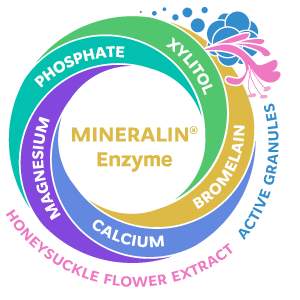
Bromelain combined with xylitol reduces bacterial adhesion, tackling the local drivers of inflammation and keeping teeth and gums clean for longer.

Oral antimicrobial protection is boosted by honeysuckle flower extract, which also has tissue-protective properties.

The formula is also enhanced with taurine to normalize energy metabolism in periodontal tissues.

The toothpaste's mineralizing complex strengthens tooth enamel and increases its caries resistance.

Indications

  • Daily care with implants, crowns, and veneers.
  • Cleaning removable dentures.

Organoleptic properties

A cream-colored toothpaste with white granules and a mild, refreshing flavor. The color may range from cream to brown due to its plant-based ingredients. Contains no artificial colorants.

 
Xylitol 12% inhibits the activity of cariogenic bacteria and some periodontopathogens and prevents the adhesion of Candida fungi.
 
Bromelain is a proteolytic enzyme that prevents microbial adhesion, has anti-inflammatory properties, and makes dental plaque easier to remove while slowing its formation.
 
Japanese honeysuckle and Caprifol honeysuckle flower extracts have a wide range of antimicrobial effects, inhibit lipopolysaccharide-induced reactions, have a tissue-protective effect, and act as a natural preservative.
 
Taurine has antioxidant and anti-inflammatory properties and normalizes energy metabolism in periodontal tissues.
 
Calcium glycerophosphate (a source of calcium ions and inorganic phosphate) + magnesium chloride (an alkaline phosphatase coenzyme) actively remineralize the enamel.
 
Cleansing silica macrogranules help remove plaque from hard-to-reach areas, then gradually break down into smaller particles to provide gentle enamel polishing in the final stage of brushing.

  • Effectively yet gently cleans teeth and prosthetic appliances.
  • Slows plaque formation, keeping the mouth clean until the next brushing.
  • Normalizes the oral microflora and reduces pathogenic bacterial load.
  • Reduces gum inflammation and bleeding.
  • Strengthens teeth by saturating them with minerals.
  • Provides a high level of protection against caries and inflammatory periodontal diseases.
  • Reduces the risk of peri-implantitis.

RIA=85 (Regular care and gentle whitening)

* Russian Abrasivity Index reflects the cleaning capacity level of oral care products and polishing pastes. Products with a higher RIA value have enhanced cleaning properties, but are also a risk factor for the development of non-carious dental lesions, therefore the choice of toothpaste should be guided by the condition of the hard dental tissues.

Russian Abrasivity Index (RIA): a new stage in oral hygiene standardization

The DRC group of companies, in collaboration with the Institute of Digital Dentistry of the RUDN Medical Institute, has developed and is implementing a new toothpaste abrasivity measurement standard in Russia that meets the highest requirements: safety, accuracy, reproducibility. Принято. This methodology is an alternative to the RDA measurement method and offers a number of advantages. Its effectiveness has been confirmed by a large-scale experimental and clinical study involving 534 patients.

The methodology is based on a rotary machine and digital technologies developed by a research group of dentists, physicists, and digital modeling specialists. QLF diagnostics, intraoral scanning, and digital analysis were used in the work, which made it possible to obtain objective data on tooth wear and the influence of abrasivity over time.


Download RIA research protocol (in Russian):

More detailed information on the Russian Abrasivity Index (RIA)

R.O.C.S. toothpaste with bromelain significantly improves oral hygiene, slows plaque formation and reduces its cariogenicity, provides a long-lasting clean feeling, and reduces gum inflammation and bleeding:

In older patients with chronic periodontitis, using toothpaste with honeysuckle extract, xylitol, and bromelain improves oral hygiene and reduces gum inflammation:

Effectiveness of R.O.C.S. toothpaste with bromelain in patients with removable dentures:

R.O.C.S. toothpaste with active minerals (calcium glycerophosphate + magnesium chloride) and xylitol saturates enamel with minerals and increases caries resistance and the rate of tooth remineralization:

A long-term study confirming the anti-caries effect of R.O.C.S. toothpaste with xylitol and active minerals (calcium glycerophosphate + magnesium chloride):


Aqua, Glycerin, Silica, Xylitol, Xanthan Gum, Calcium Glyceropospate, Cocamidopropyl Betaine, Sodium Lauroyl Sarcosinate, Aroma, Lonicera Caprifolium Extract, Lonicera Japonica Extract, Bromelain, Taurine, Sodium Benzoate, Sodium Saccharin, Magnesium Chloride, O-Cymen-5-ol.

Brush twice a day (morning and evening). Recommended toothbrushing time is 2-3 minutes.

Suitable for all ages, with no time restrictions on use.

Description

Active ingredients

Properties

RIA

Clinical trials

Ingredients

Application

Toothpaste for daily care with prosthetic appliances (implants, crowns, veneers).